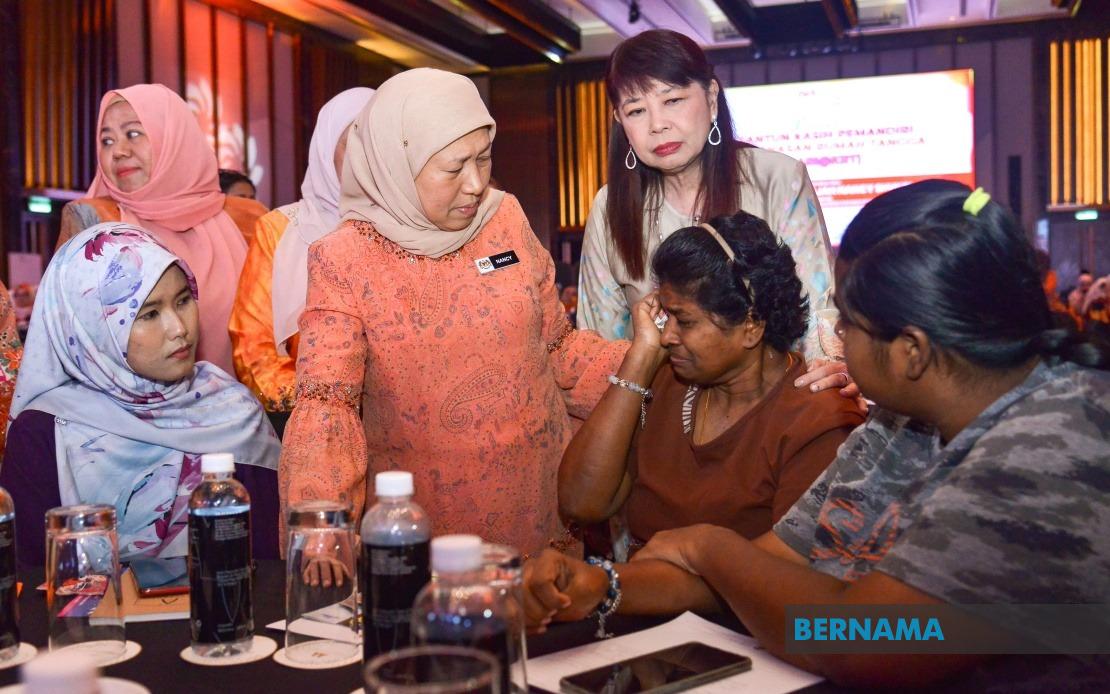
Malaysia's Ministry of Women, Family and Community Development has launched SARI@KRT: Road to Eliminate Violence Against Women (EVAW) 2026, an ambitious initiative designed to reach approximately 1,400 domestic violence survivors nationwide. Datuk Seri Nancy Shukri, the ministry's minister, unveiled the programme at an official ceremony in Kuala Lumpur, underscoring the government's commitment to transforming the lives of women affected by domestic abuse. The initiative represents a strategic pivot from reactive awareness-raising towards proactive rehabilitation and reintegration of survivors into society.
The programme structure reflects a comprehensive understanding of survivor needs, with each state expected to accommodate a minimum of 100 participants. Rather than treating domestic violence as an isolated criminal issue, KPWKM has designed SARI@KRT to address the interconnected dimensions of trauma recovery. The approach integrates three core pillars: strengthening psychosocial support services to help survivors process emotional and psychological damage, providing robust legal assistance to navigate family law complexities, and fostering economic empowerment to ensure survivors achieve financial independence and self-sufficiency.
At the heart of Nancy's messaging lies a departure from victim-blaming narratives that have historically dominated discourse around domestic violence in the region. She emphasised that the government views survivors not as passive recipients of aid, but as individuals capable of reclaiming agency and rebuilding meaningful lives. Her statement that "every crisis they face has a solution through the proper channels of action" signals an effort to demystify institutional support systems that many survivors find intimidating or inaccessible. This messaging is particularly significant in Malaysian and Southeast Asian contexts where cultural stigma, family pressure, and distrust of formal systems often keep victims trapped in abusive situations.
Recent crime statistics underscore the pressing need for such intervention. Data from the Royal Malaysia Police reveal that domestic violence cases surged to 4,014 incidents during the first half of 2024, representing a 9.1 percent increase compared to 3,678 cases recorded in the corresponding period of 2023. This upward trajectory, while alarming, carries nuance. Nancy herself acknowledged that rising reported cases may partially reflect improved public awareness and the growing willingness among survivors to seek help through official channels—a cultural shift that, while increasing visible crime figures, represents progress in breaking cycles of silence.
Geographic disparities in reported cases offer insight into regional vulnerabilities and reporting patterns. Johor emerged as the state with the highest number of cases at 721 incidents, followed by Selangor with 614 cases and Perak with 405 cases. These figures likely reflect both population concentration and variation in survivor confidence in local law enforcement and support services. Understanding these regional differences will be crucial for KPWKM in tailoring SARI@KRT delivery to address context-specific barriers to reporting and help-seeking.
The identified root causes of domestic violence incidents paint a complex picture of Malaysian family dynamics. Misunderstandings and communication breakdown account for the largest share at 1,967 cases, suggesting that many incidents stem from relationship deterioration rather than inherent violent predisposition. Drug abuse and substance dependency feature prominently in 444 cases, highlighting the intersection between addiction, financial strain, and intimate partner violence. Financial stress precipitates 378 cases, reflecting how economic pressures within households translate into interpersonal conflict and, disturbingly, domestic abuse.
Financial abuse represents a particularly insidious form of domestic violence that Nancy highlighted during her remarks, and it warrants deeper examination in the Malaysian context. She drew attention to scenarios where husbands possess adequate means to support their families but deliberately withhold financial contributions, forcing spouses to shoulder household expenses independently. This form of control—what researchers term "economic coercion"—strips victims of autonomy and entraps them in dependency, yet it often remains invisible within legal frameworks that prioritise physical violence. By naming financial abuse explicitly, Nancy moved toward an expanded understanding of what constitutes intimate partner violence, recognising that economic manipulation can be as damaging as physical harm.
The ministry's provision of special allowances enabling survivors to attend court proceedings related to child maintenance claims represents a practical acknowledgment of systemic barriers to justice. Survivors often face financial constraints that prevent them from engaging with the legal system, effectively denying them recourse. By removing this financial obstacle, KPWKM attempts to level the playing field and ensure that poverty does not compound victimhood. This policy measure demonstrates an understanding that supporting survivors requires not only emotional and psychological intervention, but concrete material support that reduces real-world friction in accessing formal institutions.
The SARI@KRT programme arrives at a critical juncture for Malaysia's approach to gender-based violence. Previous initiatives have sometimes operated in silos, with law enforcement, social welfare, and legal services functioning independently rather than in concert. The integrated framework proposed here—combining psychosocial support, legal assistance, and economic empowerment—reflects international best practices in trauma-informed victim advocacy. For Malaysian survivors, this represents a potential watershed moment, signalling that the state acknowledges the multifaceted nature of recovery and is willing to invest institutional resources accordingly.
Nancy's public messaging strategy also merits attention as a potential driver of programme success. By explicitly repositioning increased reporting statistics as evidence of survivor empowerment rather than evidence of societal moral decline, she challenges narratives that blame victims for seeking help. Her statement that remaining silent sends the wrong signal reflects an attempt to reframe help-seeking as courageous and necessary rather than disloyal or shameful—a reframing that, if absorbed into public consciousness, could accelerate survivors' willingness to access SARI@KRT services.
The programme's emphasis on shared family responsibility for financial support suggests an effort to challenge patriarchal assumptions embedded in Malaysian family law and social norms. By asserting that supporting spouse and children constitutes a joint commitment, Nancy articulates a vision of marriage as a partnership of equals rather than a hierarchical arrangement where male economic control translates to household authority. This ideological dimension of SARI@KRT may prove as transformative as its material support components, particularly if sustained public messaging cultivates social pressure for accountability among perpetrators and acceptance of survivors' right to assistance.
Moving forward, the success of SARI@KRT will depend on effective coordination between KPWKM, state governments, law enforcement, and civil society organisations. Translating ambitious targets—reaching 1,400 survivors across 14 states—into sustained, high-quality service delivery requires investment in trained counsellors, legal professionals, and case managers. For Malaysian readers and policymakers, this initiative warrants close monitoring as a potential model for how government can meaningfully intervene in the cycle of domestic violence, moving beyond punishment of perpetrators toward genuine restoration and empowerment of survivors.

