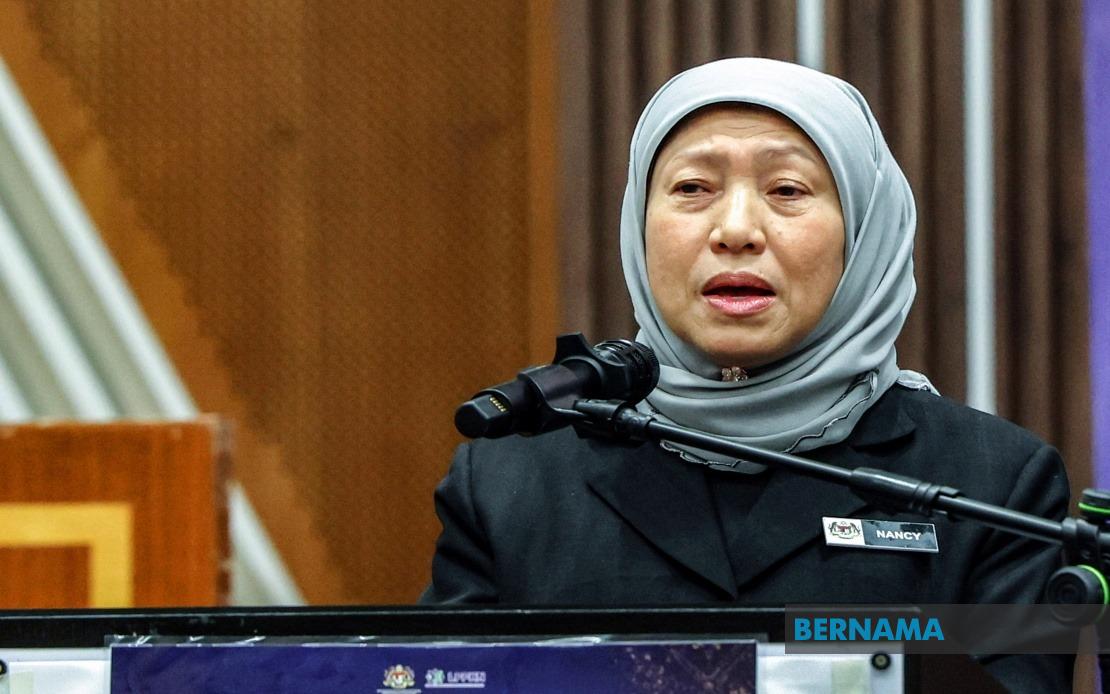
The Ministry of Women, Family and Community Development (KPWKM) is launching an ambitious 18-month research initiative designed to fundamentally reshape how Malaysia approaches men's empowerment and social development. Minister Datuk Seri Nancy Shukri announced the National Gentleman Study at a consultative forum in Putrajaya, positioning the research as a cornerstone of the government's broader National Gentleman Initiative. The programme represents a strategic shift in how policymakers conceptualise male contribution to society, moving beyond conventional metrics of economic success to encompass emotional maturity, psychological well-being and shared family responsibilities.
The timing of this study reflects growing recognition within Malaysia's policy establishment that men face distinct and increasingly severe social pressures that warrant dedicated attention and intervention. Rather than framing male empowerment as competition with gender equality initiatives, the government frames it as complementary, recognising that strengthened male emotional resilience and family engagement ultimately benefits household stability and national development. This perspective aligns with emerging international understanding that gender equality and men's well-being are interconnected rather than opposing objectives.
Minister Shukri articulated a philosophical framework for the initiative that distinguishes between domination and genuine leadership. She emphasised that a gentleman operates not through assertion of authority but through wisdom, responsibility-sharing and recognition of women as equal contributors to family and society. This definition deliberately reframes masculinity away from traditional hierarchical models, instead promoting emotional intelligence and collaborative partnership as defining characteristics of empowered manhood. The framing carries particular significance in a region where traditional gender roles remain influential across many communities.
The research will be conducted through a Public-Private-People Partnership approach, systematically gathering perspectives, experiences and recommendations from diverse stakeholders across government, business and community sectors. This consultative methodology ensures that findings will be grounded in practical reality rather than theoretical assumptions, and that programme development reflects genuine needs rather than institutional assumptions about male challenges. The forum itself serves as the initial collection point for stakeholder input before formal research commences.
Malaysia's men face mounting mental health pressures that demand urgent policy attention. Statistics presented by the minister reveal that male suicide rates operate at nearly three times the female rate, a disparity that suggests significant untreated psychological distress within the male population. The 2023 National Health and Morbidity Survey further documented that 4.6 per cent of Malaysians aged 16 and above live with depression, indicating widespread mental health challenges across the population that likely disproportionately affect men given their documented higher completion rates for suicide.
Economic pressures compound these psychological challenges and destabilise family structures across income levels. Household debt has reached 84.3 per cent of gross domestic product according to Bank Negara Malaysia, creating financial stress that cascades through family relationships and contributes to breakdown. This economic dimension underscores that men's empowerment cannot be addressed through purely psychological or social interventions without simultaneously addressing economic capacity and financial resilience.
Family stability metrics reveal concerning trends that demand policy response. Divorce cases increased 4.1 per cent to 60,457 cases in 2024, with financial stress, failure to meet maintenance obligations and prolonged domestic conflict identified as primary drivers of family dissolution. These statistics suggest that many men struggle with the economic and emotional demands of spousal support and parenting responsibilities, indicating a potential gap between societal expectations and actual capacity or preparation. The study will need to examine whether current social systems adequately prepare men for these responsibilities.
Domestic violence data presents a particularly urgent dimension requiring sensitive policy engagement. Royal Malaysia Police statistics documented that 95 per cent of domestic violence perpetrators recorded between January and December 2025 were men, indicating that addressing male behaviour patterns remains essential alongside supporting male well-being. The challenge for policymakers involves simultaneously acknowledging that most men do not commit violence while ensuring that programmes addressing male challenges do not inadvertently excuse or minimise violence. This tension will likely feature prominently in study recommendations.
The National Gentleman Study arrives amid broader Southeast Asian discussions about masculinity, family formation and social cohesion. Countries across the region grapple with similar pressures from economic transformation, changing family structures and evolving gender relationships. Malaysia's systematic research approach and explicit framing around emotional intelligence and partnership equality may provide insights valuable to neighbouring nations confronting comparable demographic and social shifts.
Implementation of the study's recommendations will test government capacity to develop integrated male-focused programming without fragmenting existing gender equality initiatives. Success requires messaging discipline to prevent reframing men's empowerment as competition with women's advancement, and policy design that treats male and female well-being as mutually reinforcing rather than opposing objectives. The eighteen-month timeline allows sufficient depth for rigorous research while maintaining momentum toward concrete programme development.
For Malaysian businesses and communities, the emerging men's empowerment framework carries practical implications for workplace policy, family support services and community programme design. Organisations may need to reconsider how they support employee mental health, family formation, parenting responsibilities and emotional development. The study may ultimately provide evidence base for corporate social responsibility programmes addressing male psychological resilience and family stability.
The research also potentially influences how Malaysia positions itself internationally regarding gender and development policy. By explicitly linking men's empowerment to gender equality and family stability rather than framing it as reaction to women's advancement, Malaysia demonstrates nuanced understanding of contemporary gender dynamics. This positioning may enhance the country's influence within ASEAN discussions on social policy and development priorities.

