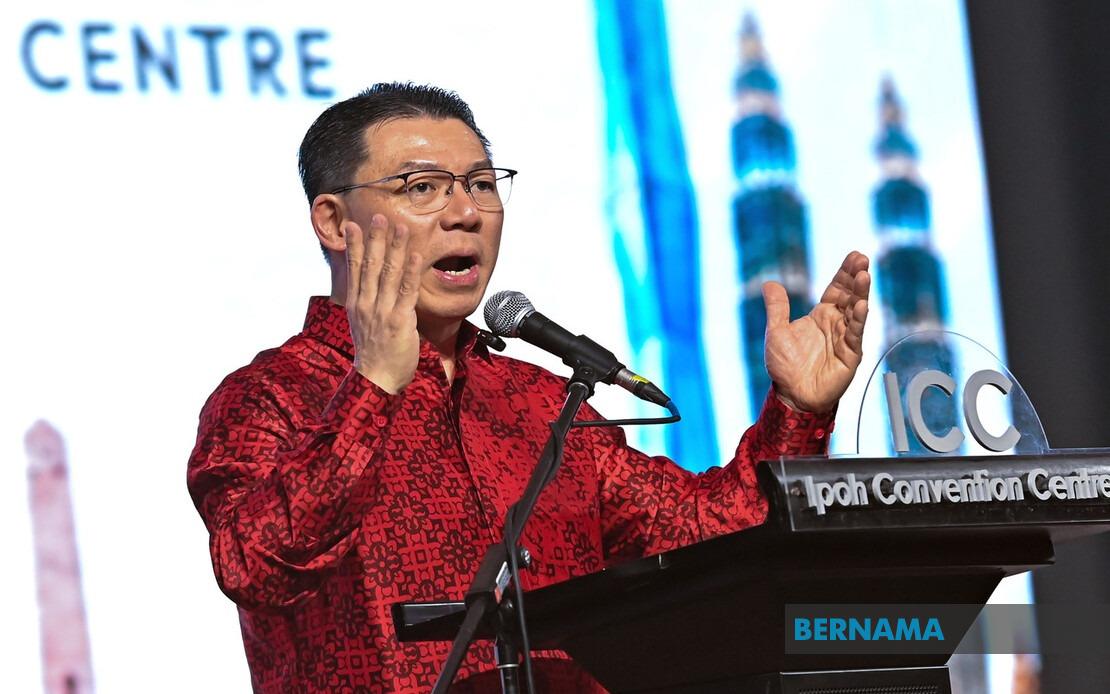
The Malaysian government has announced an ambitious new programme to transform public spaces across the country, marking a significant shift towards internationally benchmarked urban development. Unveiled during the 2026 National Landscape Day Celebration in Melaka, the MY Public Space initiative represents a strategic collaboration between the Ministry of Housing and Local Government (KPKT) and UN-Habitat, the United Nations agency focused on sustainable urban development. Housing Minister Nga Kor Ming outlined the initiative's ambitious scope, describing it as a comprehensive approach to ensuring that public spaces throughout Malaysia meet rigorous standards for quality, accessibility, safety, and community resilience.
The initiative builds on Malaysia's broader commitment to sustainable urban development and reflects the country's wider responsibilities within the global sustainability agenda. As the current President of the UN-Habitat Assembly, Malaysia has positioned itself as a leader in promoting inclusive, liveable cities and advancing the Sustainable Development Goals through enhanced international partnerships. The MY Public Space programme is specifically designed to translate this global commitment into tangible improvements in communities across the nation, ensuring that ordinary Malaysians benefit from public spaces that enhance their quality of life and support their well-being.
The rollout of MY Public Space will proceed through four carefully structured components that blend global best practices with local adaptation. The first involves establishing a national recognition framework that aligns with the Rosa Sinensis Award, creating a standardized benchmark for excellence in public space design and management. The second component focuses on piloting the MY Public Space Toolkit, a practical implementation framework that guides local authorities and communities in developing and maintaining public spaces. The third element concentrates on strengthening institutional capacity for public space management, while the fourth aims to embed the toolkit into national landscape development guidelines, ultimately establishing it as a binding national standard.
This strategic partnership with UN-Habitat is expected to elevate Malaysia's standing in global urban development discourse while simultaneously strengthening local governance capabilities. The collaboration provides access to international expertise and proven methodologies, which can be adapted to reflect Malaysia's unique cultural context, climate conditions, and urban development priorities. By positioning public space development as a critical component of national urban policy, the initiative signals the government's recognition that quality public spaces are not peripheral amenities but essential infrastructure for liveable, inclusive communities.
Complementing the MY Public Space initiative is the government's parallel commitment to expanding green space access through the MADANI Parks programme. The ministry has set an ambitious target of developing 1,000 MADANI Parks nationwide by 2035, ensuring that every community has access to quality recreational green spaces. Performance to date has exceeded initial expectations, with 217 MADANI Recreational Parks successfully completed during 2024 to 2025, surpassing the original target of 100 parks annually. Melaka has already benefited from this programme, with ten of these parks established in the state, and three additional parks planned for Ayer Keroh and Masjid Tanah during the current year.
The acceleration of the MADANI Parks programme demonstrates that Malaysia is approaching public space development as a comprehensive, multi-year transformation rather than a sporadic initiative. For residents in secondary and tertiary cities, the expansion of these parks addresses a critical gap in urban amenities, particularly for lower-income communities that often lack access to quality recreational facilities. The scale of ambition—1,000 parks over a decade—represents a substantial investment in grassroots urban livability, with implications for public health, community cohesion, and social equity across the nation.
Beyond immediate public benefits, the government recognises the economic potential embedded in landscape development and environmental services. The National Landscape Department is preparing a comprehensive Malaysian Landscape Industry Blueprint intended to position the sector as a significant contributor to the national economy. The blueprint addresses multiple dimensions of industry development, including workforce capacity building to ensure sufficient skilled professionals, coordination of industry standards to enhance quality and competitiveness, innovation in green technology to align with climate imperatives, and strengthening of the value chain to ensure local businesses capture greater economic value.
The economic dimensions of this initiative are substantial. Malaysia's landscape products currently generate export revenues of RM534.3 million annually, with destinations spanning Singapore, Japan, Australia, and the United States, reflecting competitive advantages in tropical horticulture and landscape design. The ministry targets landscape sector contributions to reach RM40 billion in annual GDP by 2035, a significant expansion that would require sustained investment, technological innovation, and market development. This trajectory would position landscape services among Malaysia's mid-tier economic sectors, comparable to established industries yet with considerable growth potential.
For regional observers, Malaysia's approach offers a noteworthy model of integrating international cooperation with domestic development priorities. The UN-Habitat partnership provides technical credibility and access to global networks, while the emphasis on local adaptation ensures that initiatives remain rooted in Malaysian realities. Other Southeast Asian nations grappling with rapid urbanization and green space deficits may find Malaysia's integrated approach—combining public space standards, parkland expansion, and industry development—instructive for their own urban policy frameworks.
The initiative also reflects evolving understanding of urban governance in Malaysia, where public space has moved from being treated as residual land to being recognized as essential infrastructure requiring strategic management. This conceptual shift has implications for how local authorities allocate resources, plan cities, and engage communities. By establishing national standards and frameworks, the government is effectively raising baseline expectations for what constitutes adequate public space provision, with potential to reduce disparities between well-resourced urban centres and developing peripheral areas.
Implementation challenges remain significant. Achieving 1,000 parks by 2035 requires sustained funding, coordination across multiple local authorities, and community engagement to ensure spaces meet actual needs. Embedding the MY Public Space Toolkit into national guidelines demands bureaucratic alignment and capacity building across administrative levels. The economic targets, while ambitious, depend on industry growth that exceeds historical trends. These challenges notwithstanding, the initiative represents a comprehensive policy response to longstanding gaps in Malaysia's urban development approach, with potential to deliver meaningful improvements in public amenity and community well-being across diverse Malaysian cities and towns.

