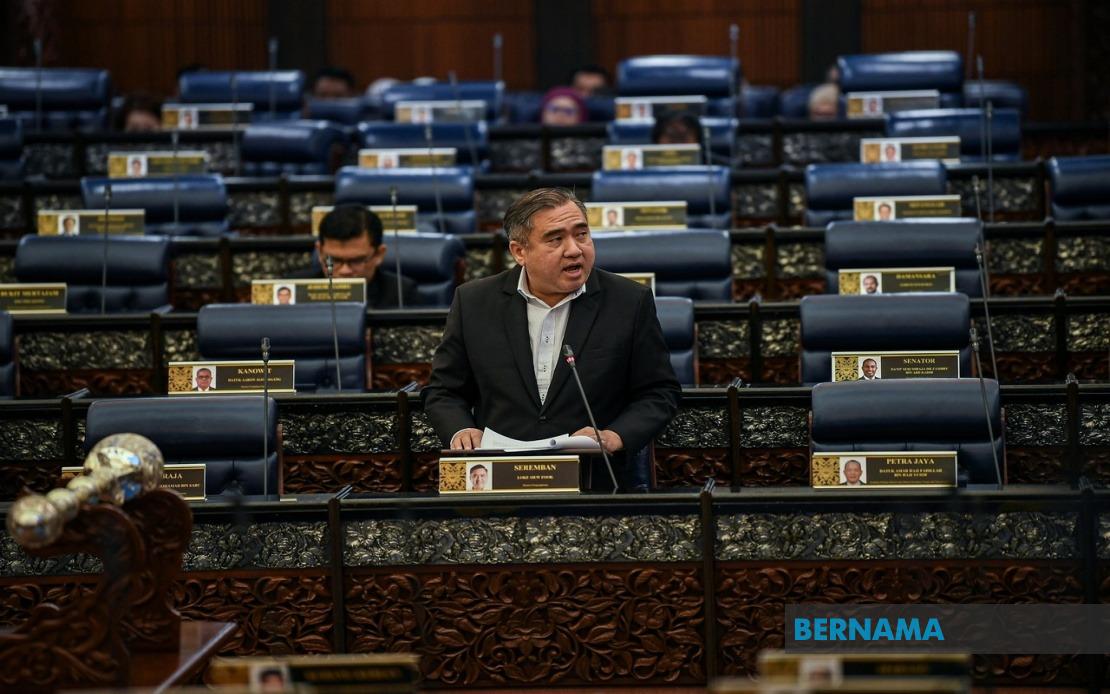
Malaysia is moving to crack down on illegal street racing with new legislation that will make the practice a standalone criminal offence rather than treating it as a subset of dangerous driving. Transport Minister Anthony Loke tabled the Road Transport (Amendment) Bill 2025 in parliament on June 23, introducing provisions designed to give law enforcement officers clearer authority to intervene before racing activities result in tragedy.
The centrepiece of the amendment is the proposed Section 42A, which specifically criminalises racing and speed testing on public roads. Under the new framework, first-time offenders would face fines ranging from RM2,000 to RM10,000, imprisonment for up to two years, or a combination of both penalties. The graduated penalty structure becomes significantly more severe for those convicted a second time or subsequently, with fines escalating to between RM5,000 and RM20,000 and potential imprisonment extending to five years.
The current legal landscape treats illegal racing as a manifestation of dangerous driving, leaving prosecutors to prove recklessness or negligence alongside the racing activity itself. This approach has created practical enforcement challenges, as authorities have traditionally needed to establish that racing resulted in tangible harm such as accidents, injuries, or fatalities before pursuing meaningful charges. The new amendment fundamentally shifts this paradigm by making the act of racing itself the offence, regardless of whether anyone is hurt.
This change carries substantial implications for both enforcement strategies and public safety. Under the proposed provision, if two or more motorcyclists engage in speed contests against one another on a public road, or if motorists use highways to illegally test vehicle performance, authorities can take immediate action without waiting for an incident to develop. This proactive approach addresses a long-standing gap in Malaysia's traffic enforcement toolkit and aligns with international best practices in jurisdictions that have similarly targeted street racing through dedicated offences.
Beyond the racing provision itself, the Bill introduces Section 110B to strengthen protection for enforcement officers and the integrity of enforcement operations. Individuals who obstruct, interfere with, physically assault, threaten, or follow enforcement officers' vehicles would face penalties ranging from RM10,000 to RM50,000 in fines and one to five years imprisonment, or both. Notably, this new offence is classified as arrestable, meaning officers can detain suspects without a warrant. The law also targets those who share information about enforcement operations to assist offenders in avoiding detection.
These provisions address a growing problem where organised illegal racing communities utilise social media and communication networks to alert participants about police operations, effectively undermining enforcement efforts. By criminalising this information-sharing behaviour, the amendment seeks to disrupt the coordination mechanisms that have allowed street racing to persist despite existing traffic laws.
The Bill further strengthens enforcement capacity through enhanced penalty structures across multiple traffic violations. Compound limits—the fixed penalties offered as alternatives to court proceedings—will be revised upward from the existing RM300 baseline to RM500 for selected offences. Importantly, the amendment clarifies that officers will not automatically impose the maximum compound amount; instead, the specific penalty applied would reflect the nature and severity of the violation, the offender's payment circumstances, and prescribed regulatory procedures.
The enhancement of compound authority is particularly relevant for overloading violations, non-compliant vehicles, and commercial vehicle infractions, which currently enjoy insufficient penalty structures relative to their safety consequences. Malaysian roads experience disproportionate accidents involving overloaded commercial vehicles, making stricter financial deterrents important for changing operator behaviour. The maximum compound rates are scheduled for implementation on January 1, 2029, providing businesses and enforcement agencies time to adjust to the new framework.
For Malaysian drivers and motorcyclists, these amendments signal a substantial shift in how authorities will treat street racing and related traffic violations. The specific criminalisation of racing means that enthusiasts and riders who participate in informal speed competitions could face serious criminal records affecting employment and mobility. Young motorists, who represent a significant proportion of illegal racing participants in Malaysia, should particularly note the mandatory jail sentences accompanying convictions.
Regionally, Malaysia's approach reflects broader Southeast Asian concerns about rising motorcycle-related fatalities and street racing culture. Countries including Thailand and Indonesia have grappled with similar enforcement challenges, and Malaysia's legislative response provides a model for addressing the gap between existing dangerous driving laws and the specific harms created by organised street racing. The standalone offence approach proves administratively cleaner and more effective than relying on derivative provisions.
The amendments also carry implications for motorcycle and automotive communities more broadly. While legal racing activities such as organised track events and sanctioned competitions fall outside these provisions, the law's language will require clear boundaries between legitimate motorsport and public road racing. Community education about these distinctions will become important as implementation approaches.
Transport Minister Loke's emphasis on preventive enforcement reflects changing attitudes toward traffic safety within Malaysia's policy framework. Rather than treating racing solely as a criminal consequence of accidents, the new approach recognises street racing as inherently dangerous behaviour warranting intervention regardless of immediate outcomes. This represents a meaningful evolution in road safety philosophy and establishes clearer expectations for public road use.
The Bill's passage through parliament would represent a significant strengthening of Malaysia's traffic safety regime, addressing both the racing phenomenon itself and the coordinated obstruction of enforcement efforts. For road users, the amendments underscore the government's commitment to making Malaysian highways safer through both preventive enforcement and enhanced penalties for traffic violations that historically escaped adequate legal consequences.