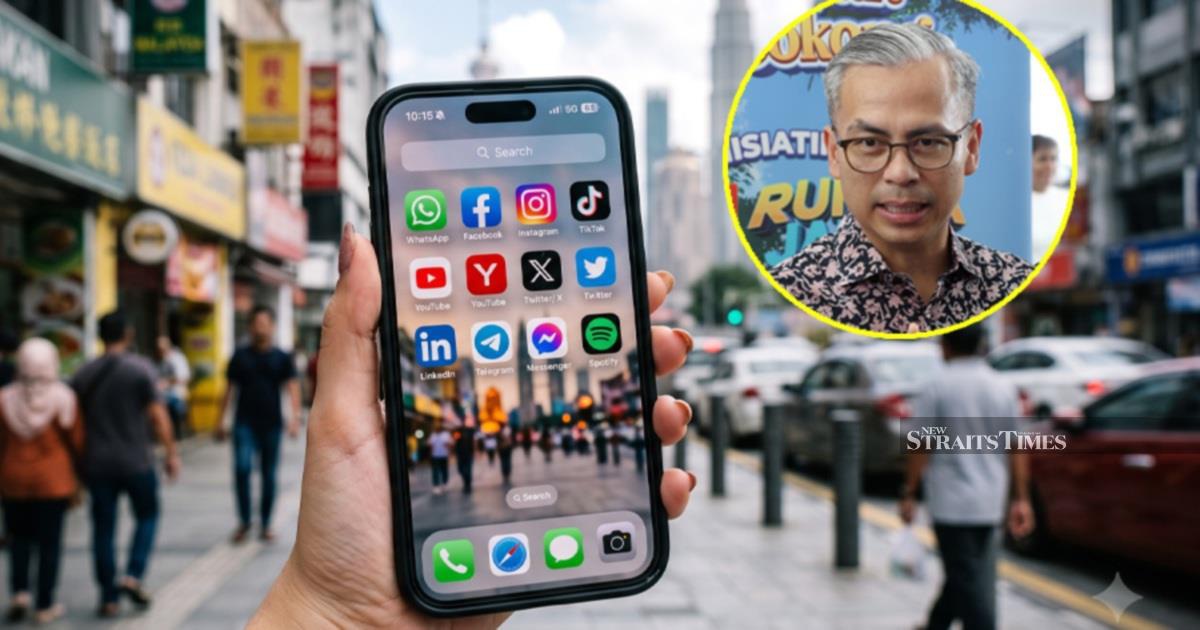
The Malaysian Communications Ministry has uncovered a troubling network of more than 1,800 fraudulent social media accounts operating across various platforms, a development that underscores the country's escalating struggle with digital misinformation. Communications Minister Datuk Seri Fahmi Fadzil disclosed the discovery, highlighting that a substantial portion of these accounts have been weaponised to amplify sensitive topics regarding race, religion, and royalty—collectively known as 3R issues—thereby heightening social tensions in the nation.
The identification of such a widespread network of inauthentic accounts represents a significant concern for Malaysian policymakers and social platforms alike. These fake accounts operate through coordinated mechanisms designed to manufacture artificial engagement, artificially inflate reach, and lend false credibility to inflammatory narratives. The deliberate targeting of 3R-related content reveals a strategic effort to exploit Malaysia's complex multicultural and multireligious fabric, where sensitivity around these matters runs deep across the population.
The 3R classification—encompassing race, religion, and royalty—has long held special significance in Malaysia's social and legal framework. These topics touch upon core aspects of Malaysian identity and governance, touching upon the constitutional monarchy, the special position of Islam in the federation, and the delicate ethnic balance that underpins the nation's social contract. The weaponisation of fake accounts to amplify divisive narratives around these issues poses a direct threat to the harmony and stability that Malaysia has worked to maintain since independence.
The scale of the operation—over 1,800 accounts—suggests a coordinated effort rather than isolated instances of account fraud. Such organised disinformation campaigns typically involve sophisticated tactics including the creation of false identities, automation of posting patterns, and strategic timing of content releases to maximise visibility and engagement. The use of multiple accounts to create an illusion of grassroots support allows bad actors to artificially amplify fringe narratives and manipulate public discourse in ways that traditional single-account activities could not achieve.
Understanding who operates these networks remains a critical investigative question. Such operations could originate from domestic actors seeking to sow discord for political or ideological purposes, foreign state actors attempting to destabilise the region, or organised groups motivated by various grievances. The sophistication required to orchestrate such a campaign across multiple platforms and sustained over time suggests actors with technical capability, resources, and strategic intent beyond casual trolling.
The implications for Malaysia's digital ecosystem are substantial. Social media platforms have become central to public discourse, political campaigns, and community mobilisation throughout the country. When these channels become saturated with inauthentic content designed to inflame rather than inform, public trust erodes and genuine dialogue becomes increasingly difficult. Malaysians attempting to form informed opinions on important matters find themselves wading through deliberately distorted information streams.
For the government and civil society, the discovery raises urgent questions about detection and prevention mechanisms. How these 1,800 accounts were identified—whether through algorithmic analysis, user reports, or platform cooperation—offers insights into the effectiveness of current oversight systems. However, the sheer number detected suggests that this represents only a portion of the broader problem, as sophisticated operators develop new techniques to evade detection and the illicit ecosystem continuously regenerates accounts that are taken down.
The challenge is particularly acute given the transnational nature of digital spaces. Social media platforms operate globally with content moderation policies designed for international audiences, yet sensitive local context around 3R matters may not be adequately understood by platform moderators in distant countries. This creates enforcement gaps where genuinely harmful content targeting Malaysian audiences may slip through standard filter systems. Local expertise and understanding become crucial in identifying content that manipulates cultural sensitivities specific to Malaysia's context.
Coordination between government agencies, social media companies, civil society organisations, and academic researchers will prove essential in addressing this challenge comprehensively. While detection of existing networks matters, prevention of future campaigns requires understanding their origins, funding mechanisms, and distribution networks. Digital forensics capabilities must be developed to trace these operations back to their sources and identify patterns that can help predict and block future attempts.
For ordinary Malaysians, the revelation serves as a reminder of the need for critical media literacy and healthy skepticism toward content encountered online. The discovery that organised networks systematically manufacture false consensus and amplify divisive narratives should prompt reflection on media consumption habits and the sources from which people derive information about sensitive public matters. Building resilience against disinformation requires both institutional action and individual responsibility.
The situation also highlights why Malaysia's existing laws around sedition and online content, while sometimes controversial, address genuine threats to social harmony. The deliberate exploitation of 3R sensitivities through coordinated inauthentic campaigns represents not merely political speech but strategic information warfare designed to undermine cohesion. The government's focus on rooting out these networks reflects recognition that digital attacks on communal harmony constitute a real threat to the nation's stability and multicultural foundations.
Moving forward, authorities must balance transparency about these threats with caution about inadvertently amplifying the very divisive messages that the fake accounts were designed to spread. Public awareness campaigns explaining how to identify inauthentic accounts and resist manipulation become important tools. Additionally, supporting research into the networks' origins and operational methods could provide insights that help other Southeast Asian democracies facing similar challenges, as coordinated disinformation campaigns often operate across borders.

