Universiti Malaysia Terengganu (UMT) has become the focal point for an unprecedented gathering of global expertise on microplastic pollution, hosting the 1st International Conference on Microplastics 2026 (ICM2026) in Putrajaya. The two-day conference convenes 126 participants spanning researchers, scientists, environmental policymakers, industrial representatives, and conservation activists from ten nations across the Asia-Pacific region and beyond, signalling the growing urgency with which the international scientific community views this emerging environmental crisis.
The diverse representation at ICM2026—with delegates arriving from Malaysia, Australia, Indonesia, China, Japan, Canada, India, South Korea, the Philippines, and Thailand—underscores how microplastic contamination has transcended geographical boundaries to become a genuinely transnational challenge requiring coordinated scientific and policy responses. For Malaysia particularly, the conference reflects both the country's heightened awareness of plastic pollution affecting its extensive coastlines and waterways, and its positioning as a regional leader capable of convening international scientific dialogue on critical environmental matters.
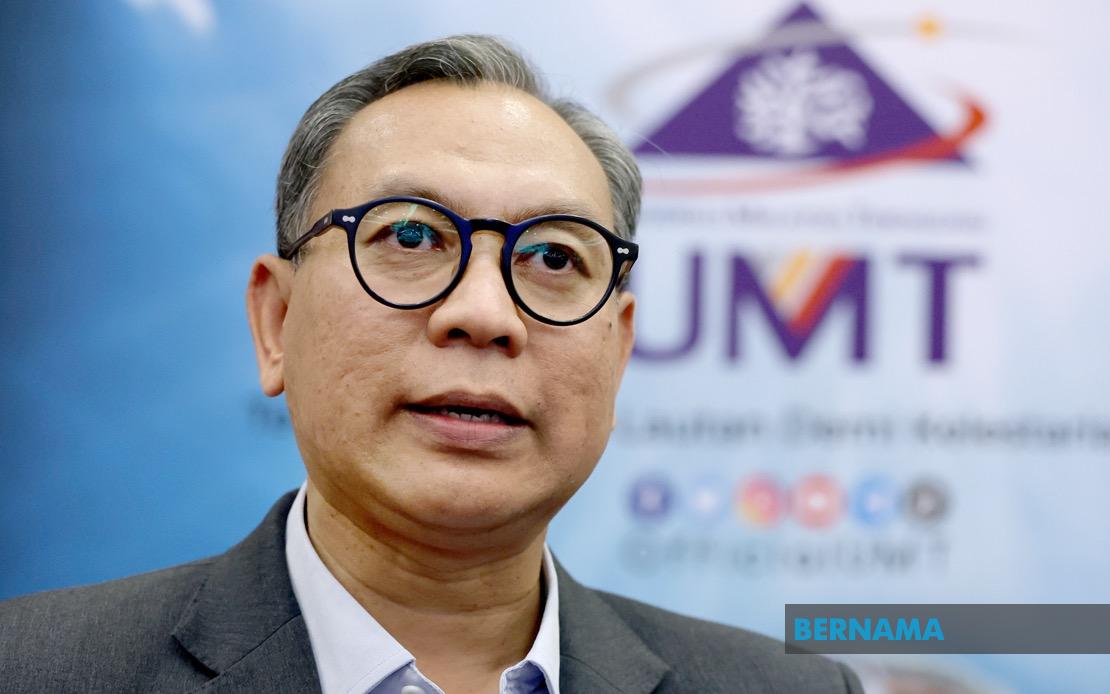
UMT Vice-Chancellor Prof Dr Mohd Zamri Ibrahim articulated the university's strategic interest in hosting this inaugural gathering, emphasising how the conference reinforces UMT's established credentials in marine, maritime, and aquatic sciences. The institution's commitment extends beyond conventional academic research toward generating the evidence base necessary for informed environmental policymaking and ecosystem protection. This bridging function—connecting academic discovery with regulatory frameworks and conservation practice—has become essential as governments worldwide grapple with plastic pollution's scale and complexity.
The conference mobilises UMT's internal research infrastructure, particularly its Microplastics Research Interest Group (MRIG) and its commercial consultancy arm, UMT Consultancy Services Sdn Bhd (UMTCS). This institutional arrangement demonstrates how Malaysian universities are increasingly positioning themselves as problem-solving entities capable of attracting international collaboration while generating commercially viable solutions to environmental challenges. The dual-track approach—combining fundamental research with applied consultancy—reflects broader global trends toward making academic institutions more responsive to real-world environmental crises.
Microplastic pollution has emerged as a defining environmental concern of the twenty-first century, fundamentally because of its ubiquitous presence across Earth's systems. These microscopic plastic fragments now contaminate ocean depths, river networks, soil sediments, and critically, the food chains that sustain both wildlife and human populations. The contamination pathway is particularly insidious because microplastics originate from multiple sources—degrading larger plastic waste, synthetic textiles, cosmetic products, and industrial processes—making prevention and remediation extraordinarily complicated compared to point-source pollutants.
Scientific evidence increasingly demonstrates that microplastic exposure poses measurable risks to biodiversity and ecosystem function at multiple levels. Organisms from zooplankton to fish ingest these particles, potentially suffering physical blockages, chemical toxicity from absorbed pollutants, and behavioural disruption. Beyond ecological impacts, emerging research suggests human health consequences through dietary intake and inhalation, though the full extent of these health impacts remains incompletely understood. This knowledge gap itself represents a major justification for conferences like ICM2026, where researchers can share findings and identify priority research directions.
The conference programme positions itself as a comprehensive knowledge exchange spanning the full spectrum of microplastic science and management. Presentations will cover cutting-edge research methodologies, environmental monitoring technologies that track microplastic prevalence and distribution, and investigations into ecological and human health consequences. Equally important are sessions addressing pollution control strategies, ranging from source reduction to remediation technologies, alongside discussions of regulatory frameworks that different nations are implementing or considering. This breadth reflects recognition that solving microplastic pollution requires simultaneous progress across research, technology, policy, and behavioural domains.
For Malaysia and the broader Southeast Asian region, ICM2026 carries particular relevance given the region's economic dependence on marine resources and its vulnerability to plastic pollution. Southeast Asian nations collectively generate enormous quantities of plastic waste, much of which enters aquatic environments, while simultaneously relying heavily on fisheries and aquaculture. The conference offers Malaysian and regional policymakers exposure to international best practices in regulatory design and technological solutions, potentially accelerating the development of regionally appropriate responses to microplastic challenges.
Prof Dr Mohd Zamri articulated ambitious expectations for ICM2026's longer-term impacts, anticipating that the conference would catalyse durable international research networks and collaborative publication pipelines. Beyond these conventional academic metrics, he highlighted the value of enhanced researcher and student mobility—the exchange of scientific personnel across institutions and nations that accelerates knowledge transfer and builds human capital in microplastic science. These interpersonal and institutional connections often prove more consequential than conference proceedings themselves in driving sustained progress on complex environmental problems.
The strategic inclusion of industrial players alongside academic researchers and policymakers at ICM2026 reflects evolving understanding that addressing microplastic pollution requires engagement with corporate actors throughout supply chains, from materials manufacturers to consumer goods producers to waste management companies. Industrial participation signals recognition that technological innovation and market-based solutions will necessarily complement regulatory approaches. Malaysian companies operating in petrochemicals, manufacturing, and waste management stand to benefit from exposure to emerging technologies and practices developed internationally.
ICM2026 arrives at a moment of heightened governmental attention to plastic pollution globally. Multiple nations have announced targets for plastic waste reduction, and several countries are implementing or considering restrictions on single-use plastics and microbeads in cosmetics. The conference provides a venue for harmonising scientific understanding across these varied policy contexts, potentially facilitating coordination among nations pursuing different regulatory pathways. For Malaysia, which has articulated commitments to environmental sustainability while maintaining manufacturing competitiveness, this international scientific dialogue offers valuable input into policy formulation.
The conference's two-day structure, while compact, reflects the intensive nature of modern scientific gatherings where presentations, networking, and collaborative planning occur in highly concentrated formats. Participants will depart with refined understandings of microplastic science's current frontiers, awareness of parallel research efforts internationally, and ideally, commitments to collaborative projects transcending institutional and national boundaries. These outcomes ultimately translate into accelerated progress toward understanding and mitigating microplastic pollution's ecological and human health consequences across the Asia-Pacific region and globally.

