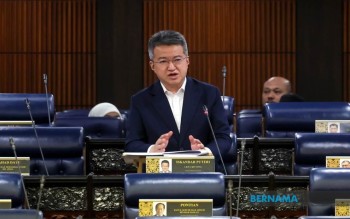
Malaysia's government has opted to maintain its current fiscal framework for Budget 2027 despite significant budgetary pressures from volatile global energy markets, Deputy Finance Minister Liew Chin Tong indicated during parliamentary proceedings on July 15. Speaking in the Dewan Rakyat, Liew stated that the administration's mid-year fiscal performance does not warrant a premature overhaul of projections ahead of the budget's scheduled presentation in October, though he acknowledged the government would remain vigilant in monitoring economic conditions until that formal announcement.
The most immediate fiscal strain derives from elevated subsidy commitments necessitated by fluctuating crude oil prices. Liew disclosed that higher petroleum costs have compelled the government to disburse approximately RM40 billion in additional subsidy expenditure during 2026. This figure underscores the persistent challenge Malaysia faces in cushioning domestic consumers and businesses from international energy market shocks—a particularly acute concern given recent geopolitical tensions across West Asia that have historically contributed to crude price instability and supply chain uncertainty.
However, the situation presents a counterbalancing mechanism that provides some fiscal relief. Liew explained that elevated global oil prices simultaneously bolster Malaysia's own petroleum-related revenue streams. The government's modelling suggests that each one-dollar increase in world crude oil prices per barrel translates into approximately RM300 million in additional petroleum-derived government income. This relationship demonstrates Malaysia's continued dependence on hydrocarbon sectors for budgetary stability—a structural reality that shapes medium-term fiscal planning even as the nation pursues economic diversification.
Beyond direct petroleum revenues, the government can anticipate supplementary income through Petronas dividend contributions, though Liew's remarks treated these as a separate accounting line. The combined effect of higher petroleum revenues and Petronas distributions creates a partial offsetting mechanism against the enlarged subsidy burden, enabling policymakers to argue that fiscal deterioration, while real, remains containable within current budget parameters. This arithmetic provides the technical foundation for the government's decision to defer comprehensive fiscal recalibration until October's formal budget presentation.
The administration has deployed multiple policy levers to manage expenditure pressures without requiring immediate fiscal restructuring. Liew highlighted the government's implementation of what he characterized as immediate, comprehensive, and structured intervention initiatives designed to prevent overall spending from spiralling while preserving the nation's fiscal health. These measures encompass targeted subsidy mechanisms intended to concentrate support toward vulnerable populations rather than broad-based universal handouts, reflecting a shift toward more fiscally efficient welfare architecture.
Revenue management and tax compliance have emerged as parallel priorities within the government's toolkit. Officials are intensifying monitoring of revenue collection performance to ensure sufficient income to meet operational expenditure across government agencies and programmes. Liew noted that this enhanced scrutiny extends across multiple revenue streams, recognising that petroleum-based income alone cannot sustain Malaysia's fiscal position indefinitely, particularly amid global economic volatility. Strengthened tax compliance and improved collection efficiency thus represent structural adjustments meant to enhance budgetary predictability beyond the current commodity price cycle.
The geopolitical dimension adds urgency to fiscal vigilance. West Asian tensions, referenced multiple times in Liew's parliamentary statement, represent a source of genuine uncertainty affecting energy markets and potentially broader economic performance. In response, the government has established crisis management coordination through the National Economic Action Council's task force, which conducts weekly engagement sessions to monitor developments and ensure continuity of energy supplies and access to essential goods. This institutional architecture signals recognition that fiscal management in 2026 and beyond cannot proceed on purely technical economic grounds but must account for external shocks emanating from regional instability.
The government's medium-term fiscal consolidation strategy rests on four interconnected pillars that Liew articulated as foundational to sustaining Malaysia's fiscal position through projected global uncertainties. Targeted subsidy programmes represent the first element, shifting support away from indiscriminate fuel and food price controls toward means-tested assistance for disadvantaged households and small businesses. Expenditure restructuring constitutes the second pillar, involving systematic reordering of spending priorities to align with development objectives while eliminating inefficiencies. Enhanced operational efficiency across government agencies forms the third component, with Liew emphasising continued efforts to accomplish more with existing resource allocations. Revenue enhancement through improved collection and tax compliance comprises the fourth dimension, addressing the income side of the budgetary equation.
These initiatives collectively aim to create fiscal space without resorting to new taxation measures that might provoke political resistance or dampen economic activity. The absence of announced new taxes despite budgetary pressures suggests the government believes existing revenue sources, optimised through better collection and compliance, combined with expenditure discipline, can accommodate current subsidy obligations. This positioning carries significance for Malaysian businesses and investors seeking policy certainty, as it implies the administration intends to navigate present fiscal challenges through administrative adjustments rather than structural tax increases.
The October presentation of Budget 2027 will provide the formal stage for comprehensive fiscal reassessment incorporating first-half 2026 performance data and updated projections for economic indicators throughout the remainder of the year. By deferring detailed recalibration until then, Liew's statement indicates the government prefers to accumulate fuller information about revenue performance, subsidy requirements, and global conditions before committing to specific numerical targets for the 2027 fiscal year. This approach allows policymakers flexibility to respond to developments while avoiding the perception of reactive, crisis-driven budgeting.
For Malaysian stakeholders, particularly businesses dependent on stable government spending or vulnerable to taxation changes, the government's confidence in maintaining fiscal consolidation trajectories without immediate structural reforms provides interim reassurance. However, the underlying dependence on petroleum revenues and subsidy management suggests that longer-term fiscal sustainability ultimately hinges on broader economic transformation and reduced reliance on commodity-derived income streams. The government's emphasis on revenue collection and tax compliance signals awareness of this challenge, even as it defers comprehensive responses until the formal budget announcement.

