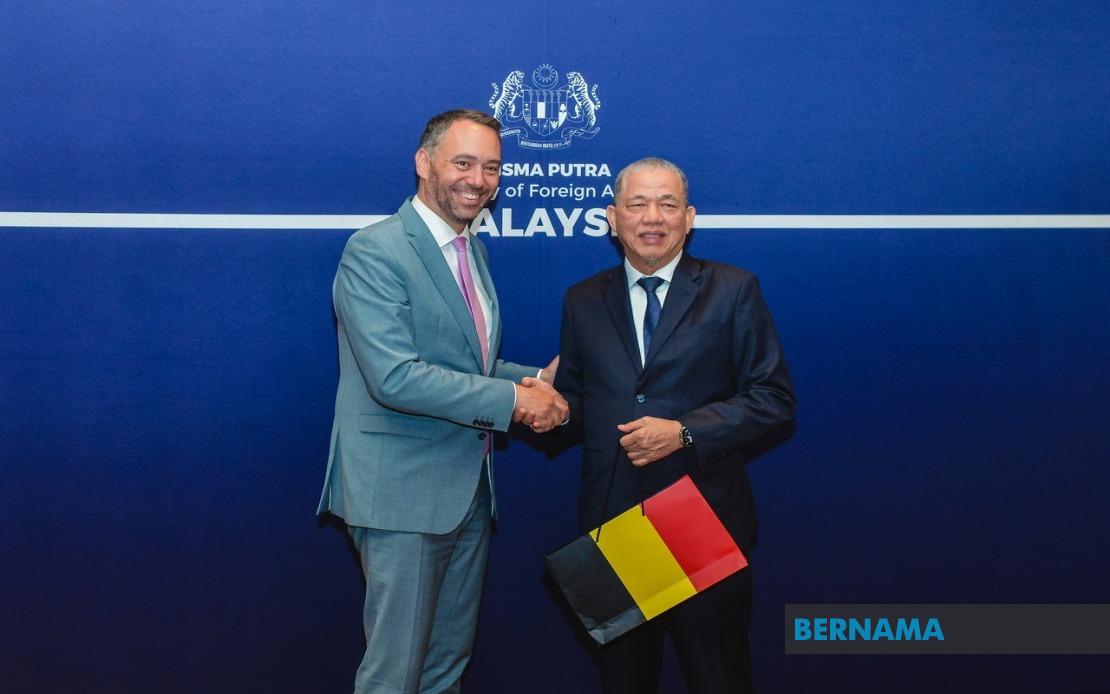
Deputy Prime Minister Datuk Seri Fadillah Yusof has offered firm reassurances to Belgium that maritime passage through the South China Sea will remain unobstructed, underscoring Malaysia's position as a guarantor of regional stability and free navigation. The commitment emerged during formal discussions between Fadillah and Belgium's Deputy Prime Minister Maxime Prévot, who is on his inaugural official visit to Malaysia since taking office in February 2025. The timing of the assurance reflects growing international anxieties about potential disruptions to global shipping corridors, particularly following recent blockade incidents elsewhere in strategically vital waterways.
The South China Sea has emerged as a focal point for international concern, with maritime nations closely monitoring developments that could replicate the kind of severe shipping disruptions witnessed in the Strait of Hormuz. Belgium, as a European trading nation heavily dependent on unimpeded global commerce, has legitimate strategic interests in understanding how regional powers intend to manage security challenges in one of the world's most economically significant waterways. Fadillah's explicit guarantee that "there will be no blockades whatsoever" speaks directly to this concern, positioning Malaysia as a stabilizing force committed to preserving the rules-based international maritime order.
Fadillah, who also serves as Minister of Energy Transition and Water Transformation, framed Malaysia's commitment within the broader ASEAN consensus on regional management. The emphasis on ASEAN-wide principles reflects how Southeast Asian nations have collectively positioned themselves as custodians of the regional security architecture, seeking to maintain their non-aligned status while managing great power competition. This approach has become increasingly important as external powers express concern about potential disruptions to commerce passing through waters that handle trillions of dollars in annual trade.
Beyond security matters, the bilateral engagement revealed Belgium's interest in deepening practical cooperation with Malaysia across multiple domains. Prévot specifically sought Malaysia's assessment of broader regional security dynamics, suggesting Belgium views the country as a reliable interlocutor capable of providing informed perspectives on Southeast Asian geopolitical trends. This recognition reflects Malaysia's position as a significant ASEAN economy and a nation with considerable diplomatic experience in managing regional relationships.
Trade and commercial ties featured prominently in discussions, with Belgium expressing renewed commitment to expanding bilateral economic engagement. The Belgian delegation indicated willingness to revisit travel advisories affecting Sabah, signaling openness to recalibrating risk assessments that may have constrained tourism and business travel between the two nations. Such practical adjustments, though seemingly routine, carry symbolic weight in demonstrating Belgium's confidence in Malaysia as a secure destination for European investors and travelers.
A particularly noteworthy development involved Malaysia's halal ecosystem, which Belgium has proposed studying as a potential model for broader European adoption. This initiative reflects the growing recognition among European policymakers of Malaysia's expertise in developing comprehensive halal certification and standards frameworks. As Muslim populations expand across Europe and demand for halal products increases, Belgium's interest in exploring Malaysian standards represents a valuable opportunity for Malaysia to position itself as a thought leader in an emerging commercial niche while strengthening bilateral ties through knowledge transfer.
Energy transition emerged as a strategic cooperation frontier, with Belgian expertise in advanced materials and innovative technologies identified as complementary to Malaysia's development priorities. This focus aligns with both nations' climate commitments and Malaysia's ambitious energy transformation agenda. By encouraging greater Belgian investment in Malaysia's clean energy and technology sectors, both sides recognize opportunities to accelerate sustainable development while creating mutually beneficial commercial relationships.
The engagement also underscored the people-to-people dimension of bilateral relations, with both delegations committed to strengthening cultural and social connections between Malaysian and Belgian communities. Such interpersonal linkages, often overlooked in discussions of formal diplomacy, provide the foundation for sustained cooperation and mutual understanding across differing cultural contexts.
Foreign Ministry Secretary-General Tan Sri Amran Mohamed Zin and Belgium's Ambassador to Malaysia Peter Van Acker's presence at the formal luncheon reflected the high-level attention accorded to Prévot's visit. The inclusion of senior diplomatic personnel indicated that both governments view this engagement as establishing important precedents for future cooperation rather than treating it as a routine courtesy call.
For Malaysian readers, Fadillah's reassurances carry significance extending beyond bilateral relations. Malaysia's explicit commitment to maintaining open sea lanes reflects the country's own vital dependence on stable maritime routes for its substantial trading economy. By guaranteeing access and opposing blockades, Malaysia reinforces its credibility as a responsible regional actor invested in preserving the international order upon which its prosperity depends.
The broader context of Belgium's visit involves Europe's growing engagement with Southeast Asia as part of efforts to diversify partnerships and reduce dependency on traditional economic relationships. Malaysia's strategic location, economic dynamism, and influential position within ASEAN make it an attractive partner for European nations seeking to strengthen ties with the region. Prévot's visit signals Belgium's intention to move beyond transactional relationships toward deeper, multifaceted partnerships spanning security, commerce, technology, and cultural exchange.
Looking forward, the agreements and assurances articulated during this visit may serve as blueprints for expanded Malaysia-Belgium cooperation. The halal standards initiative, energy transition partnerships, and security dialogue could all yield concrete outcomes in coming months, demonstrating that diplomatic engagement generates tangible benefits for both societies. For Malaysia, strengthening ties with Belgium also strengthens its connections with the European Union more broadly, diversifying its international partnerships and enhancing its influence in global forums.

