Malaysia's escalating scam epidemic has emerged as one of the nation's most pressing security challenges, with over 66,000 reported online fraud cases causing approximately RM2.97 billion in losses over the past year. The crisis reflects a fundamental shift in how organised crime operates, moving beyond simple deception into sophisticated schemes powered by artificial intelligence and deep psychological manipulation that threaten not only personal finances but the broader fabric of social trust and economic confidence.
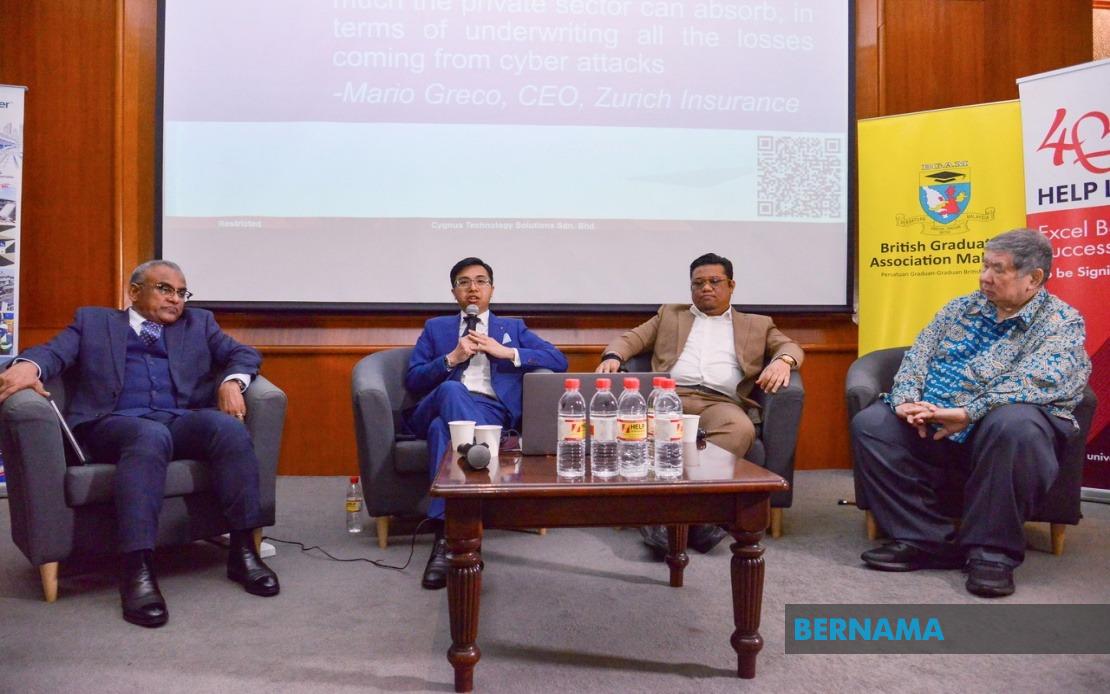
According to crime prevention experts, the scam landscape has fundamentally transformed from occasional incidents affecting isolated victims into a structured criminal enterprise that systematically targets individuals, families and commercial enterprises. Speaking at the BGAM Lecture Series on Scam Awareness held at HELP University, Malaysia Crime Prevention Foundation executive member Datuk Kamarudin Md Ali described the scale of the challenge as demanding nothing less than a nationwide mobilisation of citizen awareness and preventive action. The evolution has been dramatic and troubling, with perpetrators deploying increasingly refined tactics that exploit the digital vulnerabilities of both institutions and ordinary people.
The sophistication of contemporary scam operations extends far beyond basic phishing or unsolicited calls. Southeast Asia has become a global centre for commercial crime, with regional losses in 2025 projected to range between USD88 billion and USD114 billion, according to Datuk Seri Ramli Mohamed Yoosuf, former director of Bukit Aman's Commercial Crime Investigation Department. Large-scale scam compounds operating across Myanmar, Cambodia, Laos and the Philippines generate an estimated USD40 billion annually, fuelled by AI-generated deepfakes, cryptocurrency laundering networks and trafficked workers recruited from more than eighty countries. These syndicates operate with frightening efficiency, coordinating across borders and leveraging technological capabilities that often outpace the investigative tools available to law enforcement.
Artificial intelligence has emerged as a game-changing technology that amplifies scammers' capacity to deceive at scale. The creation of realistic deepfakes—synthetic audio and video content designed to impersonate trusted individuals—represents a particular threat because it bypasses the traditional scepticism people apply to written or spoken requests for money. When victims see and hear what appears to be a family member, government official or business associate, the psychological barriers that once protected them crumble. The technology eliminates the friction that previously allowed people time to verify requests through alternative channels.
Criminal psychologists emphasise that the technological dimension is only part of the threat. According to Prof Datuk Seri Dr Akhbar Satar, director of HELP University's Institute of Criminology and Criminal Justice, scammers succeed primarily by hacking human psychology rather than computer systems. The distinction is critical: technology provides the tools, but human vulnerabilities provide the entry points. Whether exploiting urgency, appeals to authority, manufactured trust or the fear of missing financial opportunities, modern scams are engineered around documented principles of social engineering and cognitive biases that affect even sophisticated, educated individuals.
Malaysia has initiated legislative and institutional responses to combat the expanding threat. The Cybersecurity Act 2024 represents a significant policy development, establishing clearer legal frameworks for prosecuting cyber-enabled crimes and protecting digital infrastructure. Additionally, the government has enhanced compliance with Financial Action Task Force standards aimed at disrupting money laundering networks that scammers depend upon to convert stolen funds into usable assets. The National Scam Response Centre has been established to coordinate inter-agency efforts, recognising that effective counter-scam operations require seamless collaboration between police, financial institutions, telecommunications providers and regulatory bodies.
Despite these institutional measures, experts warn that enforcement alone cannot resolve the crisis. Tan Sri Dr Syed Hamid Albar, Asia e University chancellor and former Home Minister who was also the inaugural chairman of the Malaysia Crime Prevention Foundation, stressed that combating scams demands a comprehensive societal response extending far beyond police operations or legal penalties. Public education emerges as perhaps the most cost-effective preventive tool available, since an informed citizenry becomes exponentially more resistant to manipulation. Awareness campaigns must teach people not just what scams look like, but how to think critically about unsolicited requests, verify claims through independent channels, and recognise the psychological tactics deployed against them.
The role of educational institutions in building national resilience against fraud cannot be overstated. Universities bear particular responsibility for developing graduates who understand both the technical realities of digital security and the ethical dimensions of operating within trustworthy systems. As crime increasingly intersects with technology, professionals in cybersecurity, finance, law enforcement and policy must receive training that goes beyond technical competence to encompass integrity and ethical reasoning. The principle articulated by Professor Akhbar Satar captures this idea succinctly: when integrity ends, crime begins, whether in the form of corruption or fraud.
The scope of the challenge demands coordination across multiple sectors that traditionally operate in isolation. The BGAM Lecture Series brought together government officials, law enforcement specialists, cybersecurity professionals, technology providers, academics and community representatives to address the crisis collaboratively. This multistakeholder approach recognises that scammers exploit weaknesses in the system as a whole—they target vulnerable individuals, launder money through financial networks, use telecommunications infrastructure for phishing, and depend on gaps in inter-agency communication. Closing these gaps requires sustained coordination and information sharing between institutions with sometimes competing priorities.
For Malaysian citizens and businesses, the practical implications are substantial. Personal vigilance regarding unsolicited contact, scepticism toward requests for payment or sensitive information, and verification through independent channels remain foundational defences. Organisations must implement stronger authentication protocols, employee training programs and reporting mechanisms. Financial institutions should scrutinise unusual transaction patterns and large transfers, particularly those destined for high-risk jurisdictions or cryptocurrency platforms. Telecommunications companies bear responsibility for disrupting the use of their networks in support of fraud schemes.
The regional dimension of the scam crisis underscores the limitations of purely national responses. Scam syndicates operate across borders with apparent impunity, exploiting different legal frameworks, extradition difficulties and varying levels of digital enforcement capacity. Closer cooperation among Southeast Asian nations on intelligence sharing, coordinated investigations and harmonised legal standards could significantly increase the risks and costs facing transnational scam operations. Malaysia's experience and institutional innovations could serve as models for regional collaboration.
Looking forward, the trajectory of scam technology will likely accelerate rather than stabilise. As artificial intelligence becomes more capable, the creation of convincing deepfakes will become faster and cheaper, expanding the pool of potential perpetrators beyond organised syndicates to opportunistic criminals. Quantum computing, should it advance as expected, could compromise current encryption standards, potentially exposing vast databases of personal information to exploitation. These developments demand that Malaysia's counter-scam strategy remain dynamic, with continuous investment in technological innovation, law enforcement training and public awareness.
Ultimately, building a scam-resilient Malaysia requires viewing fraud prevention as a shared national project rather than a narrow law enforcement issue. Every informed citizen, every institution, every technology provider and every government agency becomes part of the solution. The stakes extend beyond individual financial losses to encompassing public trust in digital systems, confidence in financial institutions and the foundational integrity that enables any functioning society. The scale of the current threat—over RM2.97 billion in annual losses—demonstrates that half-measures and siloed approaches have already proven insufficient. Malaysia stands at a critical juncture where sustained, coordinated, whole-of-society action remains the only realistic path toward reducing the scam epidemic.

