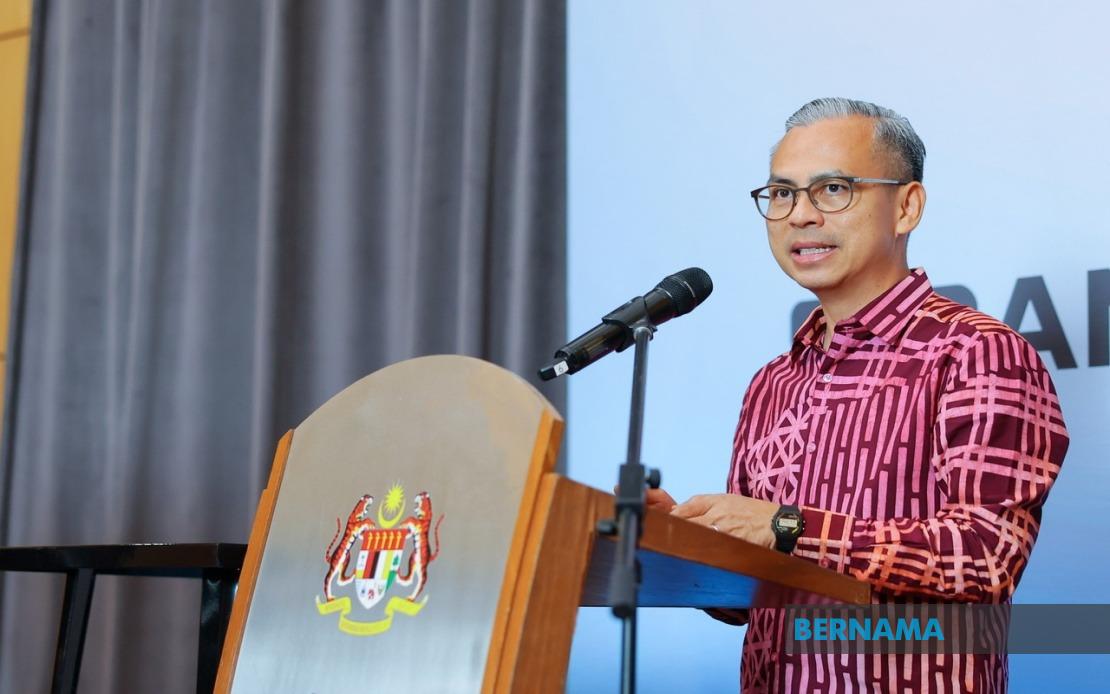
Malaysia's government has moved decisively to address the mounting threat posed by online fraud, establishing a specialized cross-agency committee designed to streamline response efforts across multiple sectors. Communications Minister Datuk Fahmi Fadzil announced the formation of this task force on July 2, revealing that the Cabinet had approved the committee's creation during a strategic retreat held on June 18. The decision reflects growing concern within government circles about the scale and sophistication of digital scams plaguing Malaysian consumers and businesses.
The committee represents a significant structural shift in how authorities approach cybercrime enforcement. Rather than operating in isolation, the participating entities—spanning various government ministries, law enforcement agencies, and regulatory bodies—will coordinate their investigations, share intelligence, and align their legal strategies. This collaborative framework acknowledges that online fraud inherently crosses jurisdictional and sectoral boundaries, requiring responses that match the borderless nature of digital crimes. The inaugural meeting is scheduled to commence shortly, marking the beginning of what officials hope will be a more agile and comprehensive approach to disrupting scam networks.
A particularly noteworthy aspect of this initiative is the unprecedented inclusion of private sector stakeholders. For the first time, Malaysia's banking sector, telecommunications industry, and major digital platforms—notably social media companies—will participate directly in official government anti-scam efforts. This public-private partnership model acknowledges that financial institutions process the transactions through which fraud victims lose money, telcos provide the communication channels exploited by scammers, and social media platforms serve as primary hunting grounds where criminals target potential victims. Their participation should enable faster detection of fraudulent patterns, real-time information sharing about emerging threats, and coordinated takedowns of fraudulent accounts and payment channels.
Fahmi emphasized that the committee's overarching mission encompasses three critical dimensions: enforcement, legislation, and investigation. The enforcement pillar focuses on strengthening capabilities to identify, apprehend, and prosecute those conducting scams. The legislative component will examine whether existing laws adequately address evolving fraud tactics or whether new statutes are required to close loopholes. The investigative aspect aims to enhance technical capacity for tracing digital transactions, reconstructing criminal networks, and gathering evidence that withstands judicial scrutiny. Together, these three elements form an integrated response rather than disconnected departmental activities.
The committee's stated objective extends beyond merely punishing scammers after the fact; officials explicitly framed it as a proactive measure designed to enhance safety for ordinary Malaysians navigating digital spaces. This preventive orientation suggests that the committee will also focus on victim education, fraud awareness campaigns, and identifying systemic vulnerabilities within digital platforms that criminals systematically exploit. By shifting resources toward early intervention and public protection, the government signals recognition that reactive prosecution alone cannot contain a problem growing faster than enforcement capacity can address.
Fahmi acknowledged the delicate balance between transparency and operational security, explaining that the government deliberately withholds disclosure of specific strategies and tactics. Revealing enforcement approaches, surveillance methodologies, or investigative techniques would provide scammers with roadmaps for evasion, potentially rendering expensive government initiatives ineffective before they gain traction. This restraint, while frustrating for those seeking detailed assurances, reflects genuine counterintelligence thinking about asymmetric threats where criminal networks possess significant technical sophistication.
The cross-agency model draws on established precedent within Malaysian government. Officials referenced the successful application of similar coordinated approaches to combating child sexual exploitation crimes, where multiple agencies, law enforcement, and sometimes international partners worked in tandem. That precedent delivered demonstrable results through specialized operations, suggesting that the framework has proven operationally sound. Extending this model to online fraud suggests confidence that institutional capacity exists to manage complex, multi-stakeholder initiatives when sufficient political priority attaches to the objective.
The establishment of this committee arrives against a backdrop of escalating online fraud affecting millions across Southeast Asia. Malaysian consumers have increasingly fallen victim to investment scams, job recruitment fraud, e-commerce deceptions, and romance schemes facilitated through digital channels. The economic losses translate directly into reduced consumer confidence in digital commerce, dampening e-commerce growth and potentially slowing Malaysia's digital economy expansion. Beyond financial costs, victims often experience psychological trauma and heightened vulnerability to future exploitation, creating ripple effects throughout communities.
For regional observers, Malaysia's institutional response offers insights into how middle-income countries are adapting governance structures to address transnational digital crimes. Unlike fully developed economies with decades of cyber-law evolution, or developing nations with nascent regulatory frameworks, Malaysia occupies a position where substantial digital adoption has outpaced legal and institutional infrastructure. The committee approach suggests recognition that catch-up requires mobilizing existing institutions more efficiently rather than creating entirely new bureaucratic layers—a pragmatic acknowledgment of resource constraints.
The involvement of telecommunications and social media companies carries particular significance given Malaysia's regulatory environment. Unlike some jurisdictions where tech companies fiercely resist government collaboration, Malaysian platforms appear willing to engage in formal institutional arrangements. This cooperation should theoretically enable rapid removal of fraudulent accounts, blocking of scam-related payment flows, and provision of metadata to investigators. However, the committee's actual effectiveness will depend on whether platforms prioritize cooperation equally with enforcement activities, or whether competing commercial interests eventually limit information sharing.
Looking forward, the committee's impact will be measured not merely by arrests or prosecutions, but by whether fraud victimization rates decline and consumer confidence in digital transactions recovers. Early wins capturing high-profile scam networks operating at scale could generate momentum and demonstrate government competence, potentially justifying further resource allocation. Conversely, if fraud continues accelerating despite the committee's existence, public perception of government capacity to address digital threats could deteriorate, undermining confidence in other digital governance initiatives.
The timing of this initiative also matters for Malaysia's broader digital economy ambitions. The government has positioned itself as promoting digital transformation and e-commerce adoption as economic development strategies. However, uncontrolled fraud undermines these objectives by discouraging consumer participation in digital commerce and eroding trust in online platforms. By visibly addressing fraud through coordinated institutional action, policymakers signal commitment to creating conditions where digital commerce can flourish safely—a necessary precondition for achieving ambitious digital economy targets.

