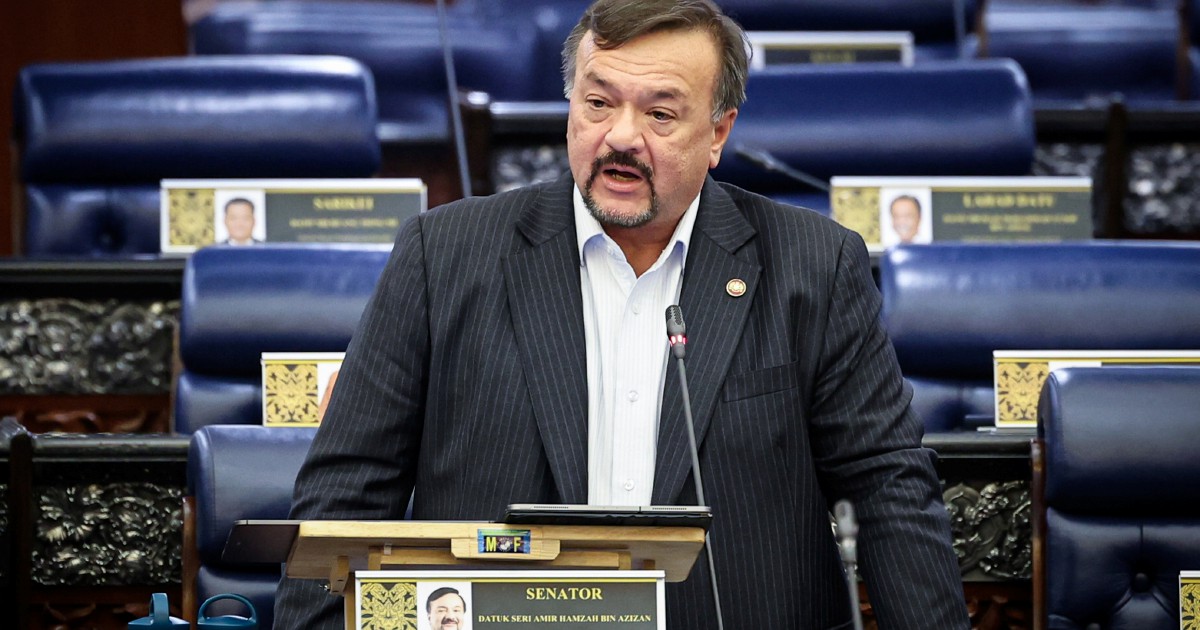
The Malaysian government is weighing the establishment of a multi-agency task force designed to orchestrate investigations into alleged irregularities within Tabung Haji, the country's pilgrimage savings management body, Finance Minister II Datuk Seri Amir Hamzah Azizan announced. The proposal represents a significant governance response to mounting scrutiny surrounding the institution, which manages savings for millions of Malaysians saving for the Hajj pilgrimage to Mecca.
Tabung Haji operates as Malaysia's dedicated savings scheme specifically designed to help Muslim Malaysians accumulate funds for their pilgrimage obligations. The institution holds substantial financial assets and maintains extensive administrative infrastructure across the nation, making it a critical component of Malaysia's Islamic financial ecosystem. As a government-linked entity, its management practices and financial integrity directly affect public confidence in state-administered financial institutions.
The decision to contemplate a multi-agency approach reflects the complexity involved in investigating potential wrongdoing across multiple dimensions. Rather than relying on investigations conducted in isolation by individual agencies, a coordinated task force would enable different regulatory and enforcement bodies to share findings, coordinate timelines, and apply complementary expertise. This structural approach acknowledges that modern financial investigations frequently span domains including accounting irregularities, governance failures, and potential criminal conduct requiring input from specialized investigative units.
The composition of such a task force would likely draw expertise from several government agencies. Financial regulators, police crime investigation units, the anti-corruption commission, and auditing authorities all possess distinct investigative capabilities and legal authorities that become more potent when deployed in concert. This integrated approach prevents jurisdictional gaps and ensures that different angles of investigation proceed in parallel rather than sequentially, potentially accelerating the inquiry process.
For Malaysian savers and contributors to Tabung Haji, the announcement carries significant implications. These individuals have entrusted substantial sums to the institution based on confidence that their savings remain secure and professionally managed. Any breach of that trust undermines public faith in dedicated savings schemes and may discourage participation in government-administered financial programs. The commitment to thorough investigation, even if prompted by serious concerns, demonstrates governmental responsiveness to protect contributors' interests.
Within Southeast Asia's broader context, Malaysia's response to financial institution controversies carries precedential weight. The region contains numerous government-linked companies and dedicated savings schemes comparable to Tabung Haji, and how Malaysia handles this situation may influence governance standards across neighbouring countries. Establishing robust investigative frameworks for suspected financial irregularities contributes to regional institutional credibility and may serve as a model for strengthening oversight mechanisms elsewhere.
The proposal also reflects evolving governmental attitudes toward institutional accountability. Multi-agency task forces represent a more sophisticated investigative methodology than traditional single-agency approaches, indicating willingness to invest resources and institutional coordination in pursuing thorough examinations of alleged wrongdoing. This contrasts with historical patterns where financial institution investigations sometimes lacked adequate inter-agency coordination, potentially permitting issues to remain unaddressed or inadequately resolved.
For Malaysia's broader governance landscape, the initiative addresses a persistent challenge: ensuring that government-linked entities maintain operational transparency and financial rectitude comparable to private sector standards. Tabung Haji's unique position as both a religious institution serving Muslim Malaysians and a substantial financial entity requires investigation frameworks that respect both dimensions. A multi-agency task force can navigate these complexities while maintaining investigative rigor and public accountability.
The financial sector will likely monitor this development closely. Banks, investment firms, and other regulated financial institutions operating in Malaysia receive regulatory attention through established frameworks, yet government-linked entities sometimes operate under different oversight structures. Clarifying that alleged misconduct at major government financial institutions triggers coordinated multi-agency investigations sends important market signals regarding expectations for institutional conduct across the financial system.
As the government deliberates on task force composition and investigative protocols, several considerations will prove critical. The task force's independence from political interference, its access to necessary investigative authorities, and its mandate clarity will determine investigation effectiveness. Additionally, mechanisms for maintaining confidentiality during investigations while ensuring eventual public accountability must balance protecting ongoing inquiries against transparency expectations.
The timeline for task force establishment remains unclear, though the announcement suggests this remains under governmental consideration rather than an already-finalized decision. Additional statements from relevant government agencies may clarify the scope of alleged wrongdoing triggering this investigative response and specify which government bodies would participate in the coordinated effort.
Moving forward, Malaysian stakeholders including Tabung Haji contributors, financial regulators, and the broader investing public await formal task force composition and terms of reference. The quality of investigation and completeness of eventual findings will substantially influence confidence in Malaysia's capacity to address misconduct within major government financial institutions and protect the interests of millions of ordinary Malaysians whose savings depend on these entities' integrity.

