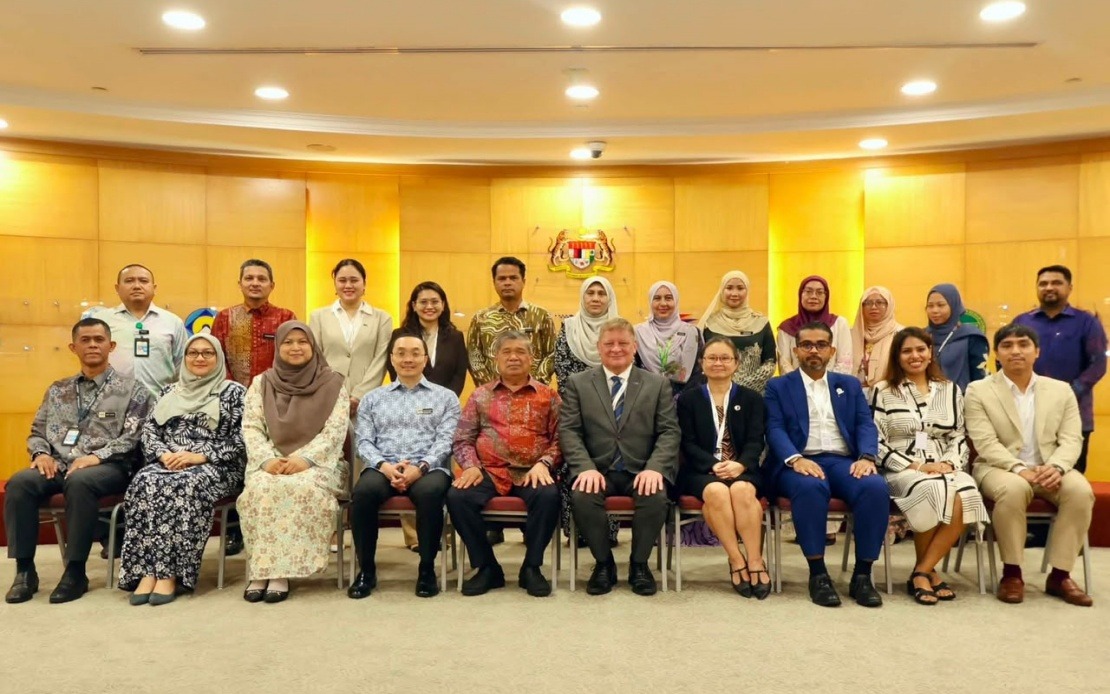
Malaysia is positioning itself to deepen agricultural modernization through enhanced partnerships with European Union companies, following a high-level meeting between Agriculture and Food Security Minister Datuk Seri Mohamad Sabu and EU-ASEAN Business Council executive director Chris Humphrey at Wisma Tani in Putrajaya yesterday.
The encounter underscores Malaysia's strategic pivot toward leveraging European expertise and investment in transforming its agri-food systems. As a middle-income nation grappling with rising food production demands and climate pressures, Malaysia recognises that European agricultural technology and sustainable practices represent a valuable pathway to enhance productivity whilst maintaining environmental stewardship. The EU remains a critical collaborator given its track record in developing resilient food systems and its stringent quality standards that increasingly influence global supply chains.
Central to the discussions was the rollout of the National Agro-Food Policy 2.0, Malaysia's comprehensive framework designed to ensure long-term food security whilst building competitive agri-businesses. The policy emphasises modernisation through technological adoption, and this meeting signals intent to attract European firms to participate in its implementation. Agricultural technology and artificial intelligence emerged as priority areas, reflecting Malaysia's recognition that automation and data-driven farming can unlock productivity gains across smallholder and commercial operations alike. For a country where agriculture employs significant rural populations, this transition carries profound implications for rural livelihoods and income diversification.
The delegation also examined Malaysia's dairy supply chain, an area where structural weaknesses have long constrained domestic production and made the sector vulnerable to import dependency. Strengthening this chain through foreign investment and technology transfer could improve competitiveness, reduce reliance on imports, and stabilise prices for consumers. Similarly, discussions on animal health and biosecurity standards reflect Malaysia's intention to align with international protocols that facilitate trade and protect public health. These standards increasingly determine market access, particularly to premium markets in Europe and beyond, making them essential for producers seeking to export value-added products.
Both sides expressed strong commitment to advancing the Malaysia-European Union Free Trade Agreement negotiations, a development of considerable significance for the region. Such an agreement would reduce tariff barriers, simplify trade procedures, and create opportunities for Malaysian agricultural producers to access the bloc's 450-million-strong consumer base. Conversely, it would expose local producers to competitive European goods, necessitating strategic positioning and capability enhancement. The timing of these discussions suggests negotiations are at a critical juncture, and agricultural stakeholders' involvement signals that farm sector interests are being actively represented in trade talks.
Minister Mohamad's emphasis on capacity building for local farmers and breeders indicates an understanding that technology alone cannot drive transformation. Malaysian farmers, many of whom operate small landholdings and lack access to training or capital, require sustained support to adopt new methods and meet international quality standards. Sanitary and Phytosanitary measures, though essential for market access and food safety, often pose compliance challenges for smaller producers. European firms possess expertise in helping farmers navigate these requirements, making partnerships mutually beneficial: Malaysian suppliers gain market entry whilst European companies expand their advisory and supply relationships.
The Minister's invitation to EU-ABC representatives to attend the Agriculture, Horticulture and Agro-Tourism Exhibition 2026 at Malaysia Agricultural Expo Park in Serdang is a strategic move to sustain momentum and showcase local innovations. Hosting international agricultural stakeholders at such events strengthens Malaysia's profile as a serious player in regional agri-food development and facilitates networking that can translate into concrete investments and partnerships. MAHA 2026 will provide a tangible platform for European companies to evaluate opportunities, meet local players, and explore joint ventures in areas ranging from crop production to value-added processing.
From a broader Southeast Asian perspective, Malaysia's agricultural modernization efforts carry regional implications. As ASEAN grapples with food security challenges exacerbated by climate variability and population growth, successful models developed through EU-Malaysia cooperation could offer templates for neighbouring countries. The EU-ABC's involvement, bridging European and ASEAN business interests, positions Malaysia at the intersection of two significant economic blocs, potentially allowing it to serve as a testing ground for innovations that ripple across the region.
The strategic cooperation framework discussed also highlights Malaysia's pragmatic approach to food security. Rather than pursuing autarky, the nation seeks to strengthen domestic production capacity whilst maintaining openness to imports and international partnerships. This balanced approach acknowledges that global food systems are interconnected and that resilience requires both local production capabilities and diverse supply sources. By engaging European expertise, Malaysia diversifies its technological and knowledge partnerships beyond traditional Asian suppliers, reducing concentration risk.
Looking ahead, the success of these initiatives will depend on concrete follow-through: whether European companies commit meaningful investment, whether Malaysian farmers receive training and financial support for adoption, and whether trade negotiations yield mutually beneficial outcomes. The agriculture sector's transformation also intersects with broader policy goals around climate action, rural development, and trade expansion, making these partnerships integral to Malaysia's medium-term economic trajectory.

