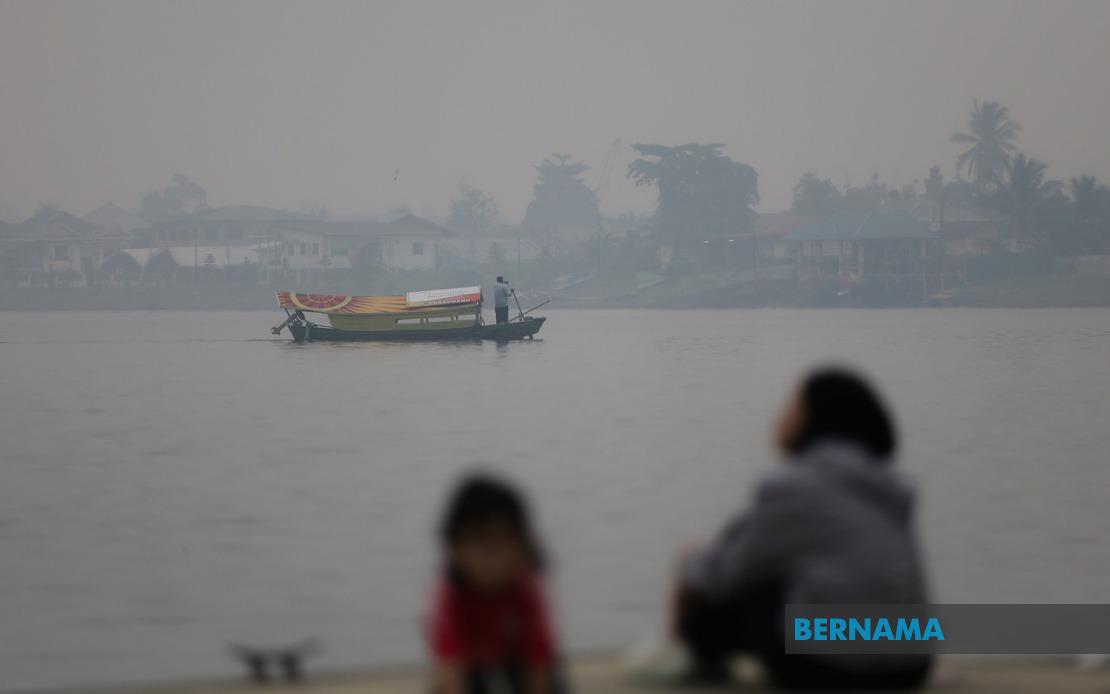
Cloud seeding operations have been activated across haze-affected regions in Malaysia, with particular emphasis on areas where air quality has deteriorated to hazardous levels and water reserves are diminishing. Deputy Prime Minister Datuk Seri Dr Ahmad Zahid Hamidi announced that the environmental intervention strategy focuses on locations recording Air Pollutant Index readings exceeding 150, whilst simultaneously addressing critical water supply concerns during the country's current heat wave.
The coordinated effort combines resources from the Malaysian Meteorological Department and the Royal Malaysian Air Force, reflecting the government's recognition that the haze crisis extends beyond simple air quality management into broader resource management challenges. The involvement of military aviation assets demonstrates the scale and urgency officials have assigned to the initiative. Dr Ahmad Zahid explained that the preventive measure became necessary as dam water levels across the nation have been steadily declining, raising concerns about potential disruptions to public water supply systems if meteorological conditions do not improve naturally.
Operations commenced in Putrajaya on the day of the announcement, with expansion plans scheduled for early September targeting three northern states. Between September 3 and 5, cloud seeding will be deployed across Sarawak, Kedah and Perlis, regions where atmospheric conditions and water resource challenges align to create particularly pressing concerns. The phased geographic rollout reflects a strategic approach to resource allocation, allowing meteorological teams to assess outcomes in initial target zones before extending operations.
The technical complexity of cloud seeding requires constant environmental monitoring and adaptive decision-making. Dr Ahmad Zahid elaborated on operational constraints, noting that successful intervention depends on multiple atmospheric variables aligning favourably. Cloud presence alone proves insufficient; meteorological experts must track cloud movement patterns to ensure seeded formations drift toward designated areas rather than dissipating over regions where precipitation would provide minimal benefit. This requirement for real-time atmospheric assessment and tactical adjustment distinguishes cloud seeding from straightforward emergency response measures.
Sarawak emerged as particularly concerning during the announcement period, with three monitoring stations recording readings at or above hazardous thresholds. The Serian Police headquarters monitoring station registered an API level of 412, categorised as hazardous and associated with serious health risks for vulnerable populations. Samarahan followed at 332, whilst Kuching recorded 304, both indicating unhealthy air quality conditions. Sri Aman presented a slightly less severe but still concerning very unhealthy reading of 228. These figures underscore why Sarawak features prominently in the expanded cloud seeding schedule.
The API measurement system, operated through the Department of Environment's Air Pollutant Index Management System portal, provides real-time data enabling authorities to identify crisis zones and deploy interventions efficiently. The granular geographic reporting allows officials to distinguish between localised pollution hotspots and broader regional patterns, supporting more targeted policy responses. Readings obtained at 12:30 pm on the announcement date illustrated that haze conditions remained volatile and potentially worsening, justifying immediate operational expansion.
Water security emerges as the secondary but equally significant driver of cloud seeding expansion. Malaysia's hydroelectric and domestic water supply infrastructure depends heavily on consistent dam inflows. Extended periods of below-average rainfall and elevated temperatures stress these reserves, potentially triggering cascade effects across multiple sectors including power generation and household water availability. Cloud seeding represents a technological tool attempting to shift weather patterns toward more favourable precipitation patterns, though success rates depend on baseline atmospheric moisture levels and seasonal conditions.
The government's public articulation of this dual-crisis response—simultaneous air pollution and water scarcity—reflects evolving climate vulnerability in Southeast Asia. Both phenomena stem from interconnected atmospheric systems, making isolated sectoral responses increasingly insufficient. Cloud seeding exemplifies adaptation strategies that attempt to address multiple concurrent challenges through integrated environmental management, though such approaches carry inherent uncertainties regarding efficacy and unintended consequences.
For Malaysian residents, particularly in Sarawak and the targeted northern states, the announcement signals intensified government engagement with deteriorating environmental conditions. However, cloud seeding remains fundamentally constrained by natural atmospheric systems beyond complete human control. Officials framed the initiative as complementary to longer-term environmental management rather than a comprehensive solution, implicitly acknowledging technological limitations. Success will depend on cooperation from meteorological systems while populations implement individual protective measures against persisting poor air quality.

