Malaysia's commitment to developing a world-class science and technology workforce has intensified as the country gears up to host the 23rd ASEAN Ministerial Meeting on Science, Technology and Innovation in June 2027. The Ministry of Science, Technology and Innovation (MOSTI) has signalled that human capital development will anchor its strategic agenda in the lead-up to the regional gathering, recognising that technological advancement hinges fundamentally on having skilled personnel capable of driving innovation across the economy.
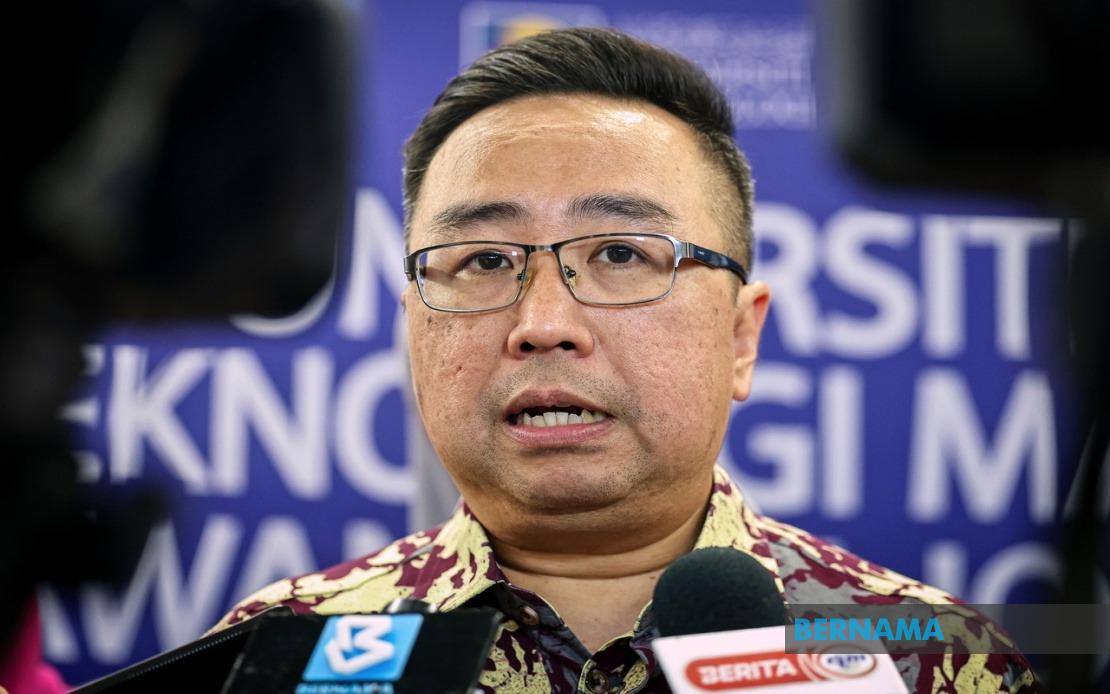
Datak Chang Lih Kang, MOSTI's minister, underscored this positioning following the MOSTI TechTalks Series 2/2026 programme in Johor Bahru, emphasising that talent development remains non-negotiable in attracting high-tech investments to Malaysian shores. The statement reflects a deliberate shift in how the ministry conceptualises competitiveness—one that places people at the centre rather than treating workforce development as a secondary concern. This philosophy aligns with regional trends, as Southeast Asian economies increasingly compete for multinational investment and indigenous innovation capabilities.
Beyond talent cultivation, MOSTI has mapped out an ambitious technological roadmap encompassing energy transition, artificial intelligence, digitalisation, advanced materials, nanotechnology, hydrogen technology, and biotechnology. This portfolio suggests Malaysia is not merely following global trends but seeking to position itself at the intersection of several high-growth sectors. The breadth of focus areas indicates a diversification strategy, acknowledging that technological supremacy in any single domain requires supporting ecosystems across multiple disciplines.
A particularly noteworthy aspect of MOSTI's approach involves its willingness to collaborate across ministerial boundaries on vocational and technical education, despite these programmes falling outside its statutory purview. The ministry has partnered with twelve government agencies, including the Ministry of Education, Ministry of Higher Education, Ministry of Rural and Regional Development, and Ministry of Human Resources, to modernise Technical and Vocational Education and Training (TVET) curricula. This inter-agency coordination represents a systemic recognition that Malaysia's technological ambitions cannot succeed if technical education remains siloed or disconnected from industry evolution.
The proposed integration of robotics, artificial intelligence, and coding into TVET frameworks marks a significant pedagogical shift from conventional skill-based instruction. Rather than training students solely in established trades, the approach anticipates future labour market demands by embedding emerging technologies into foundational vocational education. This forward-looking strategy acknowledges that today's vocational graduates will spend decades in careers shaped by automation and digital transformation, making technological literacy a baseline rather than a specialisation.
MOSTI's TechTalks initiative, conducted regularly across university campuses, functions as a conduit between government science policy and student comprehension of national priorities. By directly engaging young people with information about Malaysia's science, technology and innovation ecosystem and its strategic direction, the programme attempts to align educational choices with economic needs. This grassroots outreach addresses a persistent challenge in developing nations: the disconnect between what institutions teach and what employers require, which often forces companies to invest heavily in retraining rather than recruiting ready-made talent.
The timing of Malaysia's AMMSTI-23 hosting carries strategic weight beyond ceremonial considerations. As ASEAN nations increasingly compete for technology sector investment and regional technological leadership, countries that demonstrate tangible commitment to human capital development signal credibility to both multinational enterprises and prospective researchers. Malaysia's emphasis on talent development serves as an implicit message to potential investors and research institutions that the country offers not merely infrastructure or incentives, but a growing cadre of locally developed expertise.
The decision to host AMMSTI-23 followed agreement reached at the 22nd ministerial meeting in Vientiane, Laos, in June 2026, giving Malaysia approximately eighteen months for preparation. This timeline allows sufficient space for substantive initiatives to be launched, demonstrated, and evaluated before international scrutiny. The government can point to concrete outcomes rather than mere announcements, strengthening Malaysia's standing within ASEAN's science and innovation community.
From a regional perspective, Malaysia's talent-centred approach contrasts with and complements other Southeast Asian strategies. While Vietnam emphasises manufacturing prowess and Singapore focuses on financial-technology integration, Malaysia is deliberately cultivating multi-sector expertise. This diversification appeals to different investor profiles and creates resilience against sector-specific downturns. The TVET modernisation, particularly, holds implications for neighbouring countries grappling with similar vocational education gaps, potentially positioning Malaysia as a model for curriculum redesign.
The cross-ministerial collaboration on TVET also reflects evolving governance philosophy in Malaysia, where siloed ministry operations increasingly give way to integrated approaches recognising policy interdependencies. Technical education cannot thrive in isolation from labour policy, rural development, or higher education pathways. By institutionalising coordination, MOSTI implicitly acknowledges that science and technology development extends beyond research and extends into the human systems that enable innovation.
Looking ahead, the success of these initiatives will be measured not merely in participation numbers or programme outputs, but in whether Malaysian graduates increasingly find opportunities in technology-intensive sectors domestically and regionally. The talent development agenda, if executed effectively, should manifest in reduced brain drain, increased startup formation in high-tech sectors, and improved absorptive capacity for foreign direct investment. These outcomes will ultimately determine whether Malaysia's AMMSTI-23 hosting represents a turning point in the nation's technological trajectory or merely another diplomatic occasion.

