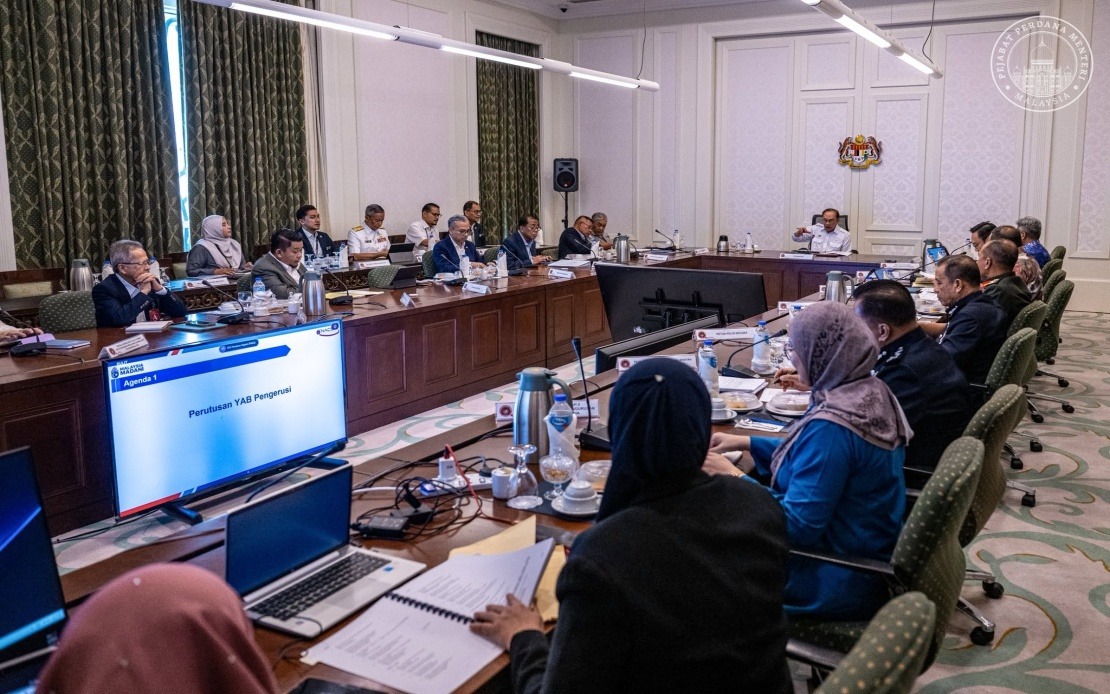
Prime Minister Datuk Seri Anwar Ibrahim has launched the Malaysia Digital 2030 (MD2030) Action Plan, a comprehensive national strategy designed to fortify Malaysia's position in an era dominated by artificial intelligence, automation, and data-driven business models. Announced during a meeting of the National Digital Economy and Fourth Industrial Revolution Council (MED4IRN), the initiative represents a deliberate pivot away from Malaysia's historical role as primarily a consumer of foreign technology toward becoming a generator of domestically developed digital solutions by 2030.
The five-year roadmap, which spans 2026 to 2030, addresses a critical juncture for Southeast Asia's largest technology market. As global superpowers intensify competition over artificial intelligence dominance and digital infrastructure control, Malaysia faces mounting pressure to modernise its technological capabilities while protecting its strategic interests. Anwar's framework seeks to position the nation not merely as an adopter of external innovations but as an active participant in shaping the digital future, with particular emphasis on nurturing local expertise and reducing dependence on foreign technology providers.
A cornerstone of the MD2030 strategy centres on fortifying Malaysia's digital sovereignty and data security architecture. The government has committed to developing internal digital services rather than relying on third-party solutions, a decision that carries significant implications for how state institutions operate and communicate with citizens. This shift reflects broader geopolitical anxieties about data control and the risks associated with outsourcing critical government functions to international vendors. By centralising digital infrastructure development within the public sector and coordinating efforts through the Digital Ministry and newly established National Digital Department, the government aims to maintain tighter oversight over sensitive information and reduce vulnerability to external manipulation or espionage.
The initiative addresses competition from neighbouring nations and global technology leaders who are rapidly advancing their AI capabilities. Singapore, for instance, has positioned itself as a regional hub for artificial intelligence research and development, while Vietnam and Indonesia are accelerating their digital transformation programmes. Malaysia's MD2030 plan must therefore be understood within this competitive regional context, where countries compete for investment, talent, and technological leadership. The framework signals government determination to retain Malaysia's standing as a technology pioneer within Southeast Asia whilst simultaneously building resilience against geopolitical volatility that could disrupt supply chains or digital infrastructure.
According to Anwar, the plan emphasises structured implementation that prioritises tangible benefits for ordinary Malaysians and business enterprises. This requires moving beyond merely announcing ambitious targets to ensuring that each initiative delivers measurable outcomes. The government envisions enhanced digital services for citizens, strengthened competitiveness for Malaysian companies operating globally, and the creation of new employment opportunities in emerging technology sectors. Such outcomes depend heavily on complementary investments in education and skills development, as transforming Malaysia into an AI nation requires cultivating a workforce capable of designing, building, and maintaining advanced technologies.
The strategy incorporates recognition that achieving these objectives demands the sustained commitment of all government agencies and departments. The MADANI Government machinery, as described by the Prime Minister, must work in coordinated fashion to implement the various components of the MD2030 plan. This cross-departmental approach is essential because digital transformation affects not only the technology sector itself but influences how government delivers services, how businesses operate, and how Malaysians interact with both state institutions and the private economy. Without genuine institutional buy-in and coordinated execution across multiple agencies, even well-designed initiatives risk fragmentation and underperformance.
The transition from technology consumer to technology producer carries profound implications for Malaysia's labour market and economic structure. While automation promises productivity gains and efficiency improvements, it simultaneously poses displacement risks for workers in routine occupations. The MD2030 framework must therefore incorporate mechanisms for reskilling and workforce transition to ensure that technological advancement benefits society broadly rather than concentrating gains among a small segment of the population. This dimension of inclusive growth forms a critical element of the government's stated commitment to building an inclusive AI nation.
International cooperation likely plays an underexplored but important role in achieving MD2030 objectives. While the strategy emphasises reducing external reliance, Malaysia cannot develop world-class AI capabilities in isolation. Attracting global technology companies, fostering partnerships with leading research institutions, and participating in international standards-setting bodies will prove essential to building credible domestic expertise. The challenge lies in balancing legitimate sovereignty concerns with the pragmatic recognition that technological advancement increasingly depends on global collaboration and knowledge exchange.
The timing of the MD2030 launch reflects recognition that Malaysia must act decisively to avoid falling further behind in the global AI race. China, the United States, and the European Union are pouring enormous resources into AI research and development, whilst countries at Malaysia's level of development risk becoming permanently subordinated to external technological providers. By articulating a coherent national strategy and committing government resources to its implementation, Malaysia signals to potential investors, researchers, and international partners that the nation intends to play a meaningful role in shaping the digital economy of the coming decade.

