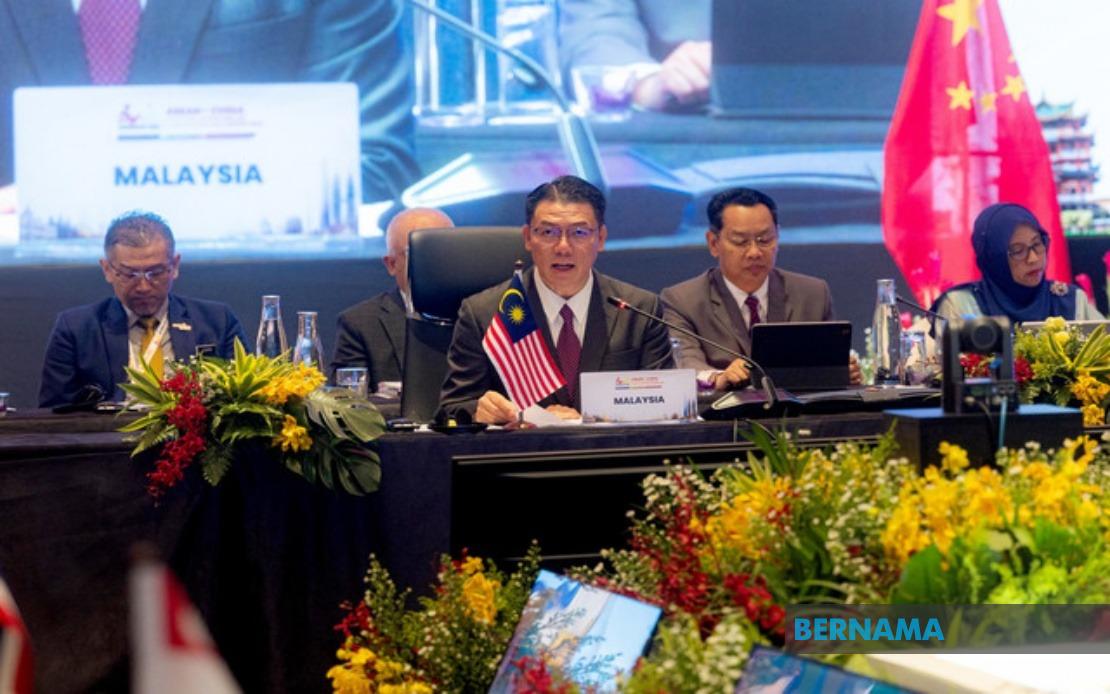
Malaysia has positioned itself at the forefront of regional cooperation on urban development by hosting the ASEAN-China Ministerial Roundtable Conference on Construction and Housing (ACMROCH) 2026 in Ipoh. The gathering brought together approximately 300 participants, including cabinet ministers, senior government officials, and diplomatic delegates representing all 11 ASEAN member states alongside China's housing delegation. The conference underscores the urgency of coordinated action as urbanisation accelerates across Asia at an unprecedented pace, reshaping how hundreds of millions of people live and work.
Housing and Local Government Minister Nga Kor Ming articulated the conference's central mission: creating a regional framework that balances rapid urban growth with environmental stewardship and social inclusion. He emphasised that ACMROCH 2026 deliberately aligns with the United Nations' New Urban Agenda and UN-Habitat's global sustainability objectives, ensuring that development across Southeast Asia and China follows internationally recognised standards for liveable cities. This strategic alignment reflects Malaysia's broader commitment to multilateral governance on development issues, positioning the nation as a bridge between ASEAN nations and China on critical infrastructure matters that transcend national borders.
The conference crystallised its approach around three foundational objectives. Sustainability as a principle means pursuing urban expansion that respects environmental limits while prioritising human welfare. Quality housing translates development gains into tangible improvements where people actually live—secure, comfortable residential spaces that families can afford and maintain. Cohesive communities recognises that infrastructure projects must strengthen social bonds rather than fragment populations, building shared prosperity rather than widening inequality. These three pillars represent a philosophical shift away from purely economic growth metrics toward holistic development that measures success through quality-of-life improvements.
Four interconnected priorities anchor the operational framework. Advancing energy-efficient and climate-responsive housing addresses Southeast Asia's vulnerability to extreme weather and energy costs, ensuring new construction incorporates passive cooling, renewable energy integration, and water management systems adapted to tropical conditions. Promoting value-driven housing and inclusive urban growth tackles affordability crises in Malaysia and the region, where rapid urbanisation has priced out lower-income workers from city centres. Strengthening resilient urban services and sustainable infrastructure tackles the physical backbone of cities—transportation, water, waste management, and power systems that must serve growing populations reliably. Fostering cohesive communities and liveable neighbourhoods emphasises public spaces, local services, and community institutions that transform residential areas into genuine neighbourhoods rather than bedroom suburbs.
The demographic urgency underlying this conference cannot be overstated. Asia now homes more than half of the world's urban population, with the continent's urbanisation rate exceeding 54 per cent. China has achieved a remarkable 67 per cent urbanisation rate through three decades of rapid transformation, while Malaysia stands at 78 per cent—among the highest in the developing world. This concentration of humanity in cities creates immense structural pressures: infrastructure networks designed for smaller populations now operate at capacity, housing demand chronically outpaces supply, and energy grids strain to power air conditioning and industrial production across dense metropolitan areas. The mathematical reality is unambiguous—the coming years will see tens of millions more Asians move to cities, and the decisions made today at forums like ACMROCH 2026 will determine whether this transition improves or diminishes their quality of life.
Minister Nga connected the conference's framework explicitly to Malaysia's long-term development vision. The Malaysia MADANI philosophy, which prioritises human-centred development, forms the ethical foundation for how the nation approaches urbanisation. This philosophy resonates with the Thirteenth Malaysia Plan's priorities and the ASEAN Community Vision 2045, which seeks a region that is economically dynamic, environmentally responsible, and genuinely responsive to its people's needs. By anchoring the conference in this broader vision, Malaysia demonstrates that sustainable city development is not merely a technical exercise but an expression of national values and regional solidarity.
The conference articulates a clear departure from conventional development narratives that treated housing and urban expansion as purely economic concerns. Instead, participants acknowledged that cities exist to serve human flourishing—children should grow up in safe neighbourhoods with green spaces and schools, not in polluted, congested areas. Public spaces should foster community interaction and cultural expression, not merely move people and vehicles efficiently. Development's ultimate justification is whether it genuinely improves daily life for ordinary residents, not merely GDP statistics or property market values. This reframing has profound implications for how Malaysia and ASEAN nations plan, finance, and implement urban projects.
China's participation, represented by Housing and Urban Rural Development Minister Ni Hong, underscores Beijing's strategic interest in shaping regional development standards and creating markets for Chinese construction expertise and green building technologies. As the world's largest builder of cities, China brings lessons—both positive experiences and cautionary tales—from its own rapid urbanisation journey. The ASEAN-China dialogue creates opportunities for technology transfer, financing mechanisms through Asian Development Bank and other institutions, and the establishment of common standards that could facilitate investment and labour mobility across the region. However, it also requires ASEAN nations to carefully scrutinise which Chinese development models truly suit their contexts and values, rather than wholesale adoption of approaches designed for different demographic and geographical conditions.
For Malaysia specifically, hosting ACMROCH 2026 reflects its status as current president of the UN-Habitat Assembly, a prestigious role that amplifies Kuala Lumpur's voice on global urban development issues. This leadership position carries responsibility to champion approaches that genuinely serve developing nations' interests, ensuring that sustainable development agendas do not become barriers to necessary infrastructure investment or affordable housing production. Malaysia's 78 per cent urbanisation rate means most Malaysians already live in cities, making housing affordability and urban livability immediate policy concerns rather than distant planning exercises. The nation's experience navigating rapid urbanisation while attempting to maintain social cohesion and environmental protection provides valuable lessons for less-urbanised ASEAN neighbours.
The concentration of housing ministers and urban development officials from across the region creates opportunities for knowledge-sharing beyond formal conference proceedings. Bilateral conversations between officials can address shared challenges—affordable housing financing, informal settlement upgrading, climate-resilient infrastructure standards, skilled labour mobility in construction sectors. Officials can compare notes on successful policies, such as Singapore's public housing model, Malaysia's affordable housing schemes, or Vietnam's approaches to managing rural-to-urban migration. These informal networks often generate practical solutions faster than official protocols, as experienced practitioners identify common problems and exchange tested approaches.
The housing and urbanisation challenges confronting ASEAN carry significant implications for Malaysia's economic and social stability. If neighbouring nations fail to provide adequate housing and liveable urban environments, migration pressure toward Malaysia could intensify, straining social services and housing markets. Conversely, if regional cooperation enables more countries to address urbanisation successfully, it creates stable neighbours, prosperous markets for Malaysian businesses, and reduced irregular migration pressures. ACMROCH 2026 thus serves Malaysia's enlightened self-interest by fostering regional development that genuinely improves conditions across Southeast Asia.
Moving forward, the conference's impact will depend on translating ambitious rhetoric into concrete action. ASEAN member states must allocate adequate budget resources to implement the conference's priorities, resist short-term political pressure to sacrifice environmental standards for rapid construction, and maintain focus on affordability even as property interests lobby for deregulation. China's participation brings capital and expertise, but requires careful management to ensure technology transfer truly strengthens local capacity rather than creating dependency on Chinese contractors and designers. Malaysia's presidency of UN-Habitat Assembly provides a platform to advocate for these principles globally, but only if domestic policies align with the conference's commitments to sustainability, inclusivity, and human-centred development.

