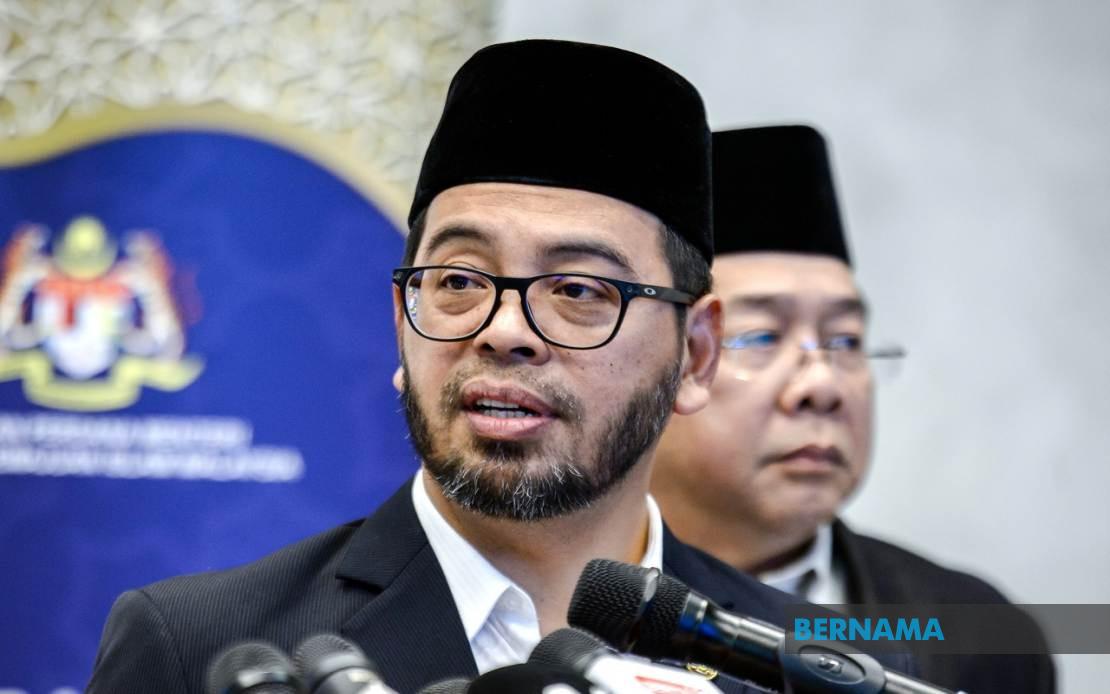
Malaysia has joined international voices in condemning the detention of Sheikh Muhammad Hussein, the Grand Mufti of Jerusalem and custodian of the Al-Aqsa Mosque, following his arrest last Friday. The Prime Minister's Department (Religious Affairs) issued a forceful statement through Senator Dr Zulkifli Hasan, characterising the incident as a breach of fundamental religious freedoms and an affront to the sanctity of one of Islam's most revered sites. Although the religious leader was subsequently released, the government views the detention itself as a troubling violation regardless of its duration, signalling Malaysia's deepening concern over religious protection in occupied territories.
Dr Zulkifli's intervention reflects Malaysia's consistent diplomatic posture on Palestinian affairs, placing religious liberty and the inviolability of sacred spaces at the centre of the dispute. The timing of the arrest—during Friday prayers—carries particular symbolism and sensitivity within Islamic tradition, where congregational worship represents a cornerstone of faith practice. By highlighting this context, Kuala Lumpur underscores that the issue transcends a single detainment and touches upon broader questions of religious sovereignty and the rights of Muslim communities in contested regions. The statement positions Malaysia as an advocate for faith-based protections within international humanitarian frameworks.
Responding to the incident, Malaysia has called upon major international actors to intervene decisively. The government specifically invoked the United Nations and the Organisation of Islamic Cooperation, both organisations where Malaysia holds significant influence and standing. This dual appeal—to both secular multilateral institutions and faith-based coalitions—demonstrates a sophisticated diplomatic strategy aimed at mobilising support across different global constituencies. The expectation that these bodies should enforce compliance with international law concerning worship rights and the safety of religious figures represents a substantial claim about the scope of their mandates and enforcement mechanisms.
The statement reiterates Malaysia's longstanding commitment to Palestinian self-determination and the elimination of what the government characterises as systematic oppression. This formulation extends beyond immediate incidents to encompass structural concerns about Palestinian rights and dignity. For Malaysian audiences, this messaging reinforces the nation's identity as a leading Muslim-majority voice in international forums and a stalwart defender of Islamic interests globally. The religious affairs ministry's role in articulating this position emphasises that Palestinian advocacy within Malaysia's foreign policy framework is not merely political but deeply rooted in religious and ethical conviction.
Beyond the immediate Jerusalem controversy, Dr Zulkifli used the occasion to commemorate the 31st anniversary of the Srebrenica massacre, directing Malaysians to reflect upon one of the twentieth century's most devastating episodes of communal violence. The genocide, in which Bosnian Serb forces executed over 8,000 Bosniak Muslim men and boys in July 1995, remains a defining trauma for the global Muslim consciousness. That more than 1,000 victims remain unidentified decades later underscores the systematic nature of the atrocity and the incomplete process of accountability and remembrance that persists to the present day. Malaysia's invocation of Srebrenica alongside current Palestinian concerns creates an implicit historical continuum, suggesting patterns of anti-Muslim violence that demand vigilance and international response.
Malaysia's contribution to Bosnian humanitarian causes represents one of the nation's most significant interventions in a foreign conflict. Former Prime Minister Tun Dr Mahathir Mohamad and current Prime Minister Datuk Seri Anwar Ibrahim both championed the Bosnian cause during their respective tenures, lending Malaysia's diplomatic weight to efforts supporting the beleaguered Muslim population. Beyond political advocacy, Malaysia established itself as a practical refuge, welcoming Bosnian refugees and offering educational pathways through institutions such as the International Islamic University Malaysia. This combination of diplomatic pressure, humanitarian assistance, and institutional support established Malaysia as more than a distant sympathiser but an active participant in Bosnia's recovery.
The Malaysian Armed Forces' deployment to Bosnia constitutes perhaps the most tangible expression of the nation's commitment to conflict resolution and peace stabilisation. Between 1993 and 1998, Malaysia deployed 10,514 military personnel under the Malaysian Battalion framework and later through the Implementation Force, making substantial contributions to UN peacekeeping operations. These deployments occurred at considerable expense and carried real security risks for Malaysian servicemen and women operating in volatile post-conflict environments. For contemporary Malaysians, this historical record serves as evidence of the nation's credibility when advocating for conflict resolution and the protection of vulnerable populations worldwide.
Dr Zulkifli's invocation of Srebrenica carries explicit pedagogical intent, framing the tragedy as a lesson for Malaysian youth about the consequences of hatred, sectarian division, and the absence of effective international protection mechanisms. This framing transforms a Balkan historical event into a relevant cautionary tale for a Southeast Asian audience, drawing connections between different contexts of communal vulnerability. The minister's appeal to younger generations to internalise these lessons suggests concern that contemporary youth may underestimate the fragility of pluralistic coexistence or the speed with which organised violence can overwhelm civilised societies. By linking Srebrenica's lessons to current struggles, the government encourages a historically informed consciousness about justice and prevention.
The statement concludes with an invocation of divine protection and blessing for the Srebrenica martyrs and their surviving families, employing both Arabic and Bosnian phrases to signal cross-cultural Islamic solidarity. This linguistic choice acknowledges Bosnia's distinct Muslim heritage and the importance of recognising diverse expressions of Islamic faith across geography and culture. The prayer for continued strength for survivors recognises that trauma extends across generations and that historical wounds require ongoing spiritual and material support. For Malaysian Muslim audiences, such invocations frame international Islamic solidarity as both a religious obligation and a practical commitment to standing with persecuted and grieving communities.
Malaysia's dual focus on Jerusalem and Srebrenica within a single ministerial statement reveals a coherent framework for understanding contemporary global crises. Both situations involve majorities with significant military or political power exercising control over vulnerable minorities, with religious identity and spaces becoming focal points of dispute and violation. By addressing these cases together, Malaysia's religious affairs ministry articulates a universal principle: that religious freedom, the sanctity of sacred sites, and protection for faith communities represent non-negotiable elements of international order. This positioning allows Malaysia to speak with moral authority derived from religious conviction rather than narrow geopolitical interest, strengthening the persuasiveness of its diplomatic appeals to international institutions and fellow Muslim-majority nations.

