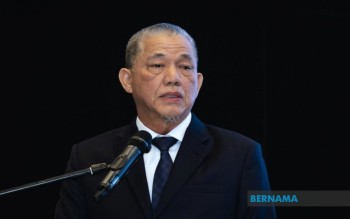
Malaysia is embarking on an ambitious infrastructure transformation programme designed to extract lasting economic value from retiring coal power stations rather than allowing these strategically important facilities to become obsolete. Deputy Prime Minister Datuk Seri Fadillah Yusof, who also leads the Ministry of Energy Transition and Water Transformation, outlined the initiative during the closing ceremony of the World Economic Forum's Malaysia energy forum on July 2, presenting a National Coal Site Repurposing Framework that would repurpose these installations into renewable energy hubs and battery energy storage facilities.
The framework addresses a fundamental challenge in Malaysia's energy transition: the country possesses substantial coal infrastructure assets that extend far beyond the power stations themselves. These sites contain crucial transmission connections, established industrial facilities and land holdings in strategically advantageous locations. By reimagining these locations rather than abandoning them, policymakers aim to prevent significant sunk costs from evaporating while creating new economic opportunities in the clean energy sector. Fadillah articulated this perspective by characterising the transition not as a loss of infrastructure but as a shift toward generating fresh economic value from existing national assets.
The proposed framework, detailed in a World Economic Forum insight paper titled "Beyond Coal: Building a Flexible, Resilient and Clean Power System for Malaysia", establishes mechanisms for sustained dialogue among government agencies, energy regulators, utility operators, private investors and affected local communities. This multi-stakeholder approach recognises that successful industrial transitions require coordination across diverse interests and expertise. Each decommissioned power station represents an opportunity to develop new industries, attract domestic and international investment and equip local workforces with skills demanded by emerging clean energy sectors. The framework aims to ensure communities dependent on coal operations are positioned to benefit from rather than suffer from the energy transition.
Malaysia has established clear decarbonisation targets that structure this transition timeline. The country is committed to building no additional coal-fired power plants, phasing out coal-fired electricity generation entirely by 2044 and achieving 70 per cent renewable energy installed capacity by 2050. These targets, while ambitious, provide a measurable pathway for the energy sector and investors planning long-term infrastructure investments. The 2044 coal retirement deadline offers approximately two decades for implementing the repurposing framework and managing the gradual workforce transitions that such a comprehensive energy shift demands.
A critical insight underpinning the strategy concerns the risk of substituting one form of energy dependence for another. Fadillah emphasised that renewable energy deployment must accelerate faster than coal retirement to prevent Malaysia from simply replacing coal reliance with increased dependence on imported liquefied natural gas. This concern reflects legitimate geopolitical and economic vulnerabilities. Should renewable capacity fail to expand sufficiently, Malaysia would become increasingly exposed to volatile international LNG markets and vulnerable to external supply disruptions influenced by international disputes or shifting energy priorities among exporting nations. A genuine energy transition, Fadillah stressed, must reduce overall import dependence rather than merely reshuffling which foreign fuels the country relies upon.
To operationalise this transition, the Ministry of Energy Transition and Water Transformation is pursuing multiple concurrent initiatives. Large-scale solar deployment represents the primary renewable technology, leveraging Malaysia's equatorial location and consistent solar resources. The Corporate Renewable Energy Supply Scheme encourages commercial and industrial enterprises to invest in onsite solar generation, distributing deployment across the economy rather than concentrating capacity in utility-scale facilities. Battery energy storage systems address the intermittency challenges inherent to solar and wind generation, enabling renewable power to supply electricity during periods of low generation. Smart grid modernisation upgrades distribution infrastructure to accommodate bidirectional electricity flows and rapidly balancing supply and demand across an increasingly complex network.
Regional collaboration strengthens Malaysia's position within Southeast Asia's energy landscape. Fadillah reaffirmed commitment to the ASEAN Power Grid initiative, which envisions interconnected electricity networks enabling cross-border power trading throughout Southeast Asia. This regional framework would allow Malaysia to export renewable energy during periods of high generation and import clean power when domestic output declines, optimising resource utilisation across the region. Enhanced regional trade also reduces individual nations' dependence on any single generation source or fuel supplier, distributing geopolitical risk across multiple parties and enhancing collective energy security.
The government is simultaneously exploring longer-term technological options to complement renewable energy deployment. Advanced nuclear technologies and small modular reactors represent potential baseload generation sources offering low-carbon electricity without the intermittency challenges of renewables. However, Fadillah underscored that nuclear development must incorporate rigorous safety protocols, transparent governance structures, regulatory frameworks demonstrating technical competency and public confidence grounded in genuine consultation and transparency. These prerequisites reflect lessons from international nuclear development and recognition that public acceptance significantly influences technology adoption timelines.
For Malaysian readers, this transition carries substantial implications extending beyond energy policy. The repurposing framework creates employment opportunities in construction, renewable energy installation and maintenance, and battery manufacturing and servicing. Communities built around coal operations gain pathways to economic diversification before coal plants retire. Manufacturing sectors depending on electricity costs benefit from competitive renewable energy pricing as capacity expands and technology costs decline. However, the transition also demands workforce retraining programmes and social support for workers transitioning from coal mining and coal plant operations into emerging clean energy sectors, representing significant policy challenges requiring sustained government commitment.
The transition also positions Malaysia strategically within global climate objectives and clean energy markets. As international investors increasingly scrutinise carbon footprints across supply chains, Malaysian manufacturers and exporters benefit from reliable access to renewable electricity. Regional leadership in clean energy technology and deployment attracts research institutions, technology companies and export opportunities in renewable equipment and systems. Companies manufacturing components for solar arrays, battery systems and smart grid infrastructure can tap both domestic demand and Southeast Asian market growth.
Malaysia's approach differs from some counterparts by explicitly integrating regional cooperation with domestic transition planning. Rather than pursuing isolated national decarbonisation, the framework acknowledges that Southeast Asian energy security and economic competitiveness improve through coordinated deployment and interconnection. This perspective reflects mature understanding of regional interdependencies and recognises that renewable energy deployment at scale requires both national commitment and subregional cooperation amplifying overall impact and efficiency.
The National Coal Site Repurposing Framework represents Malaysia's recognition that energy transitions succeed when they create positive economic narratives alongside environmental benefits. By transforming retiring coal infrastructure into renewable hubs rather than allowing stranded assets to accumulate, policymakers aim to demonstrate that decarbonisation generates rather than destroys economic opportunity. Whether this framework succeeds depends on effective implementation across multiple sectors, sustained political commitment as leadership evolves and genuine benefits reaching communities most affected by the transition.

