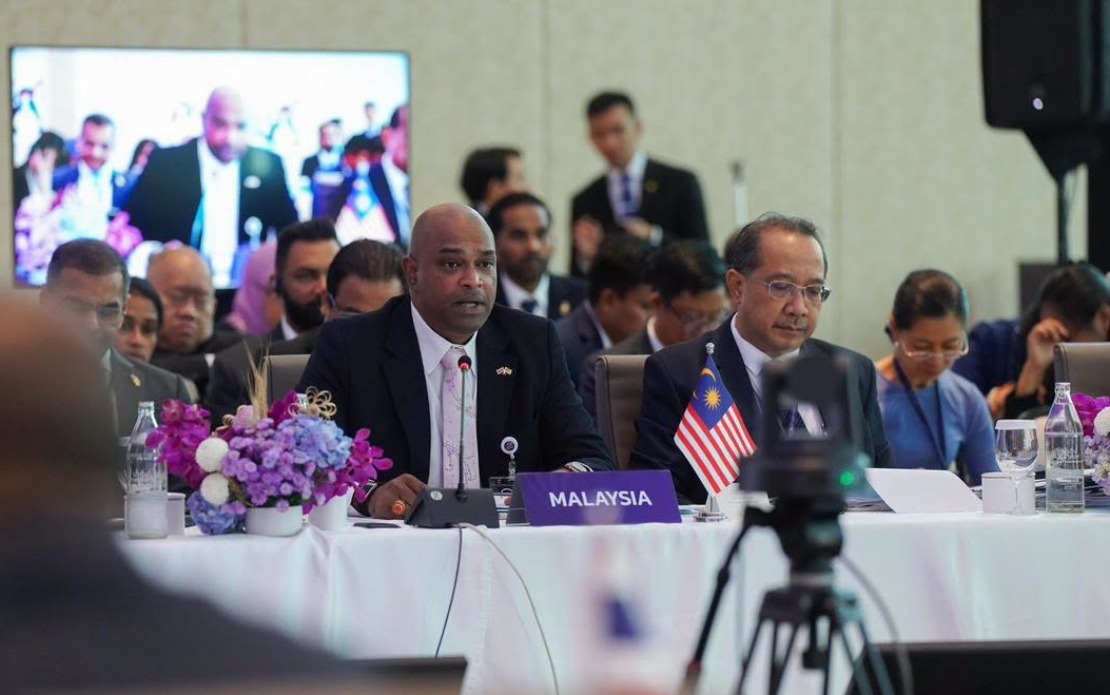
Malaysia has positioned itself as a regional advocate for standardising labour qualifications across ASEAN, recognising that fragmented certification systems hinder the bloc's ability to build a world-class workforce. Speaking at the 14th ASEAN Plus Three Labour Ministers' Meeting in Bangkok on August 27, Human Resources Minister Datuk Seri R. Ramanan articulated a vision in which skilled workers trained throughout Southeast Asia command international credibility and can pursue careers seamlessly across borders.
The initiative reflects a strategic reality facing ASEAN policymakers: despite the region's substantial human capital advantages, the absence of mutually recognised qualifications creates unnecessary barriers to labour mobility and talent development. When a skilled technician qualified in one ASEAN country cannot readily work in another without credential re-evaluation, the entire bloc loses potential economic efficiency. Ramanan's push for harmonised Technical and Vocational Education and Training (TVET) standards directly addresses this disconnect, proposing that shared certification frameworks would unlock latent productivity gains across manufacturing, services, and emerging sectors.
Three concrete priorities emerged from Malaysia's position. First, the nation advocates for strengthened joint certification and harmonisation of TVET qualifications—essentially creating a portable credential system that employers throughout the region would trust and recognise without additional verification. This represents far more than bureaucratic streamlining; it fundamentally reshapes how career pathways function within Southeast Asia. A welder, electrician, or IT specialist could develop expertise in one country and apply it immediately in another, matching skills to opportunities wherever they arise in the region.
Second, Malaysia emphasises expanding technology transfer and upskilling of teachers, acknowledging that quality certification means nothing if training institutions lack current expertise and equipment. This element targets the supply side of skilled labour, ensuring that ASEAN's vocational education ecosystem remains contemporary and industry-aligned. Without ongoing investment in educator capacity and access to latest technologies, even harmonised standards would merely formalise obsolescence.
Third, Malaysia champions development of world-class training programmes in future-oriented fields—artificial intelligence, next-generation vehicles, and robotics. This forward-looking component recognises that ASEAN's competitive advantage depends on workers equipped for tomorrow's economy, not yesterday's. The region's manufacturing prowess, built on traditional automotive and electronics expertise, faces disruption from automation and AI integration. Proactive investment in these domains positions ASEAN workers to transition into higher-value roles rather than compete in a race-to-the-bottom dynamic with lower-wage alternatives.
The multilateral architecture of this initiative warrants attention. By convening the ASEAN Plus Three framework—incorporating China, Japan, and South Korea—Malaysia recognised that regional skills harmonisation gains exponential value when anchored within a broader East Asian context. These three external partners bring distinct advantages: Japan's precision manufacturing culture, South Korea's technology and industrial expertise, and China's scale and vocational education apparatus. Their participation transforms what could be a purely intra-ASEAN exercise into a mechanism for technology transfer and best-practice diffusion across the wider region.
Ramanan's public articulation of this agenda—delivered via Facebook, a modern acknowledgment of how policymakers now communicate with constituencies—emphasised that credential recognition transcends paperwork. The underlying ambition involves fundamentally repositioning ASEAN workers as not merely available talent but preferred talent: skilled, credible, and globally competitive. This distinction matters profoundly for a region seeking to climb value chains rather than remain permanently positioned as a source of low-cost labour.
For Malaysia specifically, advancing this agenda aligns with national economic strategy. As the country seeks to develop high-technology manufacturing sectors and strengthen its status as a regional financial and services hub, ensuring access to workers with universally recognised qualifications becomes strategically vital. Malaysian employers in semiconductors, advanced manufacturing, and digital services cannot compete effectively if they cannot recruit regionally or if their own employees face barriers working elsewhere in ASEAN.
The timing of this push reflects broader regional anxieties. ASEAN faces mounting competition from other developing economies, skills shortages in technical fields, and rapid technological displacement of traditional employment. Simultaneously, demographic trends across the region show varying patterns of labour force growth, creating mismatches between supply and demand within individual nations. A harmonised, mutually recognised skills framework theoretically allows surplus labour in one nation to fill genuine shortages in another, optimising regional resource allocation.
Implementation challenges loom substantially. ASEAN member states vary dramatically in vocational education quality, industrial sophistication, and economic development levels. Establishing standards that are simultaneously ambitious enough to command international respect yet achievable across diverse national contexts requires careful calibration. National pride in education systems, protectionist impulses in labour markets, and genuine capacity constraints will generate resistance to harmonisation efforts.
Yet Malaysia's articulation of these priorities establishes an important policy direction for the region. By framing skills recognition not as a zero-sum competition but as a collective capability-building exercise, and by securing formal commitments from major East Asian partners, Malaysia has created institutional momentum toward greater labour mobility and workforce quality throughout Southeast Asia. Whether implementation succeeds will substantially determine whether ASEAN can effectively compete in an increasingly technology-driven global economy or remains trapped in comparative disadvantage.

