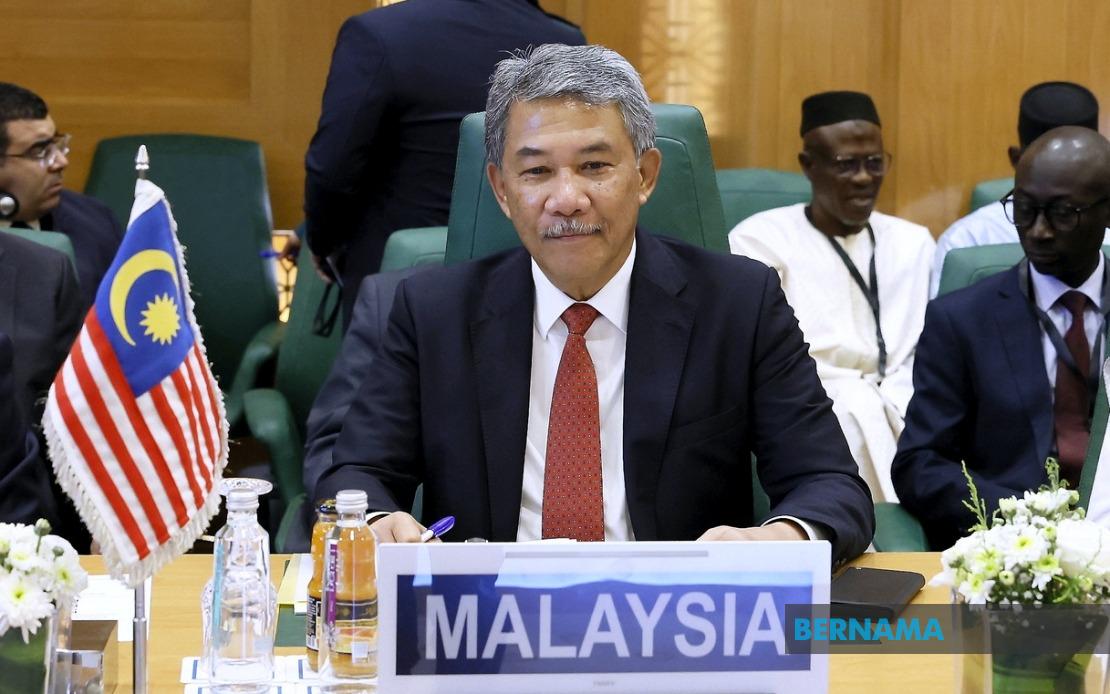
Malaysia has intensified diplomatic pressure on fellow Muslim-majority nations to take a unified stance against what it characterises as Israel's systematic expansion of illegal settlements in the occupied West Bank. At an extraordinary meeting of the Organisation of Islamic Cooperation's Council of Foreign Ministers in Jeddah on August 27, Foreign Minister Datuk Seri Mohamad Hasan delivered a forceful rebuke of Israel's settlement policies, framing them as a deliberate strategy to eliminate prospects for Palestinian sovereignty. His intervention reflects Kuala Lumpur's consistent positioning as a vocal advocate for Palestinian rights within multilateral forums, a stance that resonates strongly with Malaysia's domestic constituencies and its broader regional influence among OIC member states.
The centrepiece of Malaysia's criticism centres on a proposed settlement expansion valued at US$2.3 billion, which Mohamad characterised as part of a coordinated campaign to permanently alter the territorial and demographic composition of the occupied territories. The scheme encompasses the so-called E1 development, which authorities contend represents a particularly strategic threat because of its location between Israeli settlements in the West Bank and those in and around Jerusalem. By fragmenting Palestinian-controlled areas, proponents of this argument maintain that such projects systematically undermine the geographic contiguity required for a functioning Palestinian state, effectively rendering a two-state solution increasingly unviable.
Mohamad's statement explicitly invoked the International Court of Justice's advisory opinion issued on July 19, 2024, which addressed Israel's occupation and settlement practices. This reference carries significant weight within diplomatic circles, as it anchors Malaysia's position in international legal frameworks rather than purely political rhetoric. The Foreign Minister urged all OIC members to operationalise this judicial finding by actively withdrawing support or cooperation from the settlement enterprise, signalling that rhetorical condemnation must translate into concrete policy measures. This framing suggests Malaysia views the ICJ opinion as a watershed moment that obligates the international community, particularly Muslim-majority nations, to move beyond declarations toward enforceable mechanisms.
Beyond settlements, Mohamad expanded Malaysia's concerns to encompass the broader Israeli military campaign in Gaza, where he cited figures indicating over 70,000 deaths since hostilities intensified. He characterised the situation as a humanitarian catastrophe and a fundamental test of the international order's moral credibility, particularly given what he described as the repeated blocking of humanitarian access and destruction of civilian infrastructure including hospitals and schools. The invocation of such statistics and moral framing reflects Malaysia's strategy of connecting settlement expansion to the wider trajectory of Palestinian suffering, presenting them not as separate issues but as manifestations of a unified approach that progressively diminishes Palestinian prospects for self-determination.
The Foreign Minister articulated particular concern regarding developments in Jerusalem, Malaysia's traditional area of emphasis within Palestinian advocacy. He condemned the July 23 incursion by Israeli officials and settlers into the Al-Aqsa Mosque compound as an unacceptable provocation that threatens the holy site's sanctity. This focus reflects the deep resonance that Al-Quds issues carry within Malaysia's Islamic constituencies and across the broader Muslim world, where control and access to Jerusalem's religious sites remains fraught with historical and theological significance. Malaysia simultaneously called on OIC states to reaffirm support for Jordan's traditional Hashemite custodianship of both Islamic and Christian holy sites, a position that balances sectarian concerns with institutionalised diplomatic arrangements.
Mohamad's articulation of Malaysian policy emphasised that support for Palestinian statehood represents a fundamental imperative rather than merely a diplomatic preference, language that underscores the deep integration of this issue into Malaysia's foreign policy identity. He reiterated Kuala Lumpur's longstanding position that a viable Palestinian state must be established according to the June 4, 1967 borders, with East Jerusalem designated as its capital. This formulation has remained consistent across successive Malaysian administrations and reflects the parameters that Palestinian leadership and broader Arab consensus have advocated, positioning Malaysia within mainstream Palestinian diplomatic frameworks rather than at their extremes.
The statement also addressed institutional dimensions of Palestinian governance and reconstruction. Mohamad called for enhanced OIC support directed toward protecting and strengthening Palestinian institutions, framing this investment as foundational to establishing functional statehood. This emphasis suggests Malaysia recognises that Palestinian self-determination requires not merely territorial sovereignty but also institutional capacity, infrastructure, and administrative apparatus capable of delivering governance functions. The call implies that member states should mobilise technical expertise and financial resources to buttress Palestinian institutional development, moving beyond symbolic solidarity toward material capacity-building.
Mohamad devoted particular attention to the role of the United Nations, specifically targeting the Security Council and international humanitarian agencies. He demanded that the Council enforce international law with respect to Israeli conduct and that it protect the mandate of the United Nations Relief and Works Agency for Palestine Refugees in the Near East following what Malaysia characterised as the illegal seizure of UNRWA's Kalandia Training Centre. He also condemned recently adopted legislation imposing mandatory death penalties on Palestinians, presenting such actions as evidence of escalating extremism within Israeli policy-making circles. These references anchor Malaysia's critique within the framework of international institutional accountability, suggesting that Malaysian diplomacy aims not merely to mobilise Islamic solidarity but to leverage existing multilateral mechanisms.
For Malaysian and broader Southeast Asian readers, Malaysia's position carries several implications. Domestically, it reflects the alignment of foreign policy with Muslim-majority population sentiment and serves to reinforce Malaysia's identity as a leading voice within the Islamic world. Regionally, it demonstrates Malaysia's sustained commitment to the Palestinian cause despite geopolitical shifts in other Muslim-majority countries and broader normalisation trends affecting Israeli-Arab relations. The intensity of Malaysia's recent rhetoric suggests that questions surrounding Palestinian sovereignty and settlement expansion remain central to Kuala Lumpur's diplomatic identity and political legitimacy, particularly given the salience of these issues within Malaysia's diverse electorate.
The call for unified OIC action reflects Malaysia's broader diplomatic strategy of activating multilateral forums as platforms for advancing preferred policy outcomes. However, the varying positions adopted by different OIC members—from those maintaining diplomatic relations with Israel to those approaching normalisation—complicates the prospect of achieving the consensus that Malaysian rhetoric implies. The statement therefore functions partly as an aspirational articulation of preferred Arab and Islamic consensus while simultaneously acknowledging the fractures and divergences that characterise contemporary OIC positioning on Israeli-Palestinian questions. Malaysia's intervention thus represents an attempt to reassert Pan-Islamic solidarity around core Palestinian issues at a moment when such unity increasingly faces centrifugal pressures.
Looking forward, Malaysia's sustained emphasis on legal and institutional frameworks—the ICJ opinion, UN mechanisms, UNRWA's mandate—suggests that Kuala Lumpur perceives opportunities for advancing Palestinian interests through channels beyond bilateral diplomacy or conflict-focused advocacy. The focus on settlement expansion as a specific grievance rather than Israeli statehood more broadly provides a narrower target for potential international consensus-building, potentially offering pathways for coordination even among states with divergent overall postures toward Israel. Nevertheless, the gap between Malaysia's diplomatic demands and the capacity of OIC mechanisms to enforce compliance remains substantial, leaving open questions about whether such articulate advocacy translates into policy outcomes.

