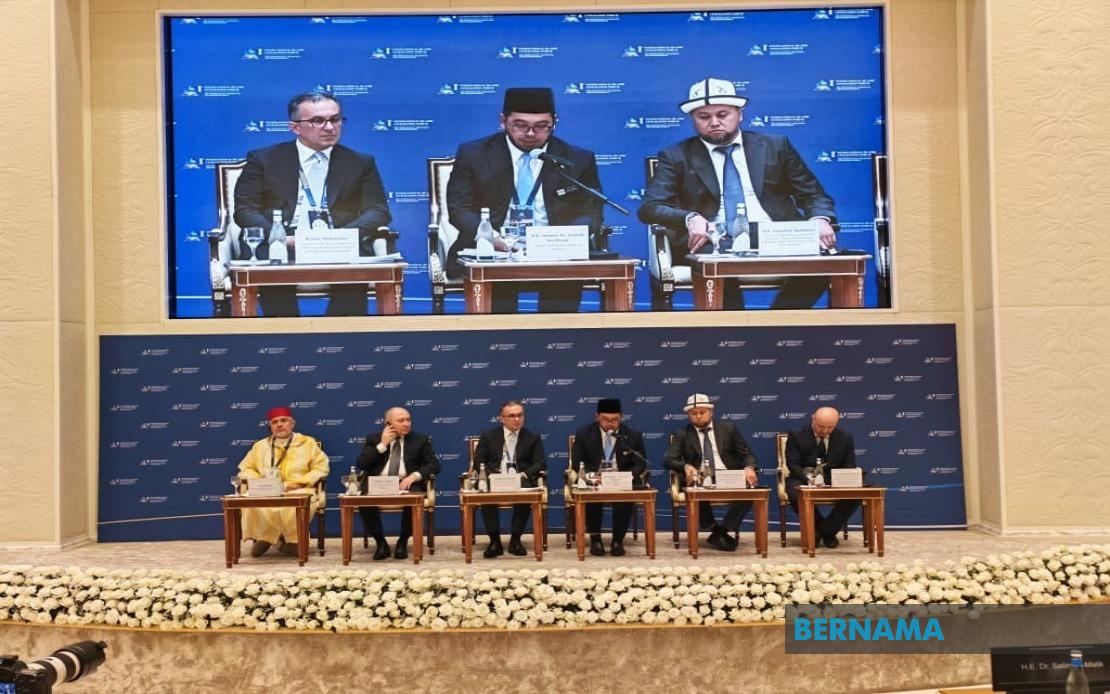
Delivering a stirring address at the International Islamic Civilisation Forum in Tashkent, Uzbekistan, Malaysia has challenged the Muslim world to extract profound lessons from the humanitarian devastation in Gaza and channel that awakening into constructive global leadership. Datuk Dr Zulkifli Hasan, the Minister in the Prime Minister's Department (Religious Affairs), framed the crisis not merely as a tragedy demanding emotional response, but as a pivotal moment for civilisational introspection and renewal.
The scale of civilian suffering in Gaza has reverberated far beyond the region, prompting uncomfortable questions about the consistency and fairness of how international law is enforced across different contexts and geographies. Rather than allowing this scrutiny to deepen Muslim world fragmentation, Zulkifli argued that Islamic nations should seize the moment to demonstrate their capacity for principled moral leadership. His intervention reflects Malaysia's broader diplomatic strategy of positioning itself as a bridge between traditional Islamic values and contemporary global engagement, a particularly significant stance given Malaysia's multicultural governance model and economic integration into regional architecture.
Zulkifli articulated a fundamental shift in how the Muslim world should conceptualise its role in international affairs. He rejected the notion that Islamic civilisation should define itself primarily through reactive stances to external pressures or geopolitical challenges. Instead, he called for Muslim societies to adopt a forward-looking posture that draws inspiration from historical achievements without becoming intellectually imprisoned by nostalgia. This distinction matters considerably for Southeast Asian policymakers, as it suggests a framework for engaging with global affairs from a position of agency rather than grievance.
Central to his thesis was the distinction between celebrating Islamic history and constructively shaping contemporary global developments. Zulkifli acknowledged Islam's extraordinary scientific, architectural, and philosophical contributions across centuries, but pivoted the conversation toward a more challenging question: what unique value can Islamic civilisation contribute to solving twenty-first century dilemmas? This reframing carries implications for how Malaysia and other Muslim-majority nations approach technology governance, environmental policy, and international standards-setting bodies where their influence remains limited.
The minister articulated a compelling vision of what Islamic civilisation could offer contemporary humanity beyond economic metrics or military capacity. He identified a global hunger for ethical frameworks, moral leadership grounded in enduring principles, and development models that prioritise human flourishing alongside material advancement. According to this vision, Islamic tradition possesses rich resources for addressing this hunger, from its historical emphasis on knowledge production as worship to its sophisticated jurisprudential traditions around justice and mercy. For Malaysian readers, this resonates with the country's own experience of constructing multicultural governance structures that acknowledge spiritual and ethical dimensions alongside secular institutional design.
A particularly forward-looking element of Zulkifli's remarks concerned emerging technologies. He proposed that Muslim scholars and policymakers should actively participate in shaping ethical frameworks for artificial intelligence, biotechnology, and quantum computing, ensuring that innovation trajectories serve humanity rather than fragmenting it further or eroding human dignity. This suggestion carries weight given that Muslim-majority nations currently underrepresent themselves in global technology standards bodies and regulatory discussions. Malaysia, as a developing nation with growing technology ambitions, stands to benefit directly from mobilising Islamic intellectual traditions to inform technology governance debates.
The minister emphasised that Islamic civilisational renewal must rest on intellectual rigour, genuine moral conviction, and shared responsibility grounded in unchanging religious principles. He argued that renaissance cannot be manufactured through political rhetoric or symbolic gestures, but requires sustained intellectual work across universities, think tanks, and religious institutions. Environmental stewardship emerged as another pillar of this renewal agenda, reflecting growing recognition across Muslim-majority nations that climate change mitigation and ecological responsibility align with Islamic teachings about mankind's trusteeship of creation.
Crucially, Zulkifli positioned this civilisational renewal not as rivalry with other traditions but as complementary contribution to humanity. He cautioned explicitly against framing Islamic leadership as inherently opposed to Western approaches or other philosophical traditions. Instead, he advocated dialogue, partnership, and mutual respect as the means through which Islamic values could gain wider influence. This framing reflects Malaysia's own foreign policy orientation and suggests how smaller Muslim-majority nations can amplify their influence through collaborative positioning rather than confrontational rhetoric.
Turning to Malaysia's relationship with Uzbekistan, the minister identified complementary strengths that could benefit the broader Muslim world. Uzbekistan's deep historical legacy in Islamic scholarship, particularly through the Central Asian intellectual tradition, combines with Malaysia's practical experience in Islamic finance, Islamic governance, and pluralistic coexistence to create potential for meaningful partnership. This bilateral angle positions Southeast Asia as increasingly relevant to contemporary debates about Islamic civilisation, challenging the implicit centering of Middle Eastern dynamics in global discussions of Islam's political and civilisational role.
The prospect of Malaysia and Uzbekistan serving as a bridge between Central Asia and Southeast Asia carries obvious strategic implications. Both regions contain substantial Muslim populations navigating rapid modernisation, technological disruption, and geopolitical transitions. A collaborative framework emphasising ethical innovation and sustainable development could generate policy models with applicability across multiple Muslim-majority contexts. For Malaysian audiences, this suggests their country's role as a development exemplar and mediator in global civilisational dialogues is expanding.
Zulkifli's intervention at Tashkent ultimately reflects a sophisticated understanding that the Muslim world's greatest asset lies not in military or economic capacity alone, but in its capacity to articulate compelling visions of human flourishing that integrate material advancement with ethical meaning. By explicitly tethering this vision to the Gaza tragedy, he connected abstract civilisational renewal to concrete human suffering, grounding his argument in moral urgency rather than mere geopolitical positioning. For Malaysian policymakers and citizens, this represents an argument that their country's religious heritage and multicultural experience position it to contribute meaningfully to global conversations about how different civilisations can collaborate in addressing humanity's shared challenges.

