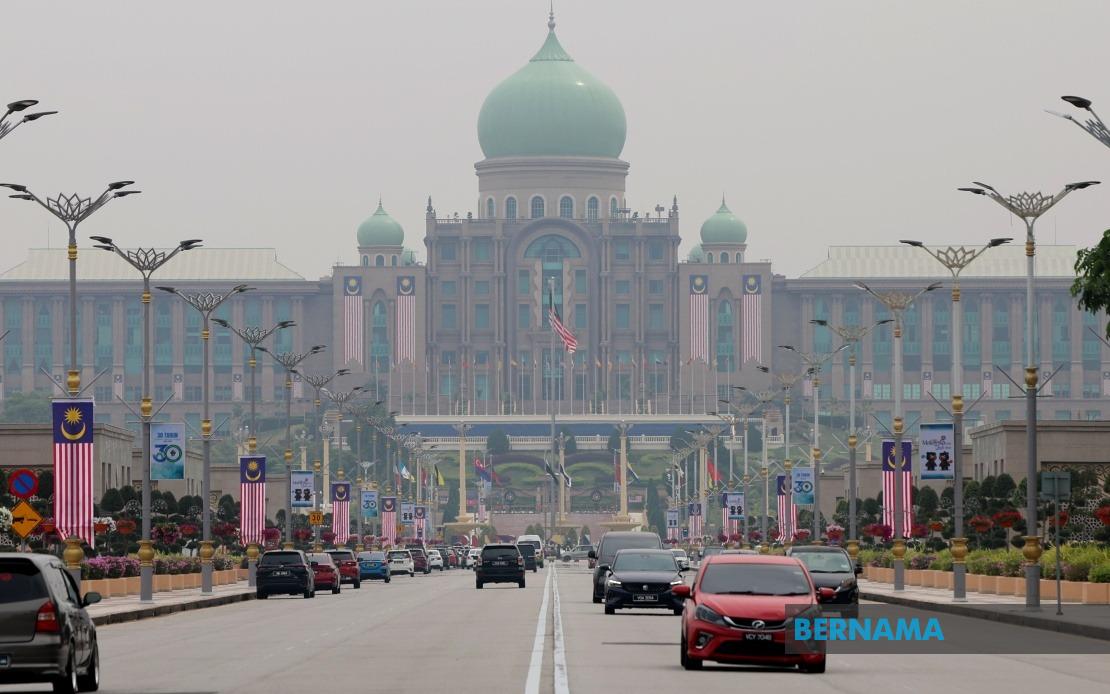
Malaysia has intensified calls for a coordinated regional response to the growing threat of transboundary haze pollution, emphasising that all ASEAN member states must bolster their collective defences through strengthened prevention, heightened readiness and rigorous oversight mechanisms rooted in the ASEAN Agreement on Transboundary Haze Pollution. Natural Resources and Environmental Sustainability Minister Datuk Seri Arthur Joseph Kurup conveyed this position formally to ASEAN Secretary-General Dr Kao Kim Hourn, signalling Kuala Lumpur's determination to elevate haze management from a national concern to a binding regional priority.
The minister underlined that member states should prioritise multiple dimensions of preparedness, spanning tighter command over hotspot activities, more sophisticated detection systems for fire sources, stricter enforcement mechanisms to prevent illegal open burning, and operational frameworks that ensure rapid firefighting responses. This multi-layered approach reflects recognition that reactive measures alone are insufficient when dealing with a phenomenon that respects no borders and can spread rapidly across the region within days. Kurup's emphasis on strengthening "control measures" signals Malaysia's view that preventive action—stopping fires before they start—must supersede emergency management.
Current weather patterns have amplified urgency around the issue. Monitoring data reveals that extended dry spells affecting southern reaches of the ASEAN region have triggered a noticeable uptick in hotspot detection and atmospheric haze concentrations. These conditions are not temporary aberrations but rather harbingers of more challenging times ahead. The gradual intensification of the El Niño phenomenon over coming months presents a compounding risk factor that could stretch the region's environmental and public health systems. For Malaysia, which has borne substantial economic and health costs from haze episodes in the past, the prospect of prolonged dry conditions coupled with fire activity across multiple countries represents a scenario demanding urgent preventive mobilisation.
The substance of Malaysia's appeal rests on three foundational pillars: early intervention capacity, transparent data sharing and synchronised regional coordination. Early intervention demands that nations identify fire-risk zones before ignition occurs, requiring investment in satellite monitoring, ground-based hotspot detection networks and rapid-response protocols. Information exchange—often the weakest link in regional cooperation—must become seamless and real-time rather than delayed and bureaucratic. When a hotspot ignites in Indonesian Sumatra or Kalimantan, Malaysian authorities need immediate notification to activate cross-border haze contingency plans. Coordination mechanisms must enable joint operations, shared resources and unified messaging rather than parallel national efforts that inadvertently create gaps.
Malaysia's formal engagement with the ASEAN Secretariat reflects recognition that the interim Transboundary Haze Pollution Control Centre (ACC THPC) serves a critical convening function. This body facilitates information dissemination, orchestrates preparedness exercises among member states and strengthens institutional frameworks underpinning the AATHP. For smaller or less resourced nations within ASEAN, this coordinating infrastructure provides crucial technical support and capacity-building assistance. Malaysia's endorsement of the Secretariat's proactive role signals confidence in multilateral mechanisms whilst implicitly calling for enhanced funding and mandates.
The haze issue carries profound implications for Malaysia specifically and Southeast Asia broadly. Transboundary smoke events disrupt economic activity, particularly affecting sectors like aviation, logistics and tourism. Public health impacts span respiratory illness, cardiovascular complications and reduced life expectancy, with vulnerable populations—children, elderly, those with chronic conditions—bearing disproportionate burden. Environmental degradation extends beyond air quality to include impacts on forests, agricultural productivity and biodiversity. When haze episodes persist, they generate political friction between nations and erode public confidence in government capacity to protect citizens' welfare.
Malaysia's positioning as a voice for collective action carries particular weight given the country's historical experience with severe haze episodes. Major incidents in 1997-1998 and 2015 demonstrated how regional fire activity—largely originating from land-clearing operations in Indonesia—can engulf Malaysia in hazardous smog despite zero fires within national borders. This asymmetry of impact has taught Malaysia that purely domestic mitigation is insufficient; the country's air quality depends substantially on neighbours' fire management practices. Consequently, Malaysian advocacy for robust ASEAN mechanisms reflects both principled environmentalism and enlightened self-interest.
The challenge confronting ASEAN, however, extends beyond Malaysia's rhetorical calls. Implementation gaps remain substantial. Some member states lack the technological infrastructure for comprehensive hotspot monitoring. Enforcement of open burning prohibitions varies dramatically, with some jurisdictions maintaining weak penalties that fail to deter violators. Firefighting operational capacity fluctuates, with some nations struggling to mobilise adequate personnel and equipment during peak fire seasons. Cross-border coordination, whilst improved from decades past, still encounters diplomatic friction and operational friction that delays response times.
El Niño's expected intensification adds urgency to these structural challenges. The climatic phenomenon typically reduces rainfall and extends dry seasons across the equatorial region, creating ideal conditions for fire spread. Agricultural expansion and forest conversion continue inexorably across Southeast Asia, providing abundant combustible material. Climate change more broadly is shifting precipitation patterns in ways that may create longer and more intense fire seasons. Malaysia's warning about El Niño strengthening is not speculative; it reflects scientific consensus about coming months and represents a sober assessment of environmental trajectories.
Malaysia's framing of this challenge in terms of protecting "sustainable, prosperous and haze-free environment for the well-being of present and future generations" elevates the discussion beyond technical management to encompass broader development sustainability and intergenerational justice. Children born today in Malaysia and across ASEAN will inherit whatever air quality legacy the region's institutions establish through current decisions. Persistent haze threatens human capital development, economic competitiveness and environmental stability that underpins long-term prosperity. This articulation of stakes—connecting immediate air quality to generational wellbeing and economic futures—helps contextualise why haze management warrants the diplomatic energy Malaysia is investing.
Moving forward, Malaysia's challenge lies in converting rhetorical appeals into concrete commitments and mechanisms. This requires engaging ASEAN members with differing capabilities and incentives, securing resources for capacity building in weaker nations, and establishing accountability frameworks that ensure compliance with agreed standards. The AATHP provides a legal architecture; translating that framework into effective prevention and rapid response remains the ongoing test of regional commitment. Malaysia's formal communication through the ASEAN Secretariat represents a calculated diplomatic move designed to crystallise member-state attention on the approaching crisis season whilst haze threats remain manageable rather than overwhelming.

