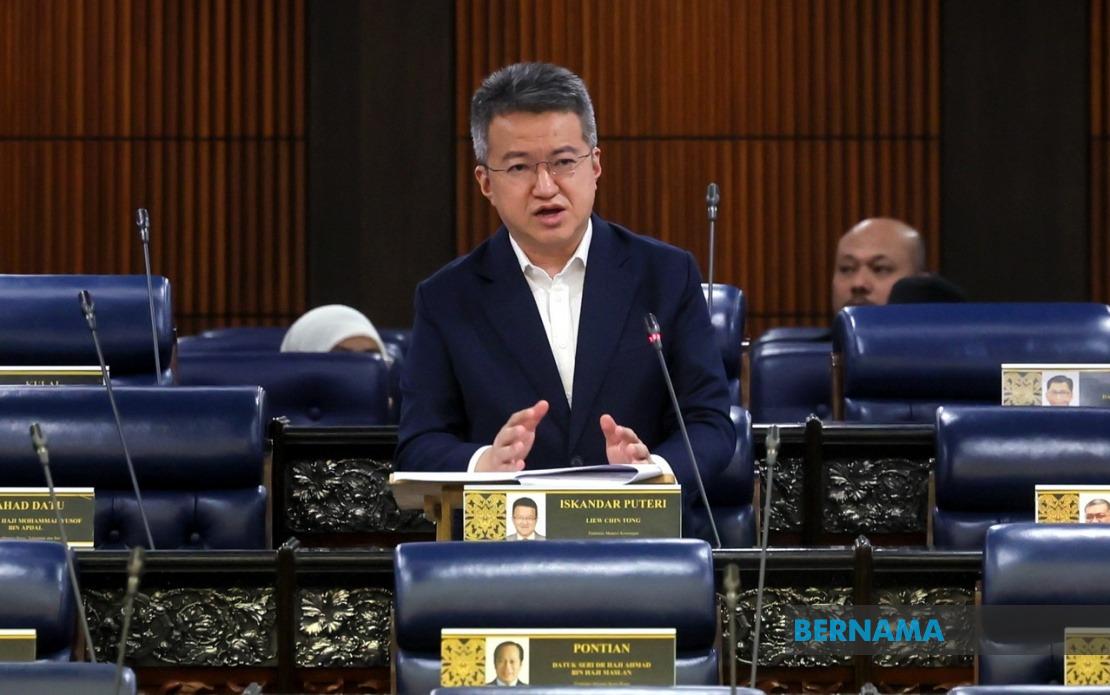
The Malaysian government has approved a RM15.77 million grant to the Malaysian Human Rights Commission (SUHAKAM) for 2025, marking a significant financial boost to the constitutional institution tasked with protecting and promoting human rights across the country. Deputy Finance Minister Liew Chin Tong announced the allocation during parliamentary proceedings, confirming that the figure represents a RM2.2 million increment compared to the RM13.55 million allocated in 2024. The enhanced funding reflects the government's commitment to sustaining SUHAKAM's independence and operational capacity during a period when human rights issues command increasing public and international attention.
The 2025 allocation encompasses operational expenses for both SUHAKAM and the Office of the Children's Commissioner (OCC), which functions under the commission's administrative umbrella. This consolidated funding approach streamlines budgetary processes while ensuring that child rights advocacy remains adequately resourced. The Children's Commissioner represents a relatively newer dimension of Malaysia's human rights infrastructure, established to address the specific vulnerabilities and developmental needs of minors within the constitutional framework. By providing unified funding, the government acknowledges the interconnected nature of human rights protection across different demographic groups.
Breaking down the utilisation of previous allocations, Liew outlined that 2024 funding covered the fixed allowance and emoluments for commissioners, essential operational costs including rental and utility expenses, and the implementation of SUHAKAM's comprehensive annual programme calendar. These expenditure categories reflect the institution's dual responsibilities: maintaining an independent investigative and complaint-handling capacity while simultaneously conducting public education and advocacy initiatives. The commission's work spans from investigating allegations of human rights violations to organising awareness campaigns and engaging with civil society organisations, activities that demand sustained financial commitment.
The deputy minister emphasised that the government has maintained uninterrupted funding for SUHAKAM since its establishment, a point of institutional significance in the Southeast Asian context where independent human rights bodies sometimes face budgetary constraints that compromise their effectiveness. This consistent support carries implications for Malaysia's international standing on human rights governance and signals continuity in the government's approach to constitutional institutions. However, observers note that funding levels alone do not necessarily reflect the depth of political protection afforded to SUHAKAM's operations, particularly when the commission investigates matters touching on sensitive governance issues.
The allocation decision emerged from the Budget 2024 review process and took into account SUHAKAM's historical spending performance and the government's fiscal capacity at the time of budgeting. This evaluation framework suggests a pragmatic approach where funding reflects demonstrated operational efficiency rather than merely proportional to societal demand for human rights investigations. Given Malaysia's diverse population and complex socioeconomic landscape, the extent to which current funding enables SUHAKAM to respond comprehensively to all complaints and investigation requests remains a matter of ongoing scrutiny from civil society advocates.
Beyond the direct human rights commission funding, Liew also addressed parliamentary questions concerning social safety nets for Malaysia's expanding informal and gig economy workforce, an issue intersecting with fundamental human rights considerations around dignified work and economic security. The government confirmed its continuation of the i-Saraan programme through Budget 2026, an initiative designed to encourage informal sector workers to voluntarily contribute to the Employees Provident Fund (EPF). The programme operates through government matching incentives, currently set at 20 per cent of annual contributions with a maximum annual benefit of RM500 or RM5,000 cumulatively across a lifetime, contingent on meeting specified eligibility criteria.
Starting in 2026, the government will launch the i-Saraan Plus programme, a targeted expansion addressing the specific circumstances of platform-based gig workers engaged in e-hailing and p-hailing services. This cohort represents one of Malaysia's fastest-growing employment segments, yet workers lack traditional employment protections and formal pension arrangements. Under i-Saraan Plus, eligible gig workers can access government matching contributions reaching RM600 annually or RM6,000 over their working lifetime, substantially exceeding the standard programme rates. The differential support reflects recognition that platform-based workers face heightened economic vulnerability due to income volatility and absence of employer-sponsored benefits.
The EPF simultaneously continues examining mechanisms to broaden contribution coverage across the informal sector and gig economy more comprehensively. This exploratory phase acknowledges that voluntary programmes, while beneficial, do not reach all eligible workers and that systemic coverage gaps persist. The challenge lies in designing mechanisms that balance worker autonomy with adequate protection, particularly given that many informal workers operate at marginal income levels where even matching contributions may seem dispensable relative to immediate consumptive needs. Malaysian policymakers face the same tension confronting other Southeast Asian nations: how to extend social protection to workers outside traditional employment arrangements without imposing burdensome administrative costs or regulatory barriers that could undermine the flexibility these workers depend upon.
The government's stated objective remains ensuring that informal and gig economy workers receive enhanced social protection and accumulate sufficient retirement savings to support themselves in later life. This long-term perspective recognises that today's informal workers constitute tomorrow's vulnerable elderly population if adequate pension provision does not occur during working years. Malaysia's ageing demographic trajectory intensifies the urgency of addressing pension coverage gaps, as declining ratios of working-age to retired populations strain public welfare systems. By incentivising voluntary EPF contributions among non-traditional workers, the government aims to distribute retirement security responsibility across individual, employer, and state actors.
The parliamentary debate underscores Malaysia's multifaceted approach to governance challenges: simultaneously strengthening institutions mandated to protect constitutional rights through SUHAKAM while extending social protection mechanisms to marginalised workers through EPF-linked programmes. These investments address different dimensions of human dignity and social cohesion. SUHAKAM's enhanced budget supports investigation and redress for human rights violations, while the i-Saraan and related schemes address preventive dimensions of rights protection by reducing economic desperation that often accompanies inadequate retirement security. Together, they represent a comprehensive if somewhat fragmented response to the interconnected challenges of rights protection and inclusive economic development in a middle-income nation grappling with demographic change and labour market transformation.

