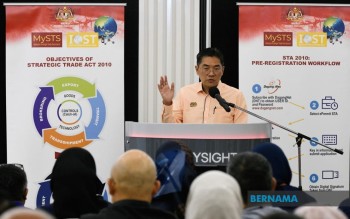
Malaysia's commitment to fortifying its electrical and electronics industry reflects broader strategic calculations about the nation's economic future in an increasingly competitive global marketplace. The Ministry of Investment, Trade and Industry has signalled renewed determination to sustain and expand the country's foothold in semiconductor manufacturing, advanced sensors, and telecommunications—sectors that have long anchored Malaysia's position as a vital node in international technology production networks.
Deputy Minister Sim Tze Tzin articulated the government's perspective during recent engagement with industry stakeholders, emphasizing that the E&E sector represents far more than a routine economic contributor. Rather, it functions as a strategic pillar underpinning Malaysia's relevance in cross-border manufacturing ecosystems, particularly in high-value assembly, testing, and packaging operations that command premium margins and generate substantial employment.
Penang and the Northern Region occupy pivotal positions within this narrative. The concentration of world-class technology manufacturers in these areas has transformed them into globally recognized industrial clusters, attracting multinational corporations and specialized suppliers. This geographic concentration creates ecosystem advantages—proximity to established supply chains, skilled workforce availability, and infrastructure specifically designed for high-precision manufacturing—that remain difficult for competitors to replicate. Malaysia's capacity to host hundreds of sophisticated technology enterprises simultaneously underscores the maturity and resilience of its industrial base.
The semiconductor industry merits particular attention within this framework. Malaysia's involvement spans the entire production spectrum, from sophisticated assembly operations through rigorous testing protocols to final packaging processes. These intermediate stages, while less glamorous than chip design or fabrication, generate substantial economic value and employment. They also position Malaysia as indispensable to global electronics manufacturers, who require reliable, cost-effective partners capable of handling millions of units annually while maintaining exacting quality standards.
Beyond sector promotion, MITI is simultaneously strengthening export control compliance mechanisms. This dimension often receives less public attention than investment incentives, yet it carries equivalent strategic weight. Ensuring that Malaysia's technology exports operate within international regulatory frameworks protects the country's reputation, maintains access to sensitive international markets, and prevents inadvertent involvement in illicit trade networks. For Malaysian manufacturers, compliance certainty reduces legal risks and insurance costs while enhancing their attractiveness to risk-averse multinational clients.
The government recognizes that Malaysia's competitive position depends not merely on manufacturing capabilities but also on institutional trustworthiness. International technology firms increasingly conduct due diligence on supply chain partners, assessing regulatory compliance, intellectual property protections, and political stability. By actively promoting export control compliance, MITI signals to global corporations that Malaysia maintains governance standards commensurate with advanced manufacturing nations, thereby reinforcing the country's appeal as a production location.
Trade performance data from the first half of the year appears sufficiently robust to have convinced policymakers that the sector momentum justifies continued investment in support infrastructure. However, government statements also subtly address worker welfare concerns, with Deputy Minister Sim explicitly encouraging companies enjoying strong profitability to distribute benefits through salary increases and bonuses. This rhetoric acknowledges growing public expectations that economic growth should translate into tangible living standard improvements for ordinary workers, rather than concentrating entirely among corporate shareholders and senior management.
The Northern Region STA Clinic programme illustrates the government's hands-on engagement methodology. By assembling 86 industry participants for direct advisory sessions covering product classification, licensing procedures, and compliance protocols, MITI creates mechanisms through which manufacturers can navigate regulatory complexity more efficiently. Such initiatives reduce transaction costs for businesses while simultaneously allowing government officials to understand emerging industry challenges and adjust policy accordingly. This iterative dialogue between state and enterprise represents a sophisticated approach to industrial governance.
For Malaysia's standing within regional competition, these developments warrant careful observation. Vietnam, Thailand, and Indonesia all harbour ambitions to capture greater shares of electronics manufacturing activity currently concentrated in Malaysia. While Malaysia's established infrastructure and human capital provide defensive advantages, complacency invites disruption. The government's proactive positioning suggests awareness that technological industries require continuous upgrading—new capabilities, enhanced efficiency, stricter compliance—to prevent erosion of comparative advantage.
The broader economic context also matters considerably. Global semiconductor supply chains have undergone disruption in recent years, prompting multinational manufacturers to diversify away from excessive concentration in any single geography. This environment creates opportunities for Malaysia to attract production capacity from companies seeking alternative production sites, provided the country maintains its reputation for reliability and competence. The emphasis on export control compliance and government-industry partnership should be interpreted partly as efforts to capitalize on this transitional moment.
International trade tensions and geopolitical realignments add further urgency to Malaysia's strategy. As major powers compete for technological dominance and supply chain security becomes intertwined with national security calculations, countries hosting advanced manufacturing capacity acquire greater geopolitical leverage. Malaysia's positioning as a trusted, neutral location for technology production—compliant with international norms yet not aligned exclusively with any major power—represents a distinctive asset worth cultivating deliberately.
Looking forward, sustained success in the E&E sector depends on maintaining the combination of competitive advantages that have accumulated over decades. These include infrastructure investment, workforce development, regulatory clarity, and macroeconomic stability. The government's articulated commitment to strengthening this sector through both promotional initiatives and governance enhancement suggests recognition that Malaysia's economic future remains substantially linked to advanced manufacturing, even as digital transformation and automation reshape global production patterns.

