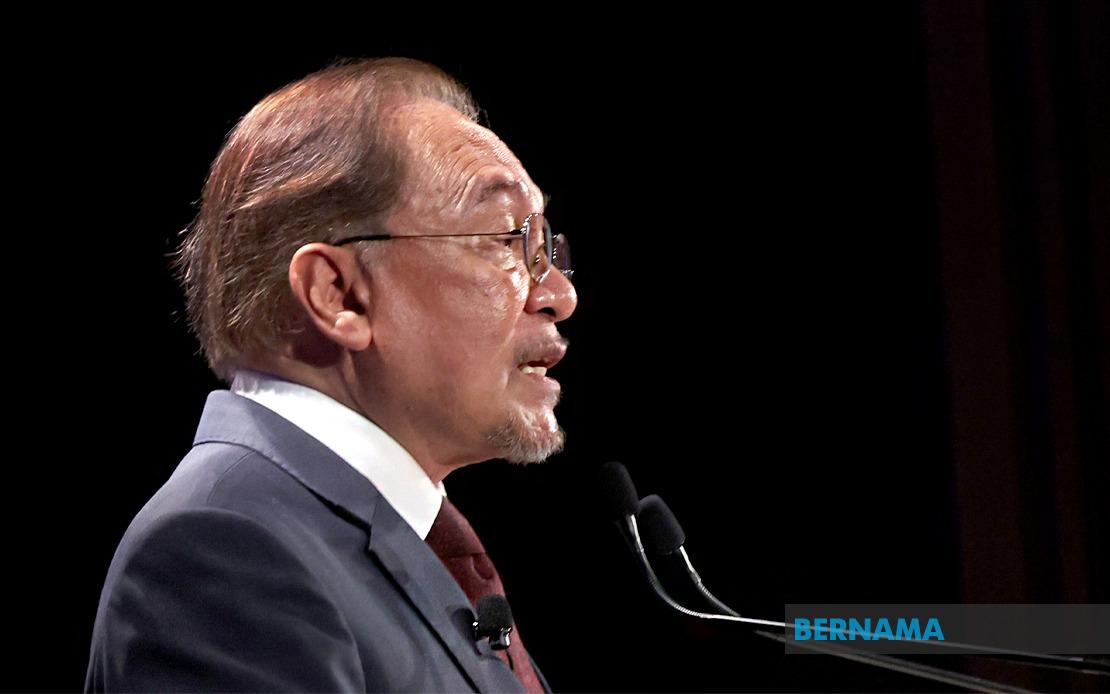
Malaysia has formally welcomed the nascent understanding between the United States and Iran as a positive step toward ending months of tension, with Prime Minister Datuk Seri Anwar Ibrahim acknowledging the crucial diplomatic efforts undertaken by Gulf nations, Türkiye, Pakistan and other regional mediators in brokering the memorandum of understanding. Speaking at the 39th Asia-Pacific Roundtable in Kuala Lumpur, Anwar struck an optimistic yet cautionary tone, recognising that while the accord represents progress, the fragile nature of the arrangement leaves considerable room for miscalculation or deliberate sabotage that could derail the peace process entirely.
The Prime Minister's endorsement carries particular weight given Malaysia's position as a prominent Southeast Asian voice in global affairs and its historical emphasis on mediation and consensus-building in international disputes. His comments underscore a broader regional perspective that prioritises de-escalation over confrontation, reflecting ASEAN's longstanding commitment to peaceful resolution of conflicts through dialogue and multilateral engagement. The Malaysian position also signals support for the mediation efforts of Gulf Cooperation Council states, which have invested considerable political capital in bringing the two adversaries to the negotiating table.
Central to Malaysia's concerns is the immediate and unconditional reopening of the Strait of Hormuz to international maritime commerce. This strategic waterway, which prior to the recent hostilities facilitated approximately one-fifth of the world's crude oil supply, has become a focal point of international anxiety due to its critical importance to global energy security. The continued disruption of shipping through this vital corridor has created cascading consequences throughout the global economy, with ripple effects felt acutely across Southeast Asia and its energy-dependent economies.
Anwar articulated a pointed critique of the economic fallout from prolonged tensions, emphasising that the soaring food and energy prices afflicting nations worldwide represent far more than abstract economic indicators. These price pressures have tangible human consequences, directly eroding purchasing power and living standards for ordinary citizens struggling to afford basic necessities. For Malaysia and other developing economies in the region, such inflationary pressures complicate efforts to maintain social stability and equitable development, particularly as governments attempt to balance budgetary constraints with the need to provide essential services.
The broader implications of extended conflict extend well beyond immediate commodity inflation. Anwar highlighted how billions of dollars that governments have been forced to deploy toward securing adequate food and energy supplies represent a catastrophic opportunity cost. These resources, which might otherwise have been channelled into education, healthcare, infrastructure development, and poverty alleviation programmes, have instead been diverted toward survival-level needs. For developing nations in Southeast Asia already grappling with limited fiscal space and competing development priorities, such diversions represent a significant setback to long-term economic advancement and social progress.
Qatar's role as a facilitator deserves particular emphasis, with reports indicating that indirect negotiations conducted on Wednesday between the United States and Iran achieved constructive momentum, particularly regarding access to the Strait of Hormuz and broader maritime security arrangements. This Qatari-mediated diplomatic channel represents a continuation of the Gulf state's established pattern of quiet diplomacy, leveraging its relationships with multiple stakeholders to forge pragmatic compromises that satisfy core security interests without demanding political capitulation from either party.
The 39th Asia-Pacific Roundtable, organised by the Institute of Strategic and International Studies Malaysia, provided an appropriate venue for Anwar to articulate Malaysia's position on this critical geopolitical development. The forum's focus on regional security and economic cooperation aligns naturally with Malaysia's concerns regarding stability in one of the world's most economically vital maritime zones. The Roundtable's multidisciplinary and multinational composition ensured that Anwar's remarks reached an influential audience of policymakers, academics, business leaders, and think-tank specialists capable of shaping regional responses to the emerging situation.
Looking ahead, the success of the US-Iran understanding will depend fundamentally on rigorous compliance with all agreed ceasefire provisions and the rapid normalisation of maritime commerce through the Strait of Hormuz. Any backsliding or reinterpretation of agreed terms risks reigniting tensions and undermining the fragile consensus that regional and international mediators have painstakingly constructed. For Malaysia and its regional partners, vigilant monitoring of implementation and sustained diplomatic engagement will be essential to consolidating these initial gains.
The Malaysian government's measured response—supportive yet circumspect—reflects the careful balancing act required of nations with significant strategic interests at stake but limited direct leverage in the dispute. By publicly welcoming the understanding while explicitly highlighting the preconditions necessary for its success, Anwar positioned Malaysia as both a stakeholder in regional stability and a responsible voice advocating for the specific outcomes upon which such stability depends. This approach reinforces Malaysia's self-presentation as a constructive middle power capable of constructive engagement on matters of global significance while remaining attentive to the distinctive vulnerabilities and priorities of developing economies and Southeast Asian nations.

