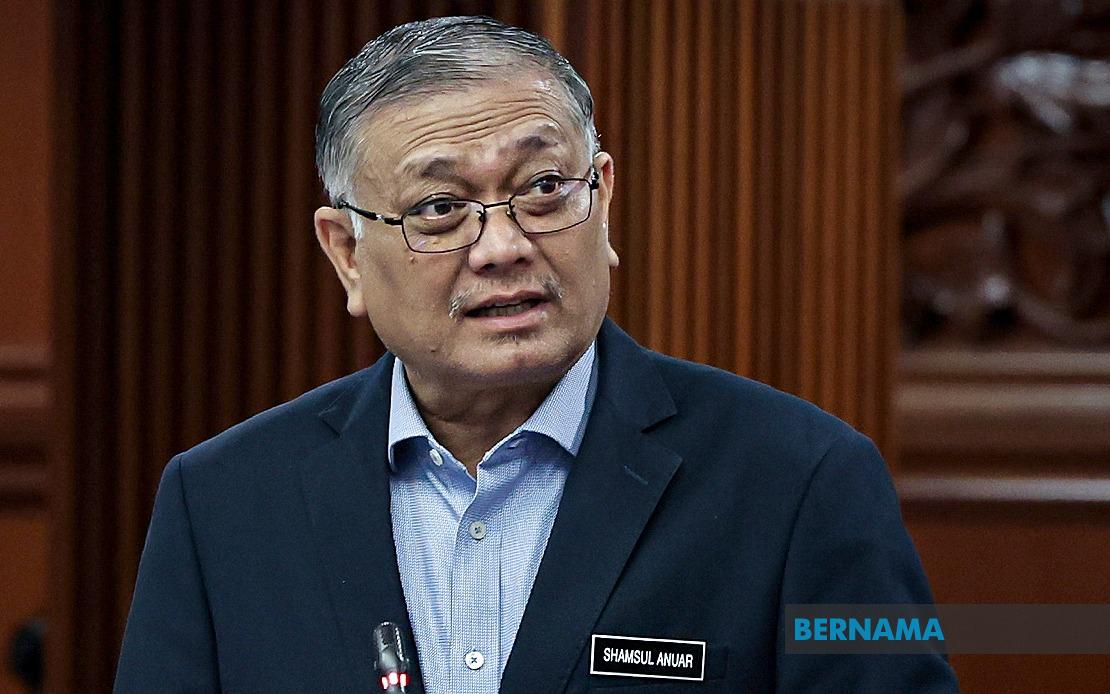
The Malaysian government has reaffirmed its commitment to assessing citizenship applications through a rigorous, case-by-case evaluation process that considers the unique circumstances of each applicant. Deputy Home Minister Datuk Seri Dr Shamsul Anuar Nasarah made this clarification during parliamentary debate on the Human Rights Commission of Malaysia (SUHAKAM) 2024 Annual Report, addressing concerns about individuals facing documentation challenges, particularly children born overseas to Malaysian mothers. The announcement carries particular significance for families navigating complex citizenship pathways and highlights the government's approach to balancing accessibility with national security considerations.
A persistent misconception in citizenship matters concerns the automatic disqualification of applicants whose Malaysian parents have passed away. Shamsul Anuar explicitly addressed this concern, emphasising that parental death does not inherently prevent an individual from pursuing Malaysian citizenship. Instead, each application undergoes thorough examination based on the applicant's own circumstances, supporting documentation, and applicable constitutional provisions. This clarification provides hope for individuals whose applications might have been delayed or stalled due to family loss, a common occurrence among diaspora communities and overseas-born children seeking to formalise their legal status in Malaysia.
The citizenship assessment procedure involves multiple layers of scrutiny designed to protect both applicant interests and national integrity. Every submission requires comprehensive background investigations, detailed document verification, and stringent security screening protocols. This multi-faceted approach ensures that the process serves as a genuine safeguard rather than merely a bureaucratic hurdle. The ministry maintains that this rigorous framework reflects Malaysia's responsibility to maintain sovereignty while remaining responsive to legitimate citizenship claims. For applicants, understanding these requirements upfront can facilitate smoother applications and reduce delays stemming from incomplete submissions.
Adults aged 21 and above who have never previously applied for citizenship retain the opportunity to pursue Malaysian nationality through naturalisation under Article 19 of the Federal Constitution. However, this pathway demands satisfaction of several prescribed conditions. Prospective citizens must hold permanent resident status, meet minimum residency requirements, demonstrate good moral character, and possess sufficient knowledge of the Malay language. These criteria reflect the government's expectation that naturalised citizens maintain genuine commitment to Malaysian society and share foundational cultural connections with the nation. For Southeast Asian expatriates and their families considering long-term settlement in Malaysia, understanding these prerequisites clarifies the timeline and preparation necessary for successful applications.
Processing efficiency represents another priority within the Home Ministry's citizenship administration. Officials have established a target timeline of one year for processing complete applications, with performance against this benchmark receiving regular monitoring and review. While acknowledging the complexity inherent in citizenship cases—particularly those involving multiple jurisdictions and historical documentation gaps—the ministry commits to continuous procedural refinement. This emphasis on efficiency responds to growing frustration among applicants facing prolonged uncertainty, a particularly acute issue for stateless or documentation-challenged individuals whose circumstances demand timely resolution.
Sabah and Sarawak present distinct citizenship administration challenges stemming from historical documentation issues and distinctive state-level procedures. To address these complications, the Home Ministry has established a Special Task Force (PPK) comprising the National Registration Department (JPN) and the Sarawak Premier's Department. Through field-based operations, this task force actively assists individuals in resolving documentation deficiencies, including delayed birth registration and identification document issuance. Such proactive intervention acknowledges the particular difficulties faced by East Malaysian communities and represents a meaningful commitment to equity across federal territories and states.
Parallel state-level mechanisms complement federal efforts to expedite citizenship resolution. The Sarawak-Level Special Committee on Citizenship Status reviews applications under Article 15E of the Federal Constitution, focusing on cases requiring special consideration such as children with complex circumstances. By establishing this localised committee structure, the government enables faster decision-making for cases whose particularities demand nuanced evaluation beyond standard naturalisation pathways. This tiered approach recognises that citizenship matters often involve human situations that resist formulaic processing, requiring discretionary judgment informed by local context and comprehensive understanding.
Beyond domestic citizenship frameworks, Malaysia continues engaging regional and international mechanisms to address refugee protection concerns. Deputy Foreign Minister Datuk Lukanisman Awang Sauni highlighted Malaysia's commitment to utilising ASEAN platforms for coordinating refugee assistance and strengthening cooperation with the United Nations High Commissioner for Refugees (UNHCR). The refugee and asylum seeker situation, particularly involving Rohingya communities, presents multifaceted regional challenges encompassing irregular migration, human trafficking, and security vulnerabilities. Malaysia's diplomatic engagement acknowledges that addressing displacement crises requires sustained international collaboration rather than unilateral action.
The Five-Point Consensus (5PC) remains Malaysia's preferred ASEAN framework for addressing the Myanmar crisis and its humanitarian consequences. While Malaysia advocates vigorously for this comprehensive regional response, government officials recognise that sustainable resolution demands engagement from the broader international community beyond Southeast Asia. Lukanisman emphasised Malaysia's ongoing advocacy for equitable burden-sharing and responsibility-sharing among nations, including expanding third-country resettlement opportunities for displaced populations. This diplomatic positioning reflects Malaysia's view that while regional solidarity matters profoundly, addressing root causes of displacement and providing durable solutions requires mobilising global resources and commitment.
For Malaysian citizens and residents, these citizenship and refugee frameworks intersect with broader questions about national identity, humanitarian responsibility, and administrative capacity. The government's approach attempts to navigate competing priorities: responding compassionately to individuals with legitimate Malaysian citizenship claims while maintaining rigorous security and documentation standards; supporting refugees within constrained national resources while advocating for international responsibility-sharing. As Malaysia continues processing citizenship applications and managing refugee populations, the effectiveness of these policies will likely shape not only individual lives but also national discourse around identity, belonging, and integration within Southeast Asian societies.

