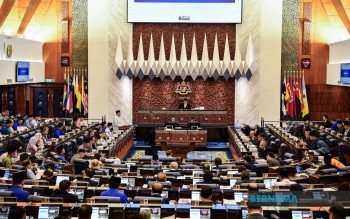
Malaysia's investment landscape has demonstrated substantial momentum over the past five years, with the Ministry of Investment, Trade and Industry and the Malaysian Investment Development Authority jointly approving nearly RM774.4 billion across 5,899 manufacturing projects between 2020 and 2025. The scale of this commitment reflects the government's concerted push to position the country as a competitive manufacturing hub in Southeast Asia, particularly as regional economies vie for investment in an increasingly complex global supply chain environment.
Remarkably, the approval-to-realisation ratio has been strong, with 5,087 projects—representing 86.2 per cent of the total number—having materialised with investments of RM587.4 billion already deployed. This figure underscores not merely bureaucratic approval but genuine implementation on the ground, a distinction crucial for assessing the credibility of investment promotion efforts. The remaining 812 projects, still in pipeline, represent future economic activity and job creation potential that continues to develop across Malaysia's manufacturing sectors.
The employment impact has been significant and substantial. The realised projects have generated 416,914 jobs, a figure that carries particular weight given Malaysia's labour market dynamics and ongoing competition for talent. More importantly, the quality of employment has shifted upward, with nearly 40 per cent of these positions classified as management, professional, technical, supervisory and skilled roles. This composition contrasts sharply with lower-value manufacturing that characterised earlier phases of Malaysia's industrialisation, indicating a deliberate policy shift toward attracting investment in more sophisticated, knowledge-intensive operations.
Yet the investment approval pipeline reveals instructive patterns about the nature of modern manufacturing projects. The gap between approved investments and realised ones becomes more pronounced in large-scale, capital-intensive ventures that demand extended development timelines and incorporate cutting-edge technologies. These projects frequently require intricate coordination between multiple stakeholders, complex technology transfer arrangements, and substantial infrastructure preparatory work. The phased implementation approach reflects commercial realities rather than policy failure—projects involving semiconductor fabrication, aerospace component manufacturing, or advanced digital ecosystem development naturally unfold across multiple years and require careful sequencing of capital deployment.
Understanding these sectoral dynamics proves essential for evaluating Malaysia's manufacturing strategy. The government has deliberately concentrated its attraction efforts on high-value-added domains including semiconductors, the digital economy, green technology and aerospace. These sectors align with global megatrends toward electrification, decarbonisation and digital transformation, positioning Malaysia to benefit from structural shifts in global demand rather than competing solely on labour costs. Investment in these domains creates substantial positive externalities for the broader economy through technology spillovers, skills development and upstream supply chain opportunities.
Beyond simple project approval, the government has implemented multifaceted measures designed to ensure investments translate into genuine economic benefits for Malaysian workers and communities. Strategic facilitation mechanisms focus on accelerating project implementation timelines, reducing bureaucratic friction and providing direct infrastructure support to incoming investors. Simultaneously, the authorities have intensified efforts to develop local human capital, recognising that sustained competitiveness depends on workforce capabilities rather than investment volume alone.
Particularly noteworthy are the specific conditions attached to manufacturing licences and approvals for high-potential foreign ventures. These stipulations mandate the employment of local workers at various skill levels, requiring foreign investors to establish formal industrial training programmes and forge collaborative relationships with Malaysian universities and research institutions. Such conditions represent a deliberate policy instrument to embed investments within the local ecosystem, preventing scenarios where multinational manufacturers operate as isolated enclaves disconnected from broader economic development.
The government's emphasis on research and development, automation and innovation initiatives reflects deeper strategic thinking about Malaysia's medium-to-long-term manufacturing role. Rather than seeking to lower labour costs to compete with Bangladesh or Vietnam, policy has shifted toward capturing higher-value-added segments where technological sophistication and innovation capability provide durable competitive advantages. Automation investments, while displacing some lower-skill roles, create demand for skilled technicians, engineers and process specialists—occupations offering superior wage trajectories and career advancement opportunities.
For Malaysian policymakers and business leaders, these figures validate the effectiveness of deliberate industrial policy combined with credible investment facilitation. The 86.2 per cent realisation rate suggests that approved investments represent genuine commitments rather than speculative proposals that subsequently evaporate. This credibility matters substantially when competing against other Southeast Asian nations for footloose manufacturing investment, as potential investors conduct detailed due diligence on the likelihood that approved projects will actually proceed.
Regionally, Malaysia's performance carries significance for ASEAN's broader manufacturing trajectory. As trade tensions between major powers and supply chain diversification pressures create manufacturing opportunities, competition among Southeast Asian nations has intensified. Malaysia's demonstrated capacity to attract, facilitate and embed substantial capital investments while simultaneously developing local capabilities positions it competitively within this regional contest. The quality employment outcomes—with nearly 40 per cent of positions in skilled categories—suggest the country is successfully capturing the more sophisticated end of manufacturing relocation trends.
Looking forward, sustaining this momentum requires maintaining both investment facilitation excellence and human capital development initiatives. The pipeline of 812 unapproved projects awaiting implementation represents approximately RM187 billion in additional potential investment and roughly 85,000 additional jobs. Translating these approvals into realisations will demand continued policy consistency, infrastructure investment and skills development. The focus on high-value sectors provides strategic direction, but execution across multiple government agencies and timeline horizons remains critical to translating approved investments into sustained, broad-based economic benefit for Malaysian workers and communities.

