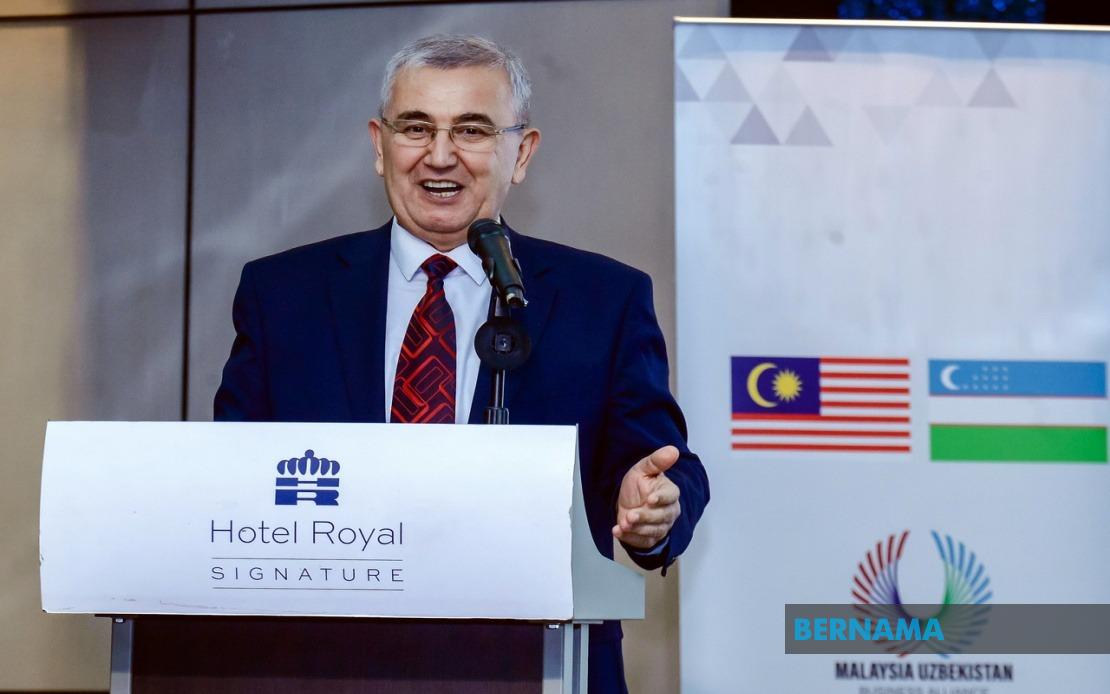
Malaysia and Uzbekistan are moving towards a comprehensive agricultural partnership that leverages complementary strengths in farming innovation, food production, and technological advancement to address regional food security challenges. The initiative, which has gained momentum following high-level political visits and ministerial exchanges, represents a strategic alignment between Southeast Asia's agricultural technology hub and Central Asia's emerging food production powerhouse. According to Uzbekistan Ambassador to Malaysia Dr Karomidin Gadoyev, agriculture has emerged as a consistent priority in bilateral discussions, underscoring how both governments view the sector as essential to their economic futures and national resilience.
The foundation for this collaboration was solidified during reciprocal visits by Malaysia's Prime Minister Datuk Seri Anwar Ibrahim to Uzbekistan in May 2024 and Uzbekistan's President Shavkat Mirziyoyev's February visit to Malaysia. Agriculture and Food Security Minister Datuk Seri Mohamad Sabu's subsequent official visit to Uzbekistan marked a watershed moment, catalysing concrete cooperative frameworks. These high-level engagements demonstrate that both nations view agricultural development not merely as a sectoral concern but as a geopolitical priority aligned with broader regional stability and prosperity objectives.
The partnership exploits clear geographic and sectoral complementarities. Malaysia brings demonstrated competencies in paddy cultivation, aquaculture, fisheries management, and advanced agricultural research and development through institutions like the Malaysian Agricultural Research and Development Institute (MARDI). Uzbekistan, conversely, possesses sophisticated expertise in energy-efficient irrigation technologies critical for arid and semi-arid climates, horticultural production, and integrated agri-food processing capabilities. This asymmetry of expertise creates natural collaboration opportunities where each nation can efficiently transfer knowledge rather than duplicating developmental efforts.
Technology adoption emerges as the cornerstone of cooperation, particularly in digital agriculture and artificial intelligence applications. Both countries recognise that conventional farming methods face increasing pressure from climate variability, population growth, and resource scarcity. Malaysian companies, including the agricultural drone specialist Miracule, have already established operational presence in Uzbekistan, with plans to assemble advanced agricultural drones domestically. This technology transfer model positions Uzbekistan to modernise its vast agricultural sectors while creating new manufacturing and services capabilities, exemplifying how bilateral partnerships can drive industrialisation alongside productivity gains.
Aquaculture represents particularly fertile ground for expansion. Uzbekistan's landlocked geography and growing population of nearly 40 million have created sustained demand for seafood products that domestic production cannot satisfy. Malaysian companies have already pioneered biofloc technology, which reduces feed costs by up to 30 per cent while simultaneously increasing productivity and lowering overall production expenses. Malaysian investors are exploring shrimp farming and fisheries ventures in Uzbekistan, suggesting confidence in the regulatory environment and market potential. This sector could become a significant employment creator across both nations and a source of premium protein for Central Asian consumers.
The digital and innovation dimension warrants particular attention for Malaysian stakeholders. Uzbekistan's integration of Malaysian agricultural expertise and technologies positions the country as a potential testbed for scaling innovations across Central Asia's broader market. Should Malaysia successfully establish itself as the technology provider and knowledge partner in this relationship, opportunities emerge for Malaysian firms to expand into Kazakhstan, Tajikistan, Turkmenistan, and Kyrgyzstan. The region's combined population exceeds 180 million, offering substantial commercial potential for agricultural technology providers.
Bilateral trade figures underscore the nascent stage of agricultural cooperation. Agri-food trade between the nations reached RM338 million in 2025, with Malaysian palm oil and derivative products dominating exports. Ambassador Gadoyev's assessment that trade could double or triple within five to ten years reflects realistic ambition grounded in identified expansion opportunities. Malaysia's potential role as a processor and regional distribution hub for crude palm oil destined for Central Asian markets provides a concrete pathway for value-chain integration. Simultaneously, Uzbek premium fresh fruits and processed food products could gain traction in Malaysian markets, reversing the current trade asymmetry.
The invitation for Uzbekistan to participate in the Malaysia Agriculture, Horticulture and Agrotourism Exhibition (MAHA) 2026 demonstrates how Malaysia is leveraging existing institutional frameworks to deepen engagement. MAHA, one of Asia's largest agricultural showcases, provides unparalleled access to Malaysian and regional agribusiness participants. Uzbekistan's participation would enable local companies to showcase capabilities, forge commercial partnerships, and identify technology providers and customers. For Malaysian organisers and participants, Uzbek presence reinforces MAHA's regional positioning and exposes the domestic industry to Central Asian market dynamics.
From a Malaysian perspective, this partnership addresses strategic food security vulnerabilities. As an import-dependent nation for various food commodities, Malaysia benefits from diversifying agricultural supply sources and establishing long-term partnerships with reliable producers. Uzbekistan's horticultural production, particularly in fruits and vegetables, offers alternative sourcing during disruptions affecting traditional suppliers. Simultaneously, Malaysia's downstream processing and export capabilities can add value to Uzbek agricultural products, creating mutual dependencies that strengthen political and economic ties.
The sustainability dimension merits emphasis. Both countries' interest in energy-efficient irrigation and smart farming technologies reflects growing consciousness of environmental constraints. Uzbekistan faces particular pressure regarding water resources in the Aral Sea basin, making efficient irrigation adoption economically imperative. Malaysian expertise in sustainable aquaculture and resource-efficient farming systems addresses genuine development challenges. Technology transfer in these domains benefits Uzbekistan environmentally and economically while positioning Malaysian firms as solutions providers.
Institutional cooperation through MARDI signifies commitment to long-term knowledge building rather than transactional arrangements. Research collaboration enables both nations to address region-specific agricultural challenges systematically. Malaysian researchers gain exposure to Central Asian growing conditions and consumer preferences, enriching domestic expertise. Uzbek scientists access cutting-edge Malaysian research facilities and methodologies, accelerating innovation adoption timelines. Such institutional partnerships typically outlast political cycles and generate cumulative benefits exceeding their initial scope.
The broader regional context suggests this bilateral partnership aligns with Southeast Asian strategic interests. China's Belt and Road Initiative has strengthened connectivity between Southeast and Central Asia. Malaysia's agricultural partnership with Uzbekistan positions Southeast Asia as a technology and value-added processing partner for Central Asian commodity producers. This positioning counters concentration of agricultural supply chain control and creates alternative market channels for both regions.
Moving forward, the success of this partnership depends on translating political commitment into institutional frameworks and private sector engagement. Establishing dedicated trade missions, technology exchange programmes, and investment facilitation mechanisms would accelerate progress. Clear identification of pilot projects in aquaculture, agricultural drones, and food processing would demonstrate tangible benefits early. Should implementation match ambition, the Malaysia-Uzbekistan partnership could become a model for agricultural cooperation across Asia, demonstrating how geographically distant nations can create mutually beneficial relationships through strategic complementarity and technology-enabled integration.

