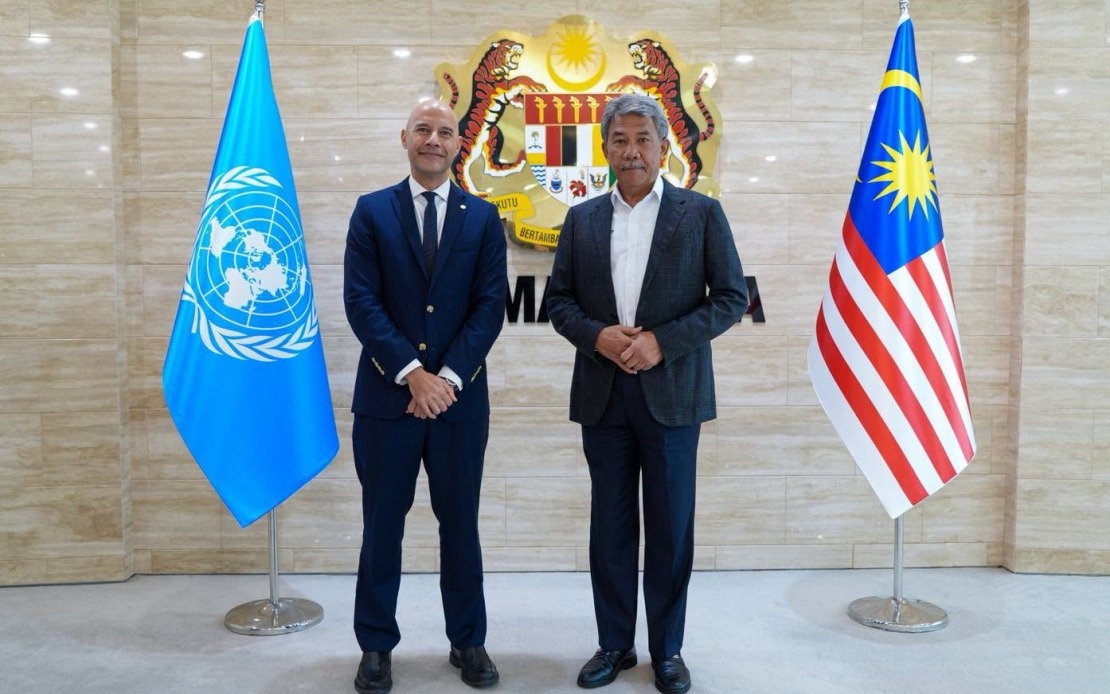
Foreign Minister Datuk Seri Mohamad Hasan met with United Nations Resident Coordinator Nikolas Myint at the Foreign Ministry headquarters in Kuala Lumpur on Wednesday, signalling Malaysia's continued engagement with the global multilateral system at a time when regional cooperation frameworks are evolving across Southeast Asia. The courtesy visit, announced through the minister's social media channels, underscores the diplomatic importance Malaysia attaches to its relationship with UN agencies operating within the country.
Myint, who assumed the role of UNRC covering Malaysia, Singapore and Brunei following his appointment by United Nations Secretary-General on May 31, 2026, brings the UN's regional coordination mandate directly into dialogue with Malaysian policymakers. This tri-country remit reflects the UN's efficiency in deploying senior representatives across geographically proximate nations, allowing for streamlined coordination on development programmes, humanitarian initiatives, and sustainable development goals that transcend national borders.
During the meeting, both sides used the platform to exchange perspectives on how Malaysia and the United Nations can deepen their working relationship. For Malaysia, such engagements serve multiple strategic purposes: they allow the government to articulate its development priorities to the UN system, ensure that international programmes align with national aspirations, and position the country as an active stakeholder in addressing transnational challenges from climate change to pandemic preparedness.
In his remarks, Mohamad emphasised Malaysia's recognition of the UN's pivotal role in tackling the complex global issues that individual nations cannot resolve alone. This framing is particularly significant for a middle-income nation like Malaysia, which must balance its own domestic development agenda with participation in international cooperation frameworks. The minister's acknowledgement of the UN's importance reflects a broader Malaysian foreign policy approach that views multilateralism not as a constraint but as a vehicle for advancing national interests through collective action.
The commitment to work closely with Myint and the various UN agencies stationed in Malaysia carries practical implications for implementation of the Sustainable Development Goals, coordination of humanitarian responses, and alignment of Malaysian policies with international best practices. UN agencies active in the country span health, education, environment, and social development sectors, making the quality of government-UN relations crucial for programme effectiveness and resource allocation.
Malaysia's emphasis on acting "in line with the nation's development aspirations and global well-being" reveals a careful diplomatic balancing act. The country seeks to remain a responsible global actor committed to international norms and cooperation while protecting policy space for pursuing its own economic and social objectives. This dual commitment becomes more complex in a geopolitical environment where major powers increasingly compete for influence through alternative development frameworks and bilateral arrangements.
The timing of this engagement is noteworthy given that Malaysia continues navigating its role within ASEAN and its broader regional relationships. As the Southeast Asian bloc itself grapples with maintaining unity amid great power competition, bilateral relationships with the UN system provide Malaysia with an additional channel for international engagement that is separate from but complementary to regional diplomatic efforts.
Myint's appointment as a regional coordinator rather than a Malaysia-specific representative also suggests that transnational challenges increasingly demand cross-border governance approaches. Issues such as air quality management, water resource sharing, labour mobility, and cybersecurity threats do not stop at national boundaries. The tri-country coordination structure allows the UN to address these interconnected challenges with a single senior officer overseeing implementation across three distinct national contexts.
For Malaysian civil society and development practitioners, the visit signals that the government remains committed to collaborative approaches with international organisations. NGOs, research institutions, and social enterprises that work on UN-supported programmes can interpret the high-level engagement as institutional commitment to maintaining vibrant partnerships that often deliver measurable development outcomes at grassroots levels.
The broader context of Malaysia-UN relations includes the country's participation in UN peacekeeping operations, contributions to UN specialised agencies, and hosting of regional UN offices. These dimensions of engagement extend well beyond courtesy calls and reflect Malaysia's integration into the global governance architecture. Maintaining strong working relationships at the ministerial level helps ensure that Malaysia's voice remains heard in UN forums and that international programmes addressing Malaysian populations receive adequate resources and priority.
Government-UN cooperation also provides Malaysia with access to global best practices, technical expertise, and peer learning opportunities that can inform domestic policymaking. When the Foreign Minister emphasises mutual benefit, he signals that Malaysia views the UN partnership as a two-way relationship where both sides gain value, rather than Malaysia simply receiving international assistance or directives.
As Malaysia continues developing its capacity in emerging sectors like renewable energy, digital infrastructure, and inclusive growth, the UN system offers partnership opportunities to achieve sustainable development targets while building local expertise. The meeting between Mohamad and Myint, though ceremonial on its surface, represents the foundational diplomacy that enables these deeper programmatic collaborations to flourish and benefit Malaysian communities over time.

