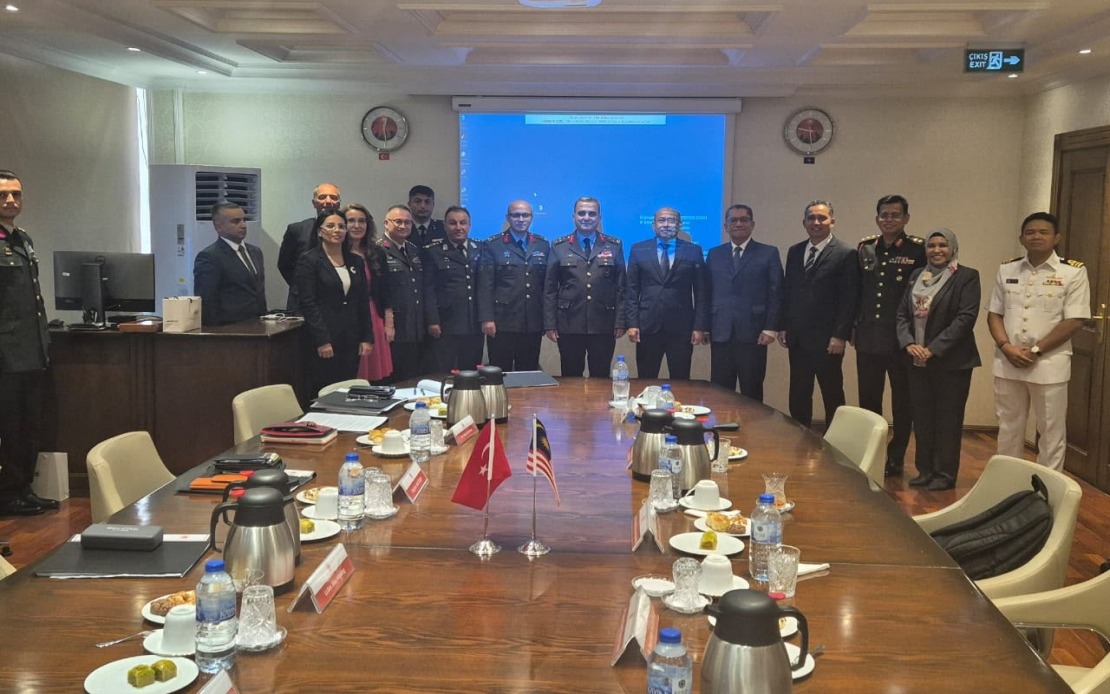
Malaysia and Turkiye have taken a significant step in their bilateral relationship by conducting their inaugural Policy Talk at the Turkish Ministry of National Defence in Ankara on Monday, marking a formal institutionalisation of defence dialogue between the two countries. The meeting, presided over by Lt Gen Ilkay Altindag, director-general of defence and security at the Turkish Defence Ministry, saw Malaysia represented by Datuk Yani Daud, deputy secretary-general of policy at the Malaysian Ministry of Defence, signalling the strategic importance both nations place on this engagement.
The substantive discussions ranged across multiple dimensions of mutual concern, with particular emphasis on defence policy frameworks and overarching strategic doctrine. Both delegations exchanged comprehensive perspectives on geopolitical security challenges that confront their respective regions, underscoring the growing recognition that stability in Asia and the Middle East remains interconnected. The deliberations extended beyond bilateral military matters to encompass the broader imperative of maintaining regional equilibrium, reflecting a shared conviction that cooperative security architectures benefit all stakeholders.
A notable dimension of the talks involved Malaysia's formal acknowledgment of Turkiye's peacekeeping endeavours in West Asia, particularly through Turkiye's involvement in facilitating the Makkah Pact. This agreement represents an important regional initiative aimed at de-escalating tensions and building consensus among diverse stakeholders in one of the world's most strategically vital regions. By explicitly endorsing Turkiye's diplomatic and security contributions, Malaysia demonstrates its alignment with multilateral approaches to conflict prevention and resolution.
The establishment of Terms of Reference for the Malaysia-Turkiye Policy Talk represents a crucial institutional achievement from these inaugural discussions. Rather than treating this engagement as a one-off exchange, both nations have committed to creating a durable mechanism that will facilitate ongoing dialogue, coordination, and planning. These terms will provide a structured framework through which both countries can systematically explore cooperation instruments, harmonise defence initiatives, and identify concrete programmes that serve mutual strategic interests whilst addressing shared security concerns.
Looking ahead, Malaysia has formally extended an invitation to Turkiye to participate in the second iteration of this policy dialogue, scheduled for Kuala Lumpur in the coming year. This reciprocal arrangement underscores the commitment to genuine partnership rather than transactional engagement. The planned venue shift to Malaysia's capital signals the intention to deepen institutional ties and allow both nations to showcase their respective defence establishments and strategic priorities within their home settings.
For Malaysia, this defence cooperation initiative aligns seamlessly with the strategic objectives articulated in the Mid-Term Review of the Defence White Paper, the nation's overarching security planning document. The defence white paper reflects Malaysia's assessment of its strategic environment and outlines priorities for force modernisation, capability development, and alliance management. By incorporating engagement with Turkiye through formal policy talks, Malaysia situates this bilateral relationship within its broader defence posture and long-term security architecture.
The timing of this inaugural dialogue carries regional significance as Southeast Asia and the broader Indo-Pacific continue navigating complex geopolitical dynamics. Turkiye, positioned at the intersection of Europe, Asia, and the Middle East, brings unique perspectives and considerable military capabilities to discussions on regional stability. For Malaysia, which has emphasised regional centrality and multilateral engagement as cornerstones of its foreign policy, the opportunity to deepen ties with a significant military power outside the traditional alliance structures provides strategic diversification.
The emphasis placed during these talks on information sharing and perspective-building reflects contemporary understandings of security cooperation that extend beyond traditional military-to-military exchanges. Modern defence partnerships increasingly require sophisticated mechanisms for exchanging strategic assessments, early warning signals, and policy insights. By formalising these information channels through the Policy Talk framework, Malaysia and Turkiye position themselves to respond more effectively to emerging security challenges whilst building mutual understanding that transcends narrow bilateral interests.
The defence cooperation framework now emerging between Malaysia and Turkiye may serve as a model for other Southeast Asian nations seeking to broaden their security partnerships with non-traditional partners. As regional governments pursue strategies of strategic autonomy and hedging, relationships like the Malaysia-Turkiye dialogue offer pathways to enhance capability whilst maintaining strategic independence. The institutionalisation through terms of reference ensures these partnerships develop depth and durability beyond the tenure of individual political administrations.
The establishment of this formal dialogue mechanism also reflects broader trends in Asian security cooperation wherein countries increasingly recognise the value of sustained engagement with partners beyond their immediate geographic neighbourhoods. Turkiye's interest in strengthening ties with Southeast Asia signals its strategic pivot toward the Indo-Pacific region, whilst Malaysia's openness to such engagement demonstrates Kuala Lumpur's pragmatic approach to building a coalition of like-minded partners committed to rules-based international order and peaceful conflict resolution.

