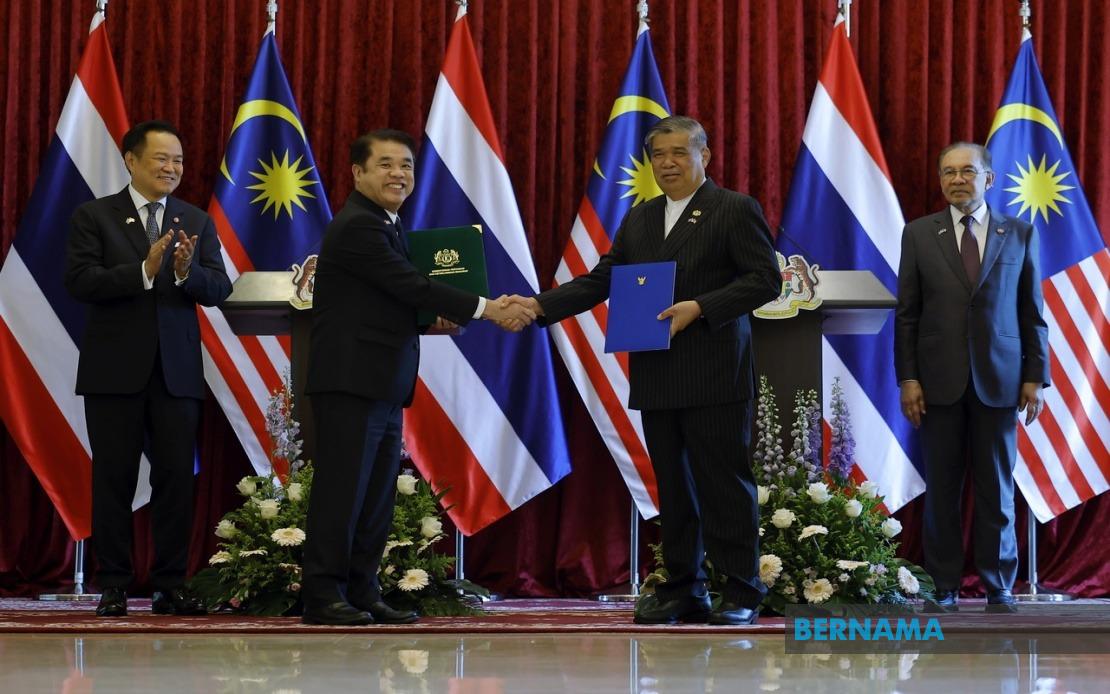
Thailand's Prime Minister Anutin Charnvirakul and his Malaysian counterpart Datuk Seri Anwar Ibrahim have charted a new course for agricultural collaboration between the two nations, moving beyond traditional trade arrangements to address the region's growing food security concerns. During talks held at the Malaysian Prime Minister's Office in Putrajaya on Thursday, the two leaders endorsed a comprehensive memorandum of understanding that positions agriculture as a strategic pillar of bilateral engagement, reflecting broader recognition across Southeast Asia that agricultural resilience and self-sufficiency have become central to national security.
The scope of the new agreement extends across multiple agricultural domains, encompassing crops, livestock, and fisheries sectors while establishing formal frameworks for technology sharing and capacity building. Rather than limiting cooperation to trade facilitation alone, both governments have committed to developing human resources across their agricultural workforces, acknowledging that long-term productivity gains depend on investing in skilled personnel and knowledge transfer. This human-centric approach signals a maturation in how Malaysia and Thailand view their agricultural partnership, moving away from transactional dealings toward building institutional capacity that will benefit farmers and agribusinesses on both sides of the border.
A particularly significant achievement involves the resolution of longstanding market access disputes that have complicated bilateral agricultural trade for years. The two nations have broken through impasses affecting the lucrative shrimp and barramundi sectors, industries worth hundreds of millions of dollars annually to fishing communities throughout the region. For Malaysian fishermen and seafood exporters, this breakthrough opens pathways to Thai markets that had previously been constrained by regulatory and certification barriers, while Thai producers gain clearer access to Malaysian distribution networks. These sectoral improvements carry practical weight for thousands of small and medium-sized enterprises throughout both countries that depend on cross-border agricultural commerce.
Thailand's Government spokesperson Ratchada Thanadirek detailed how agriculture ministers from both nations have been tasked with accelerating implementation of the agreed measures, signaling that bureaucratic procedures will not impede progress. The government bodies involved have explicitly committed to addressing specific grievances raised by farming communities, recognizing that trade agreements succeed only when they deliver tangible benefits to producers at the grassroots level. This attentiveness to farmer concerns distinguishes the current initiative from earlier agricultural protocols that sometimes remained largely symbolic.
The broader economic context frames these agricultural developments within Thailand and Malaysia's ambitious target of achieving US$30 billion in bilateral trade. Agricultural cooperation forms one component of a more expansive strategy encompassing investment, infrastructure, and tourism partnerships. By strengthening food supply chains alongside energy cooperation and high-technology collaboration, both governments are constructing integrated economic relationships that reduce vulnerability to external shocks. For Malaysia and Thailand, regional food security carries particular urgency given the pandemic-exposed fragility of global supply chains and the region's exposure to climate variability that periodically disrupts harvests.
The timing of Anutin's visit represents his first bilateral journey to Malaysia since his reappointment in March 2026, underscoring the importance both governments attach to revitalizing this relationship after a period of reduced high-level engagement. This inaugural visit demonstrates commitment to resetting the bilateral trajectory, particularly as the two nations approach 2027, when they will commemorate seven decades of formal diplomatic relations. Rather than allowing this milestone to pass ceremonially, both governments appear intent on building momentum through concrete agreements that create shared interests.
A particularly symbolic dimension involves the bilateral visit to Bukit Kayu Hitam in Kedah on Friday, where Anwar and Anutin will jointly inaugurate a cross-border road linking the Immigration, Customs, Quarantine and Security Complex in Bukit Kayu Hitam with Sadao's Customs, Immigration and Quarantine Complex. Infrastructure improvements at border crossings directly facilitate agricultural trade by reducing transportation costs and clearing times, translating policy commitments into tangible operational benefits. For agricultural exporters navigating the Malaysia-Thailand frontier, such infrastructure investments lower business costs and enhance competitiveness in regional markets.
Within Southeast Asia's broader geopolitical context, deepening Malaysia-Thailand agricultural cooperation carries implications beyond bilateral trade statistics. Enhanced food security cooperation between two major regional producers strengthens the Association of Southeast Asian Nations' capacity to weather global commodity volatility and supply disruptions. Thailand ranks among the world's leading rice exporters, while Malaysia commands substantial aquaculture and processed food sectors; their coordinated agricultural strategies amplify the region's food sovereignty. This cooperation also signals to other ASEAN members that bilateral food partnerships complement rather than complicate the regional integration agenda.
The commitment to expediting pending bilateral memoranda in preparation for the 2027 diplomatic anniversary suggests that agricultural cooperation forms merely the opening phase of expanded partnership. Both governments clearly contemplate additional agreements across sectors not yet finalized, indicating that Anutin's visit catalyzed a process of bilateral renewal extending far beyond agriculture. The sequencing of announcements—agriculture first, followed by broader trade and infrastructure initiatives—reflects strategic prioritization of food security as foundational to all other cooperation.
For Malaysian stakeholders, these developments carry multiple significance. Agricultural exporters, particularly in the shrimp and aquaculture sectors, now face reduced tariff and regulatory barriers in Thailand, a major regional market. Farmers accessing Thai technology and expertise can enhance productivity, particularly in export-oriented crops where regional competitiveness matters. Policymakers also gain reassurance that Thailand, Malaysia's largest neighbor and critical trade partner, remains committed to deepening institutional ties precisely when regional cooperation faces testing from competing strategic interests.

