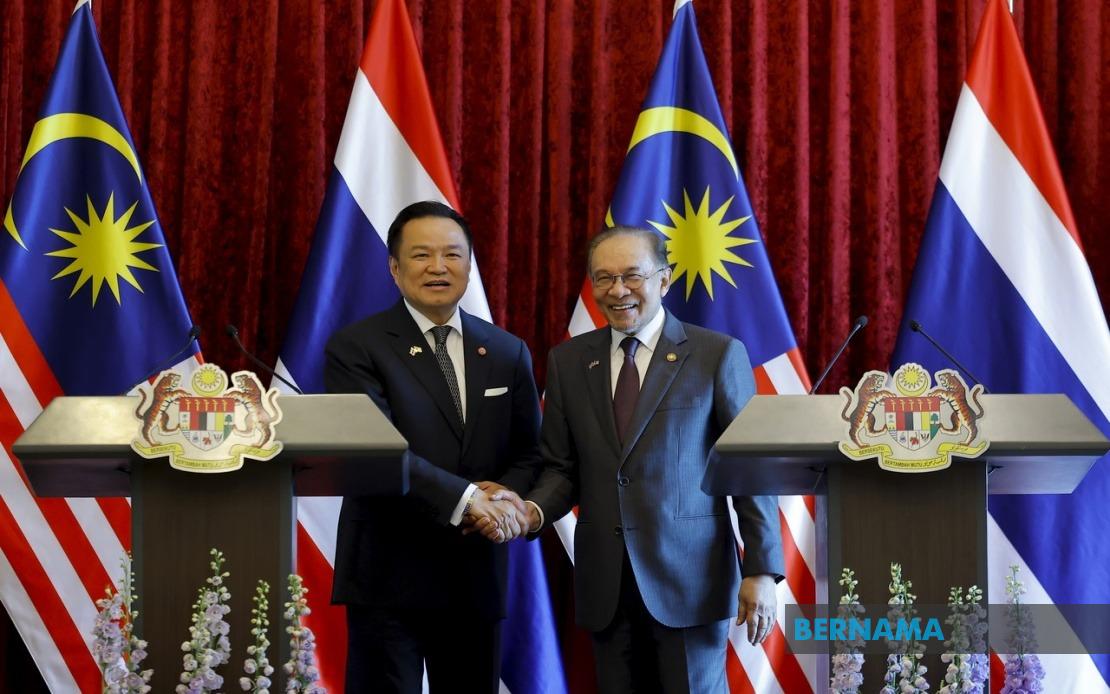
Prime Minister Datuk Seri Anwar Ibrahim and Thai counterpart Anutin Charnvirakul have committed to accelerating a suite of cross-border development initiatives during bilateral talks in Putrajaya, aiming to transform the Malaysia-Thailand economic relationship and reach a combined trade value of USD30 billion within five years. The two leaders outlined a comprehensive framework encompassing accelerated infrastructure connectivity, the creation of special border economic zones, and streamlined immigration and customs protocols—all intended to deepen cooperation across multiple sectors and unlock the substantial economic potential that exists along their shared frontier.
The scope of announced measures extends well beyond conventional bilateral engagement. Both governments have signalled their intention to fast-track several border infrastructure projects, though detailed specifications remain to be announced in the coming weeks. These initiatives reflect a recognition that the Malaysia-Thailand border region has historically underperformed economically relative to its geographic advantages and demographic scale. The establishment of special economic zones, a proven model for cross-border development in Asia, represents a particularly significant commitment. Such zones would allow preferential trade treatment, reduced tariffs, and streamlined regulatory frameworks designed to attract investment and facilitate the movement of goods, services, and skilled personnel across the frontier.
Immigration and customs procedures have long presented friction points for bilateral commerce and people-to-people exchange. The undertaking to facilitate these processes signals a willingness to modernise port-of-entry operations and adopt digital systems that reduce processing times and bureaucratic obstacles. For Malaysian businesses seeking to expand northward and Thai companies eyeing southern markets, such operational improvements translate directly into cost savings and faster market access. The announcement suggests that both nations recognise that trade expansion cannot occur sustainably without addressing the institutional and procedural barriers that currently slow cross-border transactions.
The USD30 billion bilateral trade target by 2027 represents an ambitious but achievable goal. Current trade volumes between the two countries remain below this figure, indicating that the target requires sustained growth of approximately 15 to 20 percent annually depending on baseline figures. This expansion would position Malaysia-Thailand commerce among the more significant intra-ASEAN trading relationships and would reflect the economic weight and complementarities of both nations. Malaysian expertise in petrochemicals, electronics manufacturing, and financial services, combined with Thailand's strengths in agricultural products, automotive components, and tourism, provides the sectoral foundation upon which such growth can be constructed.
Anwar emphasised that the bilateral relationship extends far beyond economic metrics, encompassing deep historical, cultural, and social connections. His framing of the Malaysia-Thailand partnership as one rooted in shared heritage underscores a long-term strategic perspective that treats economic integration as an extension of civilisational bonds rather than a purely transactional arrangement. This rhetorical positioning matters for regional observers, as it signals that Malaysian policymakers view the Thai relationship as foundational to regional stability and prosperity rather than merely one bilateral link among many.
The planned joint visit to Bukit Kayu Hitam and Sadao, border towns on the Malaysian and Thai sides respectively, carries substantial symbolic weight. By conducting high-level engagement in border communities rather than confining discussions to capital cities, both leaders are demonstrating commitment to addressing the specific development needs and aspirations of frontier populations. Border areas frequently experience economic marginalisation and receive lower investment priority than metropolitan regions. The prime ministerial visit signals recognition of this pattern and a determination to reverse it through targeted development initiatives. For residents of Bukit Kayu Hitam, Sadao, and surrounding communities, such attention translates into potential infrastructure investment, employment opportunities, and enhanced cross-border mobility.
Thailand's Prime Minister Anutin Charnvirakul's personal engagement in the initiative reflects Bangkok's strategic calculations regarding regional positioning and economic growth. Thailand faces competitive pressures from other Southeast Asian economies vying for foreign investment and international trade partnerships. Deepening ties with Malaysia, particularly through border-based development, offers Bangkok a mechanism to diversify its economic relationships and create new growth nodes outside Bangkok's established metropolitan economy. Similarly, Malaysia benefits from stronger connectivity with Thailand, which serves as a gateway to Myanmar, Laos, and Cambodia through existing Thai infrastructure and logistical networks.
The timing of this bilateral push aligns with broader ASEAN integration efforts, particularly as the bloc navigates post-pandemic economic recovery and seeks to strengthen intra-regional trade as a counterweight to global supply chain fragmentation. Malaysia-Thailand cooperation, when executed effectively, can serve as a model for other Southeast Asian dyads grappling with border development challenges. The special economic zone framework, if successfully implemented, could be adapted and replicated along other contested or underdeveloped regional frontiers, contributing to ASEAN's cohesion and collective prosperity.
For Malaysian businesses, the implications are substantial. Manufacturers seeking lower-cost production bases can explore opportunities in Thailand, while Thai firms gain clearer pathways into Malaysian market and supply chains. The streamlining of customs procedures will benefit logistics operators, freight forwarders, and trading companies that currently navigate complex documentation and verification requirements. Cross-border service providers, including financial institutions, telecommunications companies, and professional services firms, may identify new commercial opportunities as market access improves and regulatory frameworks harmonise.
Implementation challenges remain significant. Coordinating infrastructure projects across two sovereign nations requires sustained political will, compatible technical standards, and mechanisms to resolve disputes rapidly. Customs agencies must upgrade systems simultaneously while maintaining security protocols. The special economic zone framework requires careful negotiation of regulatory autonomy, dispute resolution mechanisms, and labour standards. Yet the commitment from both prime ministers suggests that these obstacles are recognised and considered surmountable within the five-year timeframe envisaged.
The Malaysia-Thailand partnership, when viewed within Southeast Asia's evolving geopolitical context, assumes importance beyond bilateral commerce. Robust intra-ASEAN economic integration provides the bloc with leverage in international negotiations and reduces the appeal of zero-sum competitive approaches. By demonstrating that border regions can become engines of mutual prosperity rather than zones of tension, Malaysia and Thailand contribute to a regional narrative emphasising cooperation and shared development benefits. This positive trajectory, if sustained through the planned joint visits and subsequent implementation phases, may serve as encouragement for other regional partnerships confronting similar connectivity challenges and development aspirations.

