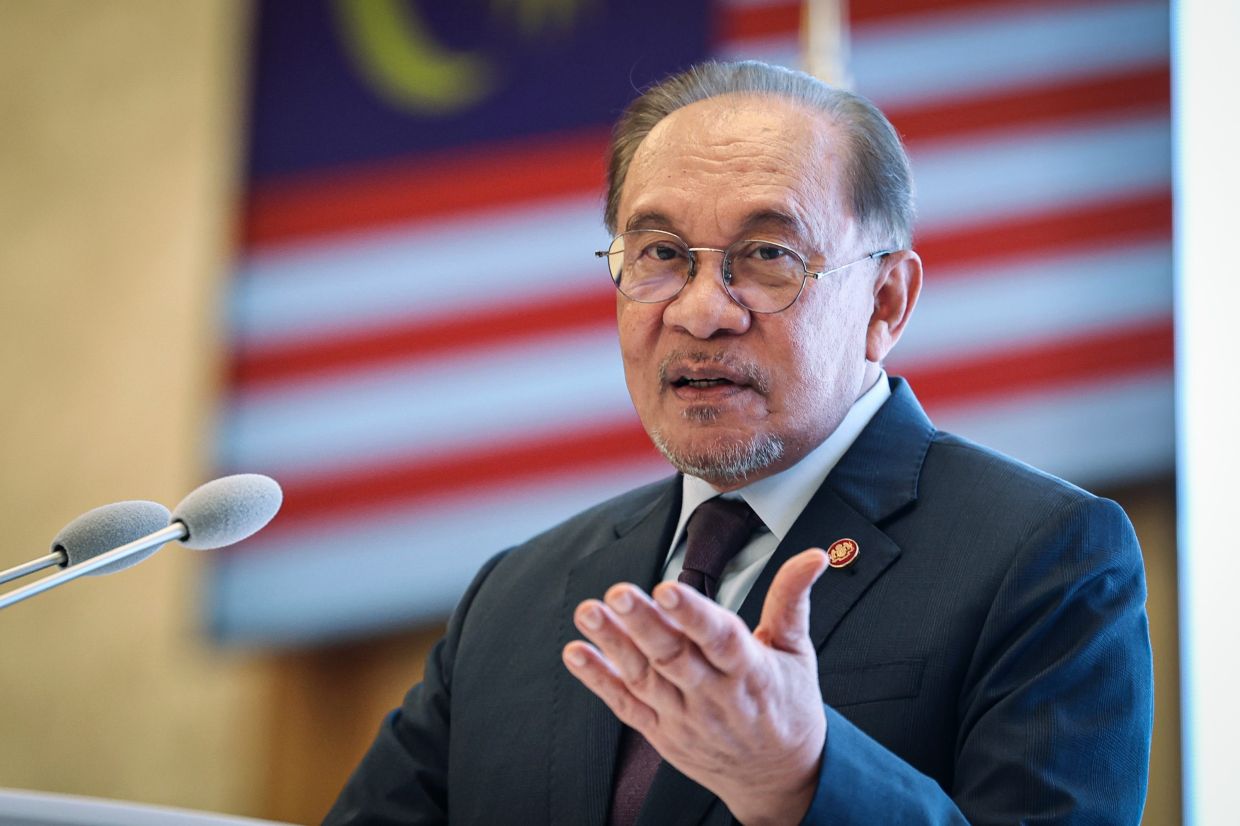
Prime Minister Datuk Seri Anwar Ibrahim has indicated that the long-anticipated master plan for the Johor-Singapore Special Economic Zone will reach completion within the foreseeable future, reflecting strengthening momentum in a flagship bilateral project that carries significant implications for the broader Southeast Asian economy. Speaking following a meeting with Singapore President Tharman Shanmugaratnam, Anwar—who simultaneously holds the finance portfolio—underscored the positive trajectory of discussions between the two nations on this transformative initiative, which aims to create an integrated economic corridor bridging the Straits of Johor.
The discussion took place during Tharman's three-day official state visit to Malaysia, which commenced on July 13 and was extended through July 15 at the behest of His Majesty Sultan Ibrahim, King of Malaysia. Such high-level engagements typically signal both nations' commitment to advancing their most strategically important dossiers. The presence of Singapore's ceremonial head of state in Kuala Lumpur itself demonstrates the gravity with which both governments regard their bilateral relationship and the projects that underpin it.
Beyond the JS-SEZ framework, the two leaders addressed a spectrum of interconnected issues that define Malaysia-Singapore ties in the contemporary period. Their conversation encompassed broader Malaysia-Singapore relations, regional geopolitical and economic developments, and several matters of mutual concern that have long required attention. This multi-faceted dialogue suggests that efforts to strengthen bilateral bonds extend well beyond the economic zone initiative, reflecting a comprehensive approach to partnership.
Crucially, Anwar highlighted that constructive progress has been made in tackling outstanding bilateral matters that have, in various forms, lingered between the nations. Both leaders reaffirmed their resolve to pursue resolution of any remaining contentious issues through dialogue conducted in good faith. The emphasis on negotiation guided by principles of mutual respect and shared understanding represents a diplomatic framework designed to prevent disagreements from derailing cooperation on high-priority projects such as the JS-SEZ.
The JS-SEZ concept itself represents an ambitious undertaking that reflects the economic interdependence of Malaysia and Singapore and their desire to capture growth opportunities through coordinated development. The special economic zone framework would theoretically enable seamless cross-border commerce, facilitate the movement of goods and services, and create new investment opportunities in sectors ranging from advanced manufacturing to financial services and technology. For Malaysia, particularly Johor, the project offers potential employment generation and infrastructure advancement. For Singapore, it represents an avenue to expand its economic hinterland and reduce constraints imposed by its geographical limitations.
The finalisation of the master plan carries operational significance because it will translate the broad conceptual framework into implementable policies, institutional arrangements, and regulatory mechanisms. Such planning documents typically address critical details including governance structures, tariff treatments, labour movement protocols, environmental standards, and investment incentives. These specifications are essential for businesses seeking to operate within the zone and for investors evaluating the venture's viability. The completion of this foundational document would therefore represent a tangible step toward the zone's eventual operationalisation.
For Malaysia's broader regional positioning, the JS-SEZ project holds strategic value beyond mere economics. It demonstrates Malaysia's ability to negotiate and collaborate with a more developed neighbour on terms that yield mutual benefit rather than subordination. The project also reinforces Malaysia's role as a facilitator of ASEAN connectivity and integration, themes that resonate throughout regional discourse on economic modernisation and competitiveness in an increasingly multipolar world. Singapore's engagement with the initiative, meanwhile, reflects its understanding that prosperity requires sustained engagement with its immediate environment rather than pure city-state insularity.
The emphasis on "mutual respect and understanding" in Anwar's characterisation of negotiations between the two sides suggests an acknowledgment that historical tensions and sovereignty concerns remain relevant even as both governments pursue cooperative agendas. Malaysia and Singapore have experienced periodic friction over maritime boundaries, water supply arrangements, and other matters rooted in their intimate geographical proximity and complex history. By explicitly invoking these principles, the PM signals that progress on the JS-SEZ proceeds in tandem with careful management of bilateral sensitivities.
For Malaysian readers and observers across Southeast Asia, the announcement carries several implications. First, it suggests that despite occasional diplomatic friction and the domestic political challenges confronting both governments, commitment to major economic integration projects remains robust. Second, it indicates that practical mechanisms for addressing disagreements—through patient dialogue rather than escalation—are functioning adequately. Third, the projected near-term finalisation of the master plan suggests that businesses in both countries may soon begin the process of formulating operational strategies related to the zone.
The broader context also matters. Regional economic uncertainty, evolving geopolitical tensions, and competing visions for Southeast Asian development mean that Malaysia-Singapore cooperation assumes heightened importance. As both nations navigate transitions in global trade patterns and technology adoption, collaborative ventures that leverage complementary strengths become more valuable. The JS-SEZ, properly designed and executed, could serve as a model for how Southeast Asian neighbours can deepen integration while respecting sovereign concerns and ensuring equitable benefit distribution.
Anwar's expression of hope that bilateral relations will strengthen through continued cooperation reflects standard diplomatic language, yet it also captures a genuine imperative facing both governments. The relationship between Malaysia and Singapore will fundamentally shape regional stability and economic performance in coming decades. Projects like the JS-SEZ, alongside sustained political dialogue and commitment to resolving disputes through negotiation, form the practical foundation for that strengthened partnership. The announcement that master plan finalisation approaches therefore warrants careful attention from investors, policymakers, and observers tracking regional economic development.

