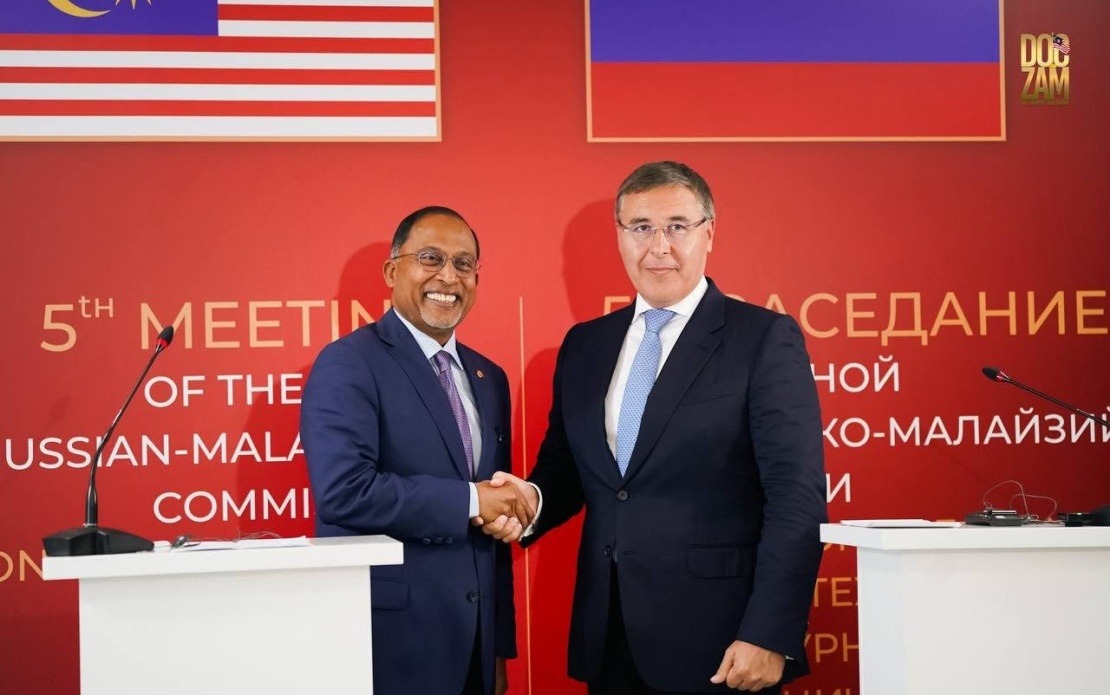
Malaysia and Russia are moving forward with plans to establish a comprehensive 2027 Joint Action Plan, with both nations aiming to have the framework in place before the year concludes. The agreement emerged from the Fifth Meeting of the Malaysia-Russia Joint Commission for Economic, Scientific, Technical and Cultural Cooperation held in Vladivostok, where Higher Education Minister Datuk Seri Dr Zambry Abd Kadir and Russian Minister of Science and Higher Education Valery Falkov jointly presided. This structured approach signals the two countries' determination to translate their longstanding diplomatic relationship into actionable, mutually beneficial programmes across multiple sectors.
The timing of this initiative carries particular significance given the strong political endorsement from Malaysia's highest levels. His Majesty Sultan Ibrahim, King of Malaysia, and Prime Minister Datuk Seri Anwar Ibrahim have both reinforced the importance of strengthening ties with Russia, setting the tone for deeper engagement across government and institutional levels. The Fifth Joint Commission meeting capitalised on this momentum, focusing explicitly on converting warm diplomatic relations into concrete collaborative ventures that would yield tangible benefits for both nations and their citizens.
In the realm of higher education and human development, Russia's commitment remains substantial. The Russian Government continues to extend 40 scholarships annually to Malaysian students, providing pathways for knowledge exchange and cultural immersion. Beyond this existing programme, both countries have endorsed several forward-looking initiatives. A maiden Malaysia-Russia Rectors' Forum is planned for 2027, which would bring together university leaders to discuss institutional collaboration and research partnerships. Additionally, the MAI-UniKL Russian Aerospace Programme will expand, offering Malaysian students and researchers deeper involvement in aerospace studies. These educational ventures aim to cultivate a generation of professionals with transnational expertise and cross-cultural understanding.
The establishment of a Malaysia-Russia Youth Leadership Summer Camp represents another pillar of the collaborative framework, targeting the development of young leaders through experiential learning and international exposure. Such programmes typically foster diplomatic goodwill and create networks that often translate into lasting professional and academic connections. The first Malaysia-Russia Rectors' Forum, coinciding with the formal launch of the 2027 action plan, will provide an institutional anchor for these educational partnerships, ensuring they remain structured and sustainable rather than episodic.
Trade and agricultural cooperation feature prominently in the bilateral agenda. Both nations have identified opportunities to expand market access and strengthen commercial ties, recognising the complementary nature of their economies. A particularly pressing focus involves securing Malaysia's food security through enhanced cooperation in fertiliser supply, notably urea. For Malaysia, where agricultural productivity and food sovereignty remain strategic concerns, diversifying supplier relationships beyond traditional sources enhances supply chain resilience. Russia, a global fertiliser producer, sees this as an avenue to deepen economic engagement within Southeast Asia, a region of growing importance to Moscow's strategic calculations.
Cooperation in strategic technological domains signals the forward-looking nature of the partnership. Both countries have identified artificial intelligence, digital infrastructure, smart city development, information security, and telecommunications as priority areas. The inclusion of renewable energy, liquefied natural gas, and liquefied petroleum gas reflects shared interests in energy transition and resource security. Notably, the two nations are also exploring cooperation in nuclear energy for peaceful purposes, a sensitive area that underscores growing confidence and the high-level nature of their engagement. Such ventures must navigate both countries' regulatory frameworks and international protocols, adding layers of complexity but also demonstrating serious commitment.
Financial cooperation has also advanced meaningfully, with central bank involvement signalling institutional depth. Bank Negara Malaysia and the Bank of Russia are collaborating to explore financial integration mechanisms. Labuan's potential role as an international financial centre and ASEAN gateway represents a particularly intriguing development, positioning Malaysia as a possible intermediary for Russia's financial linkages with Southeast Asia. The exploration of Islamic finance cooperation opens another avenue, given Malaysia's prominence in global Islamic banking and the potential complementarity with Russian institutional expertise. Digital assets collaboration further reflects both nations' recognition that financial systems are evolving and that cross-border cooperation in emerging payment mechanisms and blockchain technology could yield mutual advantages.
The sectoral breadth of the collaboration demonstrates ambition beyond traditional domains. Industrial cooperation, healthcare partnerships, transport linkages, green technology initiatives, climate change mitigation efforts, creative economy ventures, and space sector exploration collectively paint a picture of comprehensive engagement. This diversification reduces dependency on any single sector and creates multiple points of interaction between government bodies, businesses, and research institutions. Such multilayered partnerships tend to be more resilient and generate organic expansion as success in one area often catalyses interest in adjacent fields.
At the Vladivostok meeting, three formal cooperation agreements were signed between Malaysian and Russian higher education institutions. Universiti Teknologi MARA inked accords with both the National Research University Moscow Power Engineering Institute and the Institute of Experimental Medicine, while Universiti Tun Hussein Onn Malaysia established ties with the State University of Land Use Planning. These institutional agreements provide legal and administrative frameworks for ongoing academic and research collaboration, moving beyond statements of intent into binding commitments with defined deliverables and accountability mechanisms.
The decision to host the sixth Joint Commission meeting in Malaysia during 2027 carries symbolic importance, as that year marks the 60th anniversary of Malaysia-Russia diplomatic relations. Hosting the meeting underscores Malaysia's role as an equal partner in this bilateral relationship and signals to the international community Malaysia's strategic diversification in foreign policy. For Southeast Asia more broadly, Malaysia's deepening engagement with Russia demonstrates the region's commitment to maintaining balanced relationships with global powers and pursuing partnerships based on mutual interest rather than exclusive alignments.
From Malaysia's perspective, the structured approach embodied in the 2027 Joint Action Plan represents pragmatic statecraft. The nation benefits from access to Russian expertise in scientific research, higher education, and strategic technologies while offering Russia a gateway to Southeast Asian markets and positioning. The fertiliser and energy cooperation addresses Malaysia's vulnerabilities in food and energy security, critical issues for a nation dependent on imports for substantial portions of these essentials. The financial centre initiatives position Labuan competitively and could generate economic activity and employment.
The emphasis on benefits for both nations reflects a mature diplomatic approach that avoids zero-sum framings. Dr Zambry's statement underscores this principle of mutual respect and mutual benefit, positioning the partnership as natural rather than transactional. For Malaysian stakeholders—students, academics, businesses, and policymakers—the expanded framework creates tangible opportunities to participate in international collaboration. For Russia, Malaysia provides a stable, strategic foothold in a dynamically developing region facing its own geopolitical transitions.
Looking ahead, the successful completion of the 2027 Joint Action Plan will likely prompt evaluation of which initiatives yielded strongest returns, informing potential subsequent phases. The involvement of multiple ministries, government agencies, and private sector actors means that momentum established at high-level meetings must translate into sustained institutional engagement. The real test of the bilateral partnership will be how comprehensively and effectively these announced initiatives are implemented over the coming years, delivering the promised benefits that justify the diplomatic investment and political capital committed.

