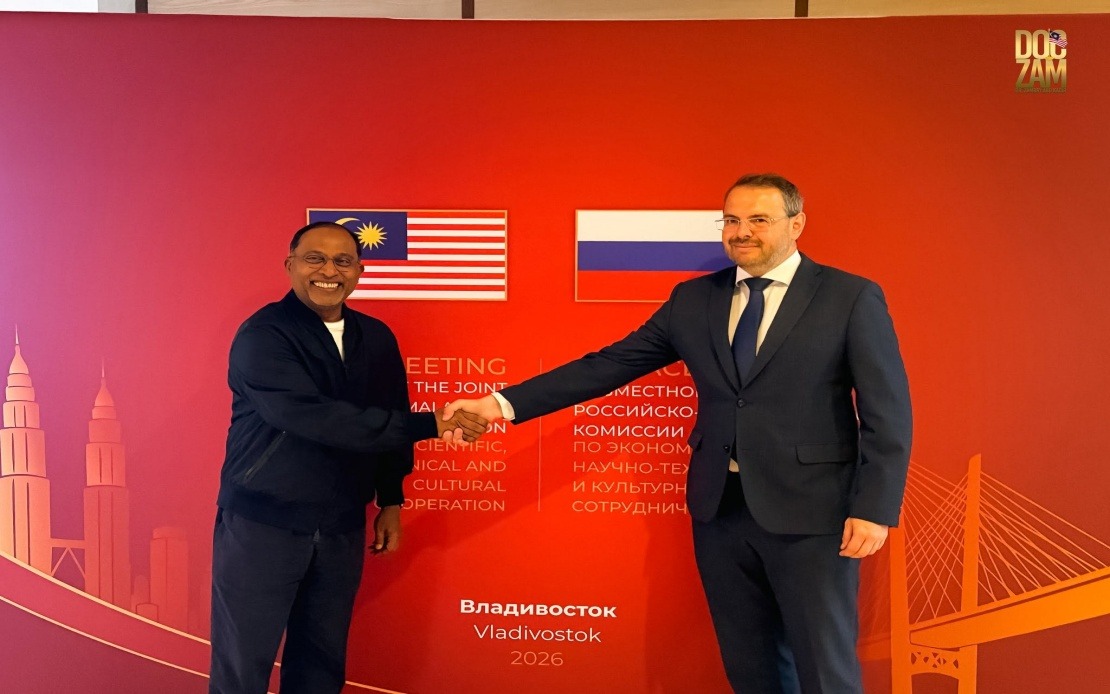
Malaysia and Russia are poised to unlock fresh opportunities for bilateral collaboration during the Fifth Malaysia-Russia JC-ESTC Meeting taking place in Vladivostok this week. Higher Education Minister Datuk Seri Dr Zambry Abd Kadir is steering the Malaysian contingent through negotiations expected to reshape economic, technological and educational partnerships between the two nations.
The gathering represents a significant inflection point in Malaysia-Russia relations. Both countries are seeking to translate years of diplomatic goodwill into tangible projects and commercial ventures that deliver measurable returns. Trade expansion, foreign direct investment flows, and strategic sector cooperation form the backbone of discussions, with particular emphasis on identifying sectors where complementary strengths can be leveraged for mutual advancement.
Higher education and research innovation have become central pillars of the bilateral agenda. Malaysia intends to intensify student exchange programmes and encourage deeper academic partnerships between universities in both countries. This emphasis reflects recognition that talent development and knowledge transfer represent long-term investments in human capital that benefit both economies. Joint research initiatives, particularly in emerging technology domains, promise to accelerate innovation trajectories and establish competitive advantages in global markets.
The composition of the Malaysian delegation signals the breadth of cooperation being pursued. Representatives from seventeen ministries and agencies are participating, spanning sectors including energy, agriculture, trade, science and technology, and cultural affairs. This multi-sectoral approach acknowledges that modern geopolitical partnerships require coordination across government departments rather than siloed engagement. The scale of participation suggests substantive negotiations are expected to yield concrete outcomes rather than rhetorical commitments.
Zambry emphasised that the joint committee, established in 2015, must evolve into a results-driven mechanism. He stressed that bilateral relations gain meaning only when translated into functioning projects, cross-border investment flows, technology partnerships and tangible opportunities for citizens and businesses. This pragmatic orientation represents a departure from relationship-building exercises that generate headlines but minimal economic impact. The minister's framing indicates Malaysian officials are intent on measuring success through deliverables rather than diplomatic pleasantries.
The complementary nature of Malaysia-Russia capabilities creates genuine scope for cooperation expansion. Russia's advanced positioning in energy sectors, particularly hydrocarbon industries and emerging renewable technologies, aligns with Malaysia's growing energy diversification needs. Russian expertise in fundamental science and technological development can strengthen Malaysian research institutions, while Malaysia offers Russia commercial pathways into Southeast Asian markets and competitive manufacturing capabilities. These mutual advantages provide realistic foundations for partnership deepening rather than aspirational goodwill.
Zambry's delegation includes co-chairing responsibilities shared with Russian Minister of Science and Higher Education Valery Falkov, indicating equivalent importance assigned by Moscow. The presence of Konstantin Mogilevsky, Russian Deputy Minister of Science and Higher Education, at Zambry's arrival in Vladivostok underscores Russia's commitment to substantive engagement. Protocol courtesies of this calibre typically signal that both nations anticipate significant announcements and are positioning their respective negotiating teams for successful outcomes.
For Malaysia, deepening Russia ties serves multiple strategic objectives. Economic diversification away from traditional Western partnerships reduces geopolitical vulnerability and expands market access. Russian technological expertise in advanced manufacturing and energy systems provides knowledge transfers difficult to acquire through conventional channels. Educational partnerships create cultural bridges and develop Malaysian professionals with exposure to alternative development models and technological approaches that may prove valuable as Asia navigates increasingly complex economic transitions.
The meeting's focus on addressing implementation challenges from previous agreements reveals maturation in the partnership framework. Early-stage bilateral relationships typically emphasise new initiatives; sustained partnerships require effective execution mechanisms, accountability structures and problem-solving mechanisms for obstacles impeding progress. This retrospective assessment suggests the Malaysia-Russia relationship has moved beyond novelty phases into establishment of durable institutional frameworks capable of sustaining cooperation through inevitable operational complications.
Southeast Asian context matters considerably for Malaysia's Russian engagement. As the region's leading Southeast Asian economy, Malaysia's partnerships influence broader regional positioning and economic trajectories. Strengthened Malaysia-Russia ties potentially facilitate Russian engagement with ASEAN institutions and economic frameworks. Conversely, Malaysian facilitation of Russian participation in regional development initiatives creates dividends for both parties and potentially moderates geopolitical tensions by embedding major powers in collaborative regional structures.
Zambry's optimistic framing about opening new chapters in bilateral relations suggests Malaysia anticipates tangible advances from this week's discussions. Concrete agreements on specific projects, expanded investment commitments, and formalised educational exchange frameworks would constitute meaningful progress. The test of this week's outcome will emerge in subsequent months as announced cooperation mechanisms transition from signed documents to functioning partnerships delivering results measurable through trade statistics, research publications and student mobility data.
The Fifth JC-ESTC Meeting ultimately reflects global trends toward diversified partnerships and multipolar economic engagement. Malaysia's strategic positioning as an important Southeast Asian economy enables cultivation of relationships across multiple major powers without exclusivity requirements that constrain policy flexibility. Russia similarly benefits from deepened Malaysian connections that strengthen its Asian engagement and counterbalance Western-centric partnership networks. When successfully executed, such balanced relationship portfolios create stability and opportunity for all participants.

