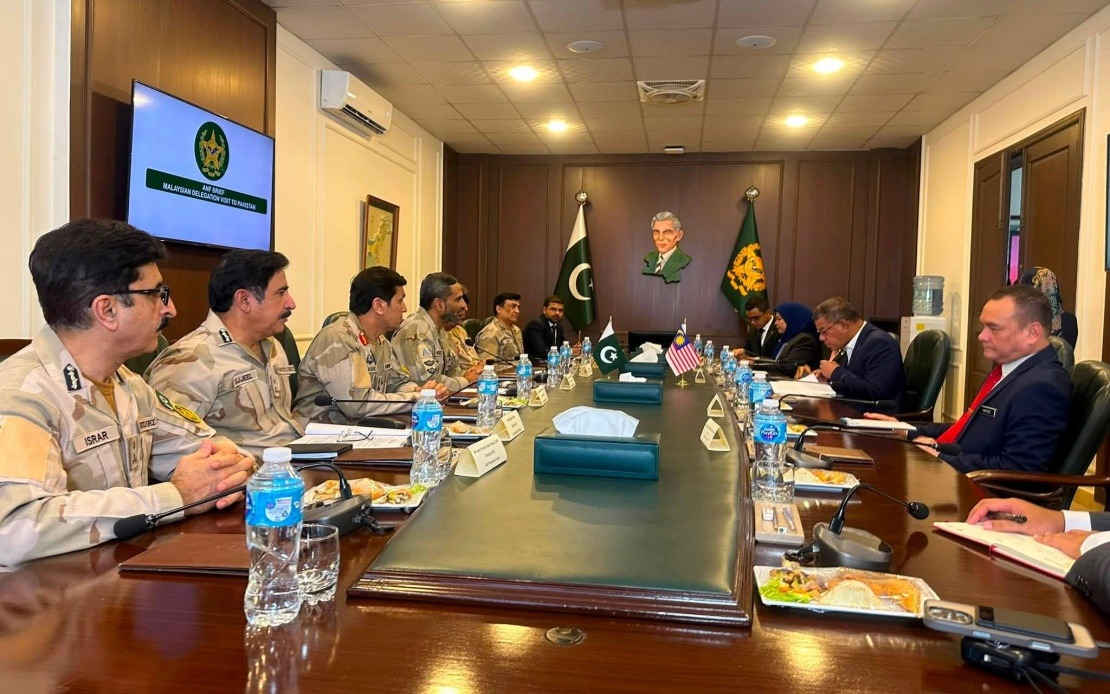
Malaysia and Pakistan are set to formalise their partnership against drug trafficking through a proposed Memorandum of Understanding that will establish clearer operational protocols between the two nations. Home Minister Datuk Seri Saifuddin Nasution Ismail made the announcement following discussions at the Anti-Narcotics Force headquarters in Islamabad, where he met with its Director-General Major General Abdul Moeed. The structured framework aims to elevate existing cooperation into a more systematic response to the mounting challenge of illegal narcotics flowing across regional and international borders.
The decision to pursue formal cooperation reflects a sobering reality facing both countries: drug trafficking networks have evolved into highly sophisticated operations that transcend national frontiers and regional boundaries. Synthetic drugs, particularly methamphetamine, have proliferated across Asia, creating new enforcement challenges that no single nation can effectively manage in isolation. Traditional law enforcement approaches, confined to individual countries or limited regional arrangements, have proven inadequate against criminal organisations that exploit modern logistics, technology and corruption to maintain supply chains spanning continents.
Pakistan occupies a critical position in this geopolitical narcotics landscape, sitting directly along trafficking routes originating from Afghanistan where opium and hashish production remains endemic. For Malaysia, strategically located along some of Southeast Asia's busiest trade corridors, the nexus between Pakistani supply routes and regional distribution networks presents an urgent security concern. The proposed MoU recognises that effective counter-narcotics strategy requires bilateral engagement that acknowledges these geographic and logistical realities rather than treating drug control as an isolated domestic issue.
Historical precedent demonstrates the value of Malaysia-Pakistan coordination in this domain. Between 2012 and 2018, both countries jointly managed more than 28 cases involving suspected traffickers and drug seizures, showcasing that operational collaboration can yield tangible results. However, past success also revealed limitations of agreements lacking robust enforcement mechanisms and regular intelligence exchange. The forthcoming MoU seeks to overcome these shortcomings by establishing concrete commitments to share actionable intelligence, coordinate cross-border operations informed by intelligence analysis, and create formal channels for training and expertise transfer among respective law enforcement agencies.
Beyond the narcotics agreement, Saifuddin Nasution's visit encompassed broader security and bilateral concerns reflecting Malaysia's diversified approach to international cooperation. Discussions with Pakistan's Deputy Prime Minister and Foreign Minister Mohammad Ishaq Dar extended to regional stability, economic cooperation including trade and investment prospects, and food security arrangements—particularly regarding potential supplies of rice and meat from Pakistan. These conversations underscore how narcotics cooperation functions as one component within a wider strategic partnership addressing multiple dimensions of bilateral relations, from commerce to regional security architecture.
A particularly significant outcome was the establishment of a Joint Working Group comprising representatives from both nations' interior ministries and narcotics control authorities. This institutional mechanism transcends symbolic commitments by creating permanent channels for sustained dialogue and operational planning. The group will specifically address security cooperation, narcotics control strategies and police training initiatives, providing regular forums where officials can align priorities, share operational lessons and adjust tactics in response to emerging threats. Such institutionalisation matters considerably in Southeast Asia, where enforcement agencies have historically suffered from inconsistent communication and divergent priorities.
The visit also witnessed signing of the International Transfer of Prisoners Agreement, addressing a persistent gap in bilateral law enforcement cooperation. This agreement streamlines procedures for transferring Malaysian nationals convicted of crimes in Pakistan and vice versa, reducing legal complications and enabling both countries to manage their prison populations more efficiently. For Malaysia's justice system, this arrangement proves particularly relevant given the nationality of individuals involved in transnational drug trafficking operations, who may face prosecution in either jurisdiction.
Additionally, Malaysian officials examined Pakistan's National Database and Registration Authority systems, assessing their digital identity and civil registration capabilities. Pakistan's experience implementing biometric identification, passport verification and integrated databases relevant to law enforcement operations offers lessons for Malaysia's ongoing digital transformation agenda. The Home Ministry's interest in these systems reflects recognition that modern narcotics enforcement depends increasingly on sophisticated data management, border control technology and coordination between disparate government agencies—capabilities that require significant institutional investment and technical expertise.
The emphasis on technology and digital solutions aligns with the Malaysian government's MADANI framework, which prioritises leveraging technology to enhance public sector efficiency and security outcomes. As criminal networks adopt increasingly sophisticated methods including encrypted communications and cryptocurrency transactions, law enforcement agencies must similarly upgrade their investigative tools and information-sharing platforms. Pakistan's experience with large-scale digital identity systems offers relevant lessons for enhancing Malaysia's capacity to track suspicious financial transactions, monitor border movements and coordinate intelligence across agencies tasked with countering narcotics trafficking.
For Malaysia and Southeast Asia more broadly, this deepening cooperation with Pakistan addresses a critical vulnerability in the region's drug control architecture. While ASEAN countries maintain bilateral and multilateral agreements on narcotics control, coordination with major transit countries outside the region remains comparatively underdeveloped. Pakistan's pivotal role in the trafficking chain linking Afghan production to East and Southeast Asian markets makes enhanced cooperation a strategic necessity rather than optional diplomatic gesture. Malaysian enforcement agencies gain access to upstream intelligence about drug flows originating from Afghanistan, enabling more proactive interdiction efforts rather than purely reactive responses to drugs already within Malaysian territory.
The broader geopolitical context cannot be ignored when assessing this cooperation's significance. Rising U.S.-China tensions, shifting alliances and economic uncertainty have prompted regional powers to cultivate diverse international partnerships ensuring security and prosperity regardless of geopolitical realignment. Malaysia's engagement with Pakistan on narcotics control reflects this hedging strategy, deepening ties with an important Islamic nation while addressing genuinely shared security interests that transcend ideological or political divisions.
Moving forward, success of the Malaysia-Pakistan narcotics partnership will depend on consistent implementation rather than ceremonial agreement-signing. Intelligence sharing must become routine rather than exceptional, involving regular secure communications between operational units in both countries. Joint training programmes should rotate Malaysian and Pakistani officers through each other's facilities, building personal relationships and institutional familiarity that facilitate real-time cooperation during active investigations. Resources must be allocated to maintain dedicated liaison officers in each country, ensuring cultural and linguistic fluency that enhances communication quality compared to formal diplomatic channels.
The MoU ultimately represents acknowledgment that drug trafficking's transnational character demands transnational responses extending far beyond regional frameworks. Malaysia's willingness to strengthen partnership with Pakistan, despite occasional diplomatic tensions or divergent approaches to other security issues, demonstrates pragmatic recognition that narcotics control transcends traditional geopolitical divisions. For Malaysian citizens, enhanced cooperation with Pakistan translates into reduced availability of dangerous synthetic drugs, greater prosecution of traffickers and ultimately improved public health and safety outcomes. The structured framework being developed through this MoU should yield measurable results in coming years, providing a template for similar bilateral arrangements addressing shared transnational security challenges.

