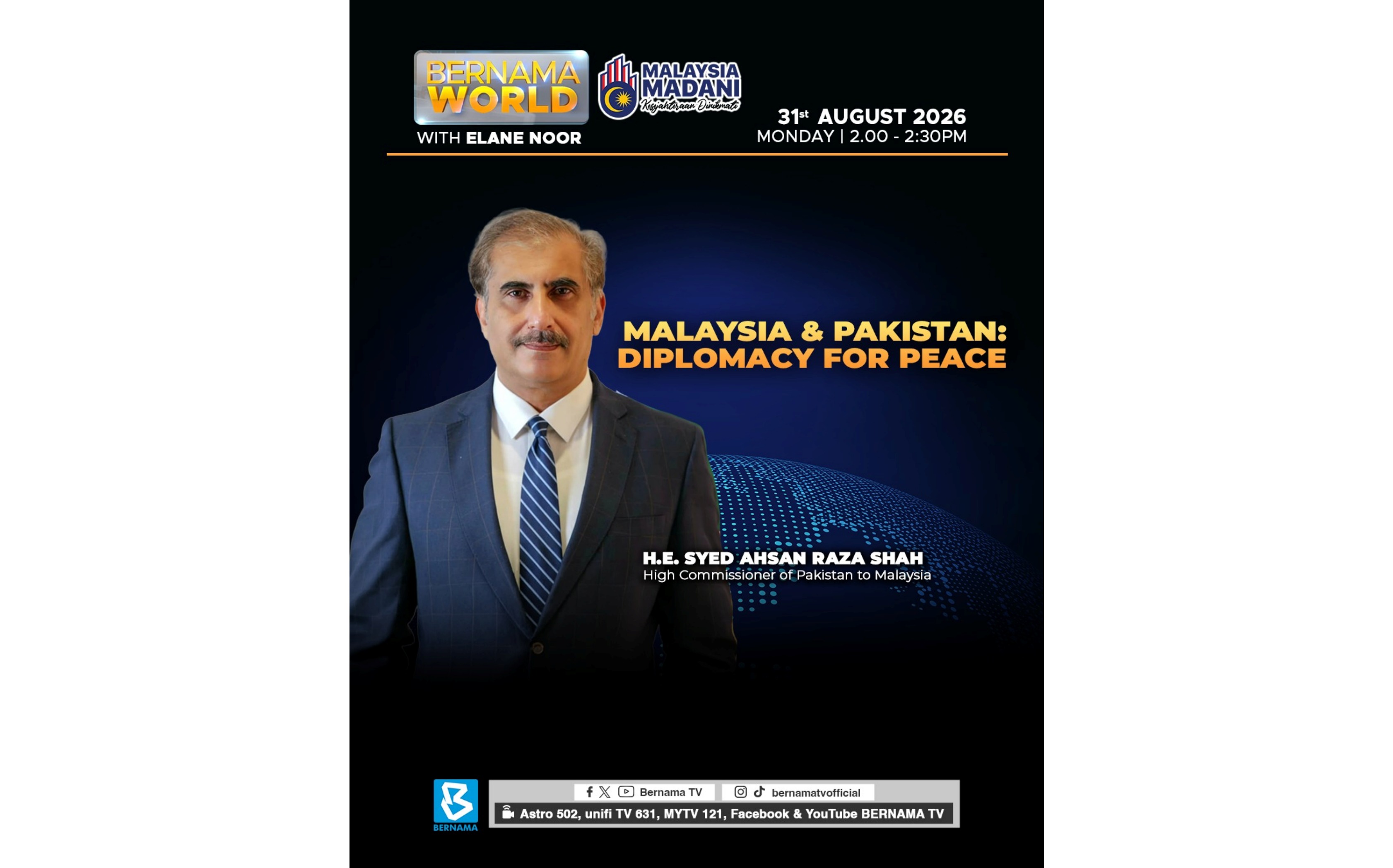
Pakistan's High Commissioner to Malaysia, Syed Ahsan Raza Shah, has made a compelling case for deepening bilateral collaboration on conflict resolution and diplomatic mediation, describing such cooperation as essential in an era of escalating geopolitical friction. Speaking to Bernama World on Monday, the envoy argued that Malaysia and Pakistan, occupying strategically important positions in their respective regions, possess valuable expertise that should be pooled to address the mounting tensions threatening stability across Asia and beyond.
The High Commissioner highlighted the track records of both nations as effective intermediaries in some of the region's most challenging disputes. He pointed specifically to Malaysia's role under Prime Minister Datuk Seri Anwar Ibrahim in managing the Thailand-Cambodia border tensions, when ASEAN's conventional diplomatic machinery appeared inadequate to contain the crisis. Through skillful intervention, Malaysia helped broker a ceasefire and facilitate the signing of the Kuala Lumpur pact, demonstrating how patient diplomacy and personal leadership can defuse potentially explosive situations that threaten regional peace.
Parallel to Malaysia's efforts in Southeast Asia, Pakistan has similarly positioned itself as a crucial bridge between competing powers. The High Commissioner referenced Pakistan's facilitation of dialogue between the United States and Iran, two nations with deeply antagonistic relationships that appeared locked in an intractable standoff. Pakistan's geographic proximity to Iran, combined with its historical ties to Tehran and its longstanding strategic partnership with Washington, uniquely qualified Islamabad to serve as a neutral venue for negotiations when both sides seemed unwilling to communicate directly. The resulting Islamabad accord, Syed Ahsan emphasised, represented a validation of Pakistan's diplomatic standing and commitment to regional stability.
What emerges from these examples is a broader pattern: both Malaysia and Pakistan have demonstrated the capacity to transcend their own national interests when regional security is at stake. This capability, born from their respective geographic positions and historical relationships with various state and non-state actors, represents a strategic asset that should be formalised and systematised. The High Commissioner's call for systematic knowledge-sharing suggests that both nations could develop more coordinated approaches to future crises, potentially amplifying their individual mediation efforts through joint frameworks and shared protocols.
Central to the High Commissioner's argument is the notion of what Prime Minister Anwar has termed "post-normal times"—a characterisation that reflects the unprecedented volatility and interconnectedness of contemporary geopolitics. In such an environment, conventional diplomatic playbooks often prove inadequate. Countries must constantly recalibrate their approaches, drawing on accumulated experience whilst remaining adaptable to novel circumstances. Malaysia and Pakistan, having navigated diverse and complex mediation scenarios, possess institutional memory and practical wisdom that could be systematised into best practices applicable across different conflict contexts.
Syed Ahsan emphasised that successful mediation rests fundamentally on trust, a commodity increasingly scarce in international relations. For mediators to be effective, all parties to a dispute must perceive them as genuinely impartial, well-intentioned, and free from hidden agendas. This trust cannot be manufactured overnight; it accumulates through consistent behaviour, transparency, and demonstrated commitment to principles rather than partisan interests. Both Malaysia and Pakistan have invested considerable political capital in building such reputations, particularly within their regions, and this credibility constitutes their principal diplomatic asset.
The High Commissioner also articulated several operational principles that should guide mediation efforts. Rather than pursuing maximalist solutions in single negotiations, mediators should embrace incremental approaches, celebrating small victories and allowing momentum to build gradually. This strategy acknowledges that deeply entrenched conflicts rarely yield to frontal assaults; instead, they respond to patient, methodical diplomacy that allows parties to adjust positions incrementally without appearing to capitulate. Equally important is the mediator's capacity to remain unruffled by inflammatory rhetoric and procedural setbacks, maintaining focus on long-term objectives rather than reacting emotionally to short-term provocations.
Anwar Ibrahim's personal diplomatic skills received specific commendation from the High Commissioner, who noted that the Prime Minister's ability to establish genuine rapport with international leaders has proven instrumental in Malaysia's mediation successes. Personal relationships and mutual respect between leaders create informal channels of communication that often prove more effective than formal diplomatic structures. This emphasises that mediation is not merely an institutional exercise but fundamentally depends on individual leaders who possess both the political authority to commit their nations and the interpersonal skills to navigate sensitive negotiations.
Looking beyond immediate bilateral cooperation, Syed Ahsan warned that contemporary conflicts possess inherent spillover potential. Disputes that appear geographically contained inevitably generate economic, security, and strategic consequences that ripple across borders and regions. A conflict in the Middle East affects energy markets and investment patterns globally; tensions in the South China Sea impact trade corridors vital to Southeast Asian economies; political instability anywhere reverberates through interconnected financial systems and supply chains. Malaysia, as a trading nation deeply embedded in regional and global commerce, faces particular exposure to geopolitical disruptions originating elsewhere. This reality underscores why preventive diplomacy and early mediation, in which Pakistan and Malaysia could jointly engage, represent not merely altruistic endeavours but enlightened self-interest.
The High Commissioner's intervention arrives at a moment when several regional and global flashpoints demand urgent diplomatic attention. Whether addressing maritime disputes, religious tensions, economic competition, or legacy conflicts, the international community requires credible mediators capable of transcending narrow national interests. Malaysia and Pakistan, through formalised cooperation on mediation strategies, could enhance their individual effectiveness whilst contributing to broader regional stability. Such collaboration would transform their respective diplomatic experiences into practical instruments for conflict prevention and resolution, demonstrating that in an era of mounting tensions, nations committed to peace can still shape outcomes through wisdom, patience, and principled engagement.

