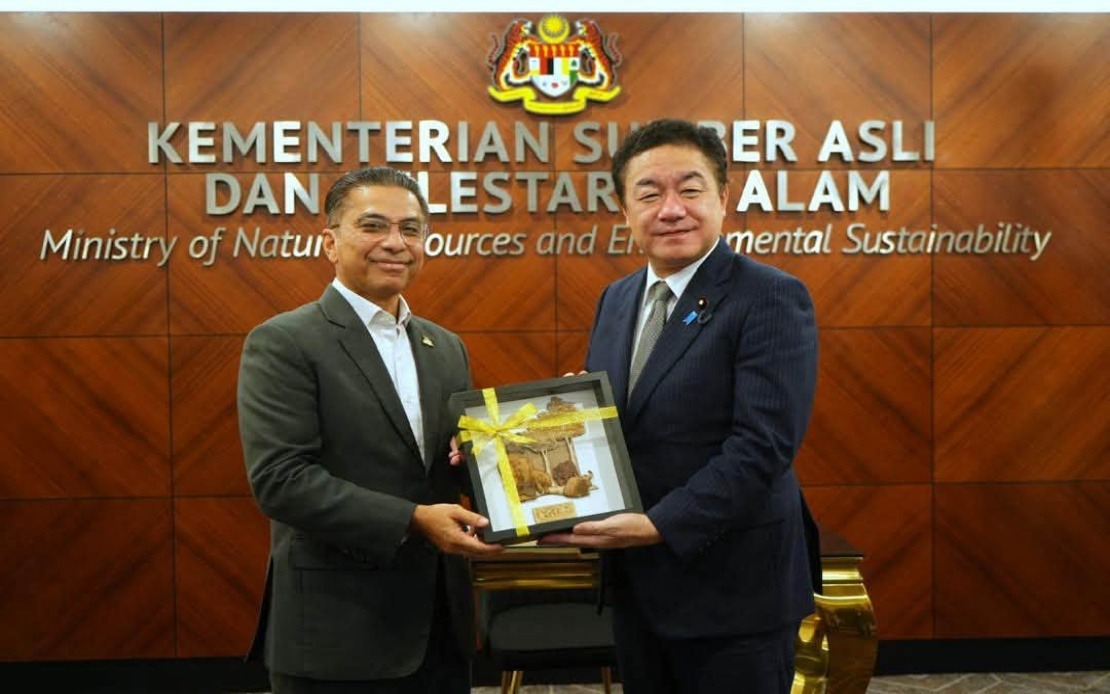
Malaysia and Japan are deepening their strategic partnership across critical sectors including rare earth elements, minerals processing, and climate mitigation, according to discussions held at the Ministry of Natural Resources and Environmental Sustainability in Putrajaya. The engagement centred on a visit by Japan's Parliamentary Vice-Minister of Economy, Trade and Industry Komori Takuo, who met with Deputy Natural Resources and Environmental Sustainability Minister Syed Ibrahim Syed Noh to review progress on agreements reached during the bilateral summit in June.
The meeting underscores the growing importance of the Malaysia-Japan Comprehensive Strategic Partnership framework as both nations navigate complex transitions in energy security and decarbonisation. For Malaysia, the visit represents an opportunity to leverage Japanese technological expertise while advancing domestic ambitions to build a value-added rare earth processing sector. Japan, for its part, seeks to secure reliable access to critical materials essential for its green technology and manufacturing base, making Southeast Asia a strategically vital region.
Central to the discussions was Malaysia's commitment to maintaining a moratorium on exporting unprocessed rare earth elements, a policy designed to ensure that refining, separation, and manufacturing activities remain anchored domestically. This approach aims to capture greater economic value from the nation's mineral endowments rather than exporting raw materials to be processed abroad. The Malaysian delegation, including senior officials from the Natural Resources Ministry and representatives from the Foreign Ministry, emphasised this position firmly while expressing gratitude for Japan's ongoing technical support through institutions such as the Japan International Cooperation Agency and the Japan Organisation for Metals and Energy Security.
The cooperation with JICA and JOGMEC has been instrumental in building Malaysian capacity in mineral processing and resource management. These partnerships facilitate knowledge transfer, workforce development, and technology adoption, enabling Malaysia to upgrade its industrial capabilities in the rare earths value chain. As supply chain vulnerabilities and geopolitical tensions have heightened global interest in securing critical minerals outside China's traditional dominance, such bilateral arrangements have become increasingly valuable for both mining-dependent economies and technology-dependent nations.
Beyond minerals, the two countries are advancing cooperation on climate action through the finalisation of a Memorandum of Cooperation on the Joint Crediting Mechanism. This carbon market framework, based on Article 6.2 of the Paris Agreement, provides a structured pathway for bilateral climate finance and investment in low-carbon technologies. By year's end, officials expect to formalise the arrangement, creating incentives for Japanese investment in Malaysia's renewable energy projects, energy efficiency initiatives, and sustainable resource management.
The Joint Crediting Mechanism is particularly significant for Malaysia's ability to meet its Nationally Determined Contribution—the climate pledge submitted to the United Nations Framework Convention on Climate Change. Rather than relying solely on domestic funding for the energy transition, carbon market mechanisms allow Malaysia to attract international capital and expertise. Japan, having pursued aggressive decarbonisation targets, brings proven technologies and investment models that can be adapted to Malaysia's context, from industrial energy efficiency to renewable energy infrastructure.
The anticipated completion of the MoC aligns with Malaysia's broader strategic objectives to position itself as a green economy leader in Southeast Asia. By combining Japanese technological sophistication with Malaysia's abundant renewable resources and mineral endowments, both nations aim to develop competitive advantages in the emerging green industrial economy. This includes downstream rare earth applications, advanced materials manufacturing, and clean energy sectors.
For Malaysian policymakers, the partnership addresses a persistent challenge: how to transform resource abundance into sustainable, knowledge-intensive economic activity. Historically, Malaysia has exported commodities with limited domestic processing. The emphasis on rare earth value addition reflects a deliberate pivot toward industrial upgrading and moving up global supply chains. Japanese experience in integrating minerals processing with advanced manufacturing provides a relevant model, particularly as global demand for permanent magnets, electronic components, and renewable energy technologies continues expanding.
The bilateral engagement also reflects evolving geopolitical realities in Southeast Asia. As major powers compete for influence and resource access, strategic partnerships based on mutual economic benefit and technology cooperation offer small and medium-sized economies a degree of maneuverability. Malaysia's approach—maintaining sovereignty over mineral policies while welcoming targeted technology partnerships—demonstrates pragmatic diplomacy that neither surrenders control over natural resources nor isolates itself from global development networks.
Japanese Ambassador to Malaysia Shikata Noriyuki and senior METI officials attended the meeting alongside Malaysian counterparts including NRES deputy secretary-general Datuk Khalid Mohamed. This high-level participation signals the political weight both governments attach to these arrangements. The involvement of multiple ministries and agencies reflects the cross-cutting nature of modern economic cooperation, where minerals policy intersects with energy security, climate commitments, and international trade frameworks.
Looking forward, the success of these initiatives will depend on translating diplomatic agreements into concrete projects and investments. The completion of the JCM framework by year's end will test both countries' commitment to rapid implementation. Similarly, the rare earth cooperation framework must demonstrate tangible progress in expanding Malaysia's processing capacity and capturing greater shares of global value chains. The outcome will likely shape regional perceptions of Japan's strategic engagement in Southeast Asia and Malaysia's capacity to leverage bilateral partnerships for genuine industrial transformation.
The timing of these discussions also reflects broader Asian economic trends. As the region grapples with energy transition pressures, supply chain diversification, and climate imperatives, Malaysia-Japan cooperation offers a template for how bilateral partnerships can simultaneously address resource security, technological advancement, and environmental responsibility. Success here could catalyse similar arrangements across the region, potentially reshaping patterns of trade and investment in critical sectors.

