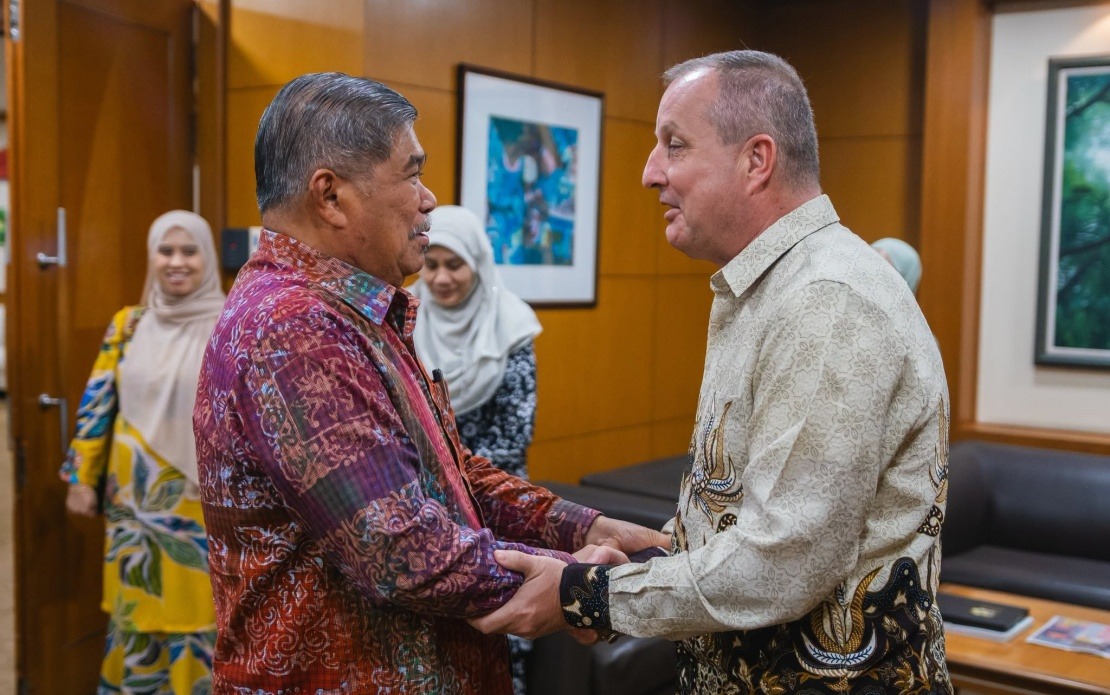
Malaysia and Hungary are forging stronger ties in agriculture and food security, marking a significant development in bilateral relations that could reshape the region's approach to farming innovation and supply chain resilience. During a recent courtesy visit, Hungarian Ambassador to Malaysia Dr. Sándor Sipos met with Agriculture and Food Security Minister Datuk Seri Mohamad Sabu to discuss multiple avenues for deepening cooperation between the two nations. The discussions signal growing recognition that cross-regional agricultural partnerships are essential for addressing food security challenges in an increasingly complex global environment.
A cornerstone of this expanding partnership is Hungary's confirmed participation in the Malaysian Agriculture, Horticulture and Agrotourism Exhibition (MAHA) 2026. This represents more than a trade showcase opportunity; it positions Hungary as a key stakeholder in Malaysia's agricultural future and signals the Malaysian government's confidence in fostering international agricultural partnerships. For Malaysian farmers, agribusiness entrepreneurs, and investors, Hungarian participation brings direct exposure to Central European farming practices, technological innovations, and business models that may prove adaptable to tropical and subtropical Southeast Asian conditions.
The implementation of the first Malaysia-Hungary Joint Working Group (JWG) meeting forms the institutional backbone of this cooperation. Such formal mechanisms typically establish clear operational frameworks, identify priority sectors, and create pathways for sustained dialogue between government agencies, research institutions, and private sector actors. The JWG serves as a mechanism to move beyond symbolic gestures toward concrete, measurable outcomes that benefit both nations' agricultural sectors and respond to specific development priorities.
Central to the technical dimension of this partnership is the collaboration between the Malaysian Agricultural Research and Development Institute (MARDI) and the Hungarian University of Agriculture and Life Sciences (MATE). This institutional pairing bridges research expertise across continents and enables the systematic exchange of knowledge in critical areas. The partnership encompasses advanced work in genetics, breeding technology, and high-quality livestock product development—fields where Hungarian expertise, built on Central European agricultural traditions, could offer valuable insights for Malaysian researchers and farmers seeking to improve crop yields and animal husbandry practices.
The Erasmus+ Researcher exchange programme represents a practical mechanism for knowledge transfer between the two countries' scientific communities. Through reciprocal visits and collaborative research assignments, individual researchers from both nations gain hands-on experience with different agricultural systems, climate conditions, and technological approaches. These interpersonal connections often outlast formal programmes, creating informal networks of professionals who continue collaborating and sharing innovations long after structured exchanges conclude. For Malaysian agricultural professionals, exposure to Hungarian research methodologies and infrastructure could accelerate adoption of best practices.
Expanding trade and investment in the agri-food sector stands as another pillar of the Malaysia-Hungary partnership. Enhanced commercial ties create financial incentives for businesses in both countries to deepen engagement and invest in processing facilities, distribution networks, and value-added product development. For Malaysian agribusinesses seeking to access European markets or establish supply chains serving Central Europe, Hungarian partners offer valuable geographic and regulatory proximity advantages. Conversely, Hungarian companies may identify opportunities in Malaysian agricultural commodities or in establishing regional hubs serving Southeast Asia.
Minister Mohamad Sabu emphasized that this cooperation creates opportunities for farmers, breeders, researchers, and agri-food entrepreneurs across both nations through structured sharing of expertise, technology, and operational experience. Rather than treating agricultural development as a zero-sum competition, the partnership reflects an understanding that shared innovation benefits all participants. Malaysian smallholder farmers could gain access to improved seed varieties and breeding knowledge developed through MARDI-MATE collaboration, while Hungarian researchers gain exposure to tropical agriculture challenges and solutions developed in Malaysia's unique climate.
The food security dimension of this partnership carries particular significance for Malaysia and Southeast Asia broadly. As global population growth and climate variability increase pressure on agricultural systems, diversifying international partnerships and knowledge sources enhances regional resilience. By learning from Hungarian approaches to sustainable intensification, crop diversification, and resource management, Malaysian policymakers can inform domestic strategies that simultaneously boost productivity and environmental sustainability. This aligns with Malaysia's broader development objectives of maintaining food self-sufficiency while managing environmental pressures.
Minister Mohamad's commitment to continuing and strengthening the Malaysia-Hungary agricultural relationship reflects recognition that long-term food security requires sustained institutional engagement rather than episodic initiatives. Building on the foundation established through the JWG, MARDI-MATE collaboration, and MAHA 2026 participation, both countries can develop increasingly sophisticated cooperative frameworks. These might eventually include joint ventures in third markets, harmonized research standards, or integrated supply chains serving broader regions.
The timing of this partnership expansion occurs as Southeast Asian nations increasingly recognize that agricultural modernization requires engaging with global research networks and development partners. Malaysia's proactive approach to deepening ties with Hungary positions it as a regional leader in leveraging international cooperation for domestic agricultural advancement. This diplomatic prioritization of food security and agricultural innovation signals to other nations that Malaysia views these sectors as strategic priorities worthy of high-level government attention and resource allocation.
For Malaysian stakeholders in agriculture and food security, the emerging Malaysia-Hungary partnership creates concrete opportunities for professional development, access to new technologies, and market expansion. Farmers interested in adopting advanced breeding techniques, agribusiness entrepreneurs seeking international partnerships, and researchers pursuing collaborative projects now have formalized channels and institutional support. The partnership's success will depend on translating high-level diplomatic commitments into operational realities that generate tangible benefits for practitioners working throughout Malaysia's agricultural value chains.

