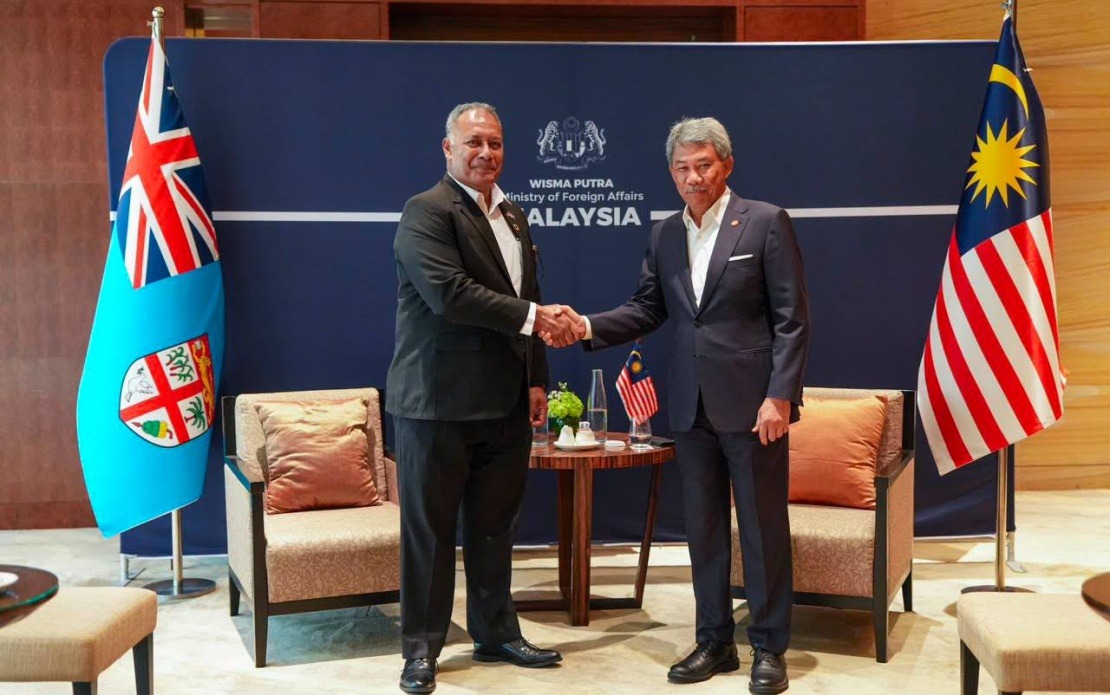
Malaysia and Fiji are moving to deepen their diplomatic and economic relationship, with senior officials from both nations identifying multiple avenues for expanded cooperation during high-level discussions this week. Foreign Minister Datuk Seri Mohamad Hasan hosted Fijian Foreign and External Trade Minister Sakiasi Raisevu Ditoka on Tuesday as part of a structured working visit aimed at rekindling momentum in bilateral engagement between the two countries.
The timing of this ministerial engagement carries particular significance given the reopening of Fiji's High Commission in Kuala Lumpur, which Ditoka officially inaugurated on Monday. The establishment of a permanent diplomatic mission underscores both nations' commitment to maintaining consistent dialogue and advancing shared interests across the Indo-Pacific region. For Malaysia, the reopening represents an opportunity to strengthen its footprint among Pacific island nations and reinforce its role as a bridge between Southeast Asia and the broader Pacific community.
During their discussions, both ministers identified several priority sectors for collaborative advancement. Trade and investment form the cornerstone of the proposed partnership expansion, reflecting the economic foundations that must undergird any meaningful bilateral relationship. Beyond commerce, the two countries have identified human capital development as a critical area, suggesting potential exchanges in education, skills training, and professional development that could benefit citizens of both nations. Such initiatives would create tangible people-to-people connections extending far beyond government-to-government interactions.
The inclusion of forestry and renewable energy in the cooperation framework reflects broader regional trends and global imperatives. As Southeast Asia confronts mounting environmental challenges and the imperative to transition away from carbon-intensive energy sources, Malaysia's experience in both sustainable forestry management and renewable energy development could prove instructive for Pacific nations like Fiji grappling with similar pressures. Conversely, Fiji's unique perspectives on climate resilience and ocean governance could offer valuable insights for Malaysian policymakers navigating their own sustainability agenda.
Cultural cooperation represents another dimension of the envisioned partnership. Exchange programmes in arts, heritage preservation, and traditional knowledge would foster mutual understanding and create platforms for creative professionals from both nations to collaborate. Such initiatives often generate soft power benefits that complement formal diplomatic efforts and create enduring connections among broader populations. The emphasis on culture also acknowledges that meaningful bilateral relationships extend beyond transactional economic arrangements to encompass shared human values and aesthetic appreciation.
Trade statistics reveal the current asymmetry in economic exchange between the two nations. In 2025, bilateral trade totalled RM880.01 million, with Malaysian exports substantially outpacing imports—RM867.92 million in Malaysian exports versus just RM12.09 million in purchases from Fiji. This trade imbalance suggests considerable scope for Fiji to expand its export capacity to the Malaysian market, particularly in sectors where the island nation possesses comparative advantages. Malaysian investors might also identify opportunities to establish ventures in Fiji that could eventually generate reverse flows of goods and services back to the Malaysian market.
Ditoka's presence in Malaysia from August 9 to 12 provided an extended window for substantive engagement beyond formal ministerial meetings. Such working visits typically involve detailed technical-level discussions among officials from various government departments, allowing for concrete progress on specific initiatives rather than the broad-brush commitments sometimes evident in ceremonial state visits. The bilateral agenda likely encompassed discussions on regional security concerns, maritime cooperation, and coordination on international forums where both nations participate.
The ministers also exchanged views on broader regional and global issues, indicating that Malaysian-Fijian cooperation exists within a larger geopolitical context. For Malaysia, engagement with Pacific nations serves multiple strategic purposes: diversifying diplomatic partnerships beyond the immediate Southeast Asian neighbourhood, maintaining influence in regional institutions, and addressing common challenges ranging from climate change to maritime security. For Fiji, relationships with major Southeast Asian economies like Malaysia offer pathways to development assistance, investment capital, and participation in regional value chains.
Malaysia's diplomatic outreach to Pacific nations reflects a strategic pivot increasingly evident across Southeast Asia. As traditional great powers compete for influence in the Indo-Pacific, middle powers like Malaysia recognise that proactive engagement with island developing states strengthens their own regional positioning and creates coalitions supportive of their interests in multilateral forums. This outreach also acknowledges the growing salience of Pacific concerns—from climate finance to blue economy development—in shaping global governance frameworks.
The cooperation framework outlined during these discussions positions both nations to pursue mutual benefit across multiple domains. For Malaysia, the relationship offers chances to promote its expertise in trade facilitation, renewable energy deployment, and economic development model to an appreciative audience in the Pacific. For Fiji, deeper ties with a large Southeast Asian economy provide access to investment, technical expertise, and participation in regional initiatives that could accelerate its own development trajectory.
Implementation of the various cooperation frameworks discussed will require sustained commitment from both governments and coordination among relevant ministries and agencies. The reopening of Fiji's High Commission in Kuala Lumpur provides the institutional infrastructure necessary for translating diplomatic vision into concrete projects and programmes. With regular high-level engagement and institutional capacity now in place, the bilateral relationship appears positioned for meaningful advancement in coming years.

