Negotiations between Malaysia and the European Union on a landmark free trade agreement have reached a crucial milestone, with negotiators completing work on five substantive chapters and setting their sights on a 2027 finalisation date. The Malaysia-European Union Free Trade Agreement (MEUFTA) represents one of the most significant commercial undertakings for the country in recent years, potentially reshaping trade flows and investment patterns across multiple sectors ranging from manufacturing to digital services.
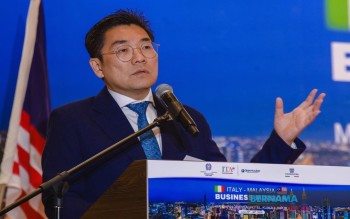
Deputy Minister of Investment, Trade and Industry Sim Tze Tzin confirmed that the fourth round of formal negotiations, conducted in Kuala Lumpur from June 8 to 12, resulted in the conclusion of three additional chapters covering Customs and Trade Facilitation, Trade Remedies, and Good Regulatory Practices. These technical areas form the backbone of modern trade agreements, establishing the procedural frameworks that allow goods to move smoothly across borders and ensuring that regulatory systems do not become hidden barriers to commerce. The completion of these chapters signals that both sides have moved beyond preliminary discussions into substantive agreement on operational mechanics.
The negotiation process has accelerated through successive rounds, with earlier sessions having already secured consensus on the Transparency chapter during the second round of talks, followed by the Small and Medium Enterprises chapter during the third. This sequential progress demonstrates that despite the inherent complexity of aligning two vastly different trading systems—one representing a continental bloc of 27 member states with deeply harmonised standards, the other a Southeast Asian nation with distinct regulatory traditions—the talks have maintained momentum. The upcoming fifth round, scheduled for September 21 to 25 in Brussels, will continue work on remaining chapters that likely include services, intellectual property, labour standards, and environmental protections.
The backdrop to these negotiations includes recent high-level political engagement between Malaysia and Europe. Prime Minister Datuk Seri Anwar Ibrahim's working visit to Italy in July of the previous year, undertaken at the invitation of Italian Prime Minister Giorgia Meloni, laid groundwork for expanded bilateral cooperation. The Italy-Malaysia Business Mission held in conjunction with Sim's remarks reflects this deepening engagement and demonstrates how trade negotiations at the governmental level catalyse broader business-to-business connections across the private sector.
From Malaysia's perspective, the MEUFTA promises transformative potential for the economy. Officials characterise the agreement as a mechanism to integrate the country more tightly with the world's largest single market whilst simultaneously unlocking avenues in high-technology services, renewable energy, and digital commerce—sectors aligned with Malaysia's strategic development objectives. For Italian manufacturers and service providers, the agreement offers access to a nation positioned as a gateway to Southeast Asian supply chains and markets. The synergies between the two economies are particularly pronounced in electronics manufacturing and machinery production, where both countries possess complementary capabilities and established production ecosystems.
Malaysia's trade relationship with Italy has already demonstrated robust growth, with bilateral commerce reaching approximately RM17 billion (US$3.2 billion) in 2025, representing a year-on-year increase of 14.2 per cent. This growth trajectory elevated Italy to fifth position among Malaysia's European trading partners, a ranking that underscores the significance of deepening this commercial relationship through a formal trade agreement. Malaysian exports to Italy, valued at RM7.6 billion and rising 12.7 per cent year-on-year, are predominantly anchored in natural resource-based products, particularly palm oil and palm-derived manufactured goods, alongside higher-value industrial exports including iron and steel products, electrical and electronics components, and machinery. Conversely, Italian exports to Malaysia concentrate on sophisticated manufactured items—machinery, optical and scientific instruments, chemicals, jewellery, and advanced electronics—reflecting Italy's position as a hub for precision manufacturing and design-intensive industries.
Investment flows further illustrate the strength of Malaysia's appeal as a manufacturing destination for European firms. Over 80 Italian manufacturing projects representing a combined value of US$442 million have been established in Malaysia across diverse sectors encompassing food processing, chemicals, machinery manufacture, and aerospace components. Italian companies consistently identify Malaysia as a preferred investment location, citing the country's comprehensive industrial ecosystem, established supplier networks, and logistical infrastructure that facilitate efficient production for the broader Southeast Asian market. This existing investment base provides essential momentum for the MEUFTA negotiations, as concrete business operations create constituencies within both economies supportive of deeper trade integration.
The machinery and equipment manufacturing sector presents particularly promising ground for expanded cooperation between Malaysia and Italy. Both nations have developed genuine competencies in this domain, though with differing specialisations and capabilities. Italian strengths in precision machinery and design-intensive manufacturing can combine with Malaysia's competitive advantages in electronics-integrated production and regional supply chain management. A tariff-free trade environment under MEUFTA would reduce costs for firms sourcing components across borders, potentially attracting additional investment from global companies seeking to optimise production networks across the two economies.
Malaysia's semiconductor ambitions also feature prominently in the trade policy framework underpinning these negotiations. The government has enacted a New Investment Incentive Framework effective from March 2024, which offers tax incentives designed to encourage capital commitments in advanced manufacturing, front-end semiconductor fabrication, and integrated circuit design. The framework explicitly aims to support Malaysian enterprises in moving up the value chain toward higher value-added activities, challenging common perceptions that Malaysia's investment incentives benefit only foreign multinational corporations. This policy architecture creates conditions under which European semiconductor equipment manufacturers and designers could profitably establish or expand operations within Malaysia, serving both local and regional demand.
The 2027 completion target, while ambitious, appears achievable given the momentum demonstrated across four negotiation rounds. Remaining work likely involves more contentious policy areas including labour standards, environmental commitments, and rules of origin specifications that determine eligibility for preferential tariff treatment. The September Brussels round will provide a clear indication of whether the timeline remains realistic or requires adjustment. Success in completing MEUFTA would position Malaysia as a preferred hub for European manufacturers seeking Southeast Asian market access whilst simultaneously expanding Malaysian exporters' reach into one of the world's most affluent and regulated markets, with implications extending far beyond bilateral commerce into regional supply chain architecture and geopolitical positioning.

