Malaysia is accelerating its defence diplomacy across Southeast Asia with a renewed focus on bilateral partnerships that underscore the region's commitment to peace and stability. Defence Minister Datuk Seri Mohamed Khaled Nordin's recent visits to Vietnam and Cambodia represent a strategic recalibration of Malaysia's role in regional security affairs, one that extends beyond its year as ASEAN Chair and positions the nation as a consistent advocate for rules-based cooperation in an increasingly complex geopolitical landscape.
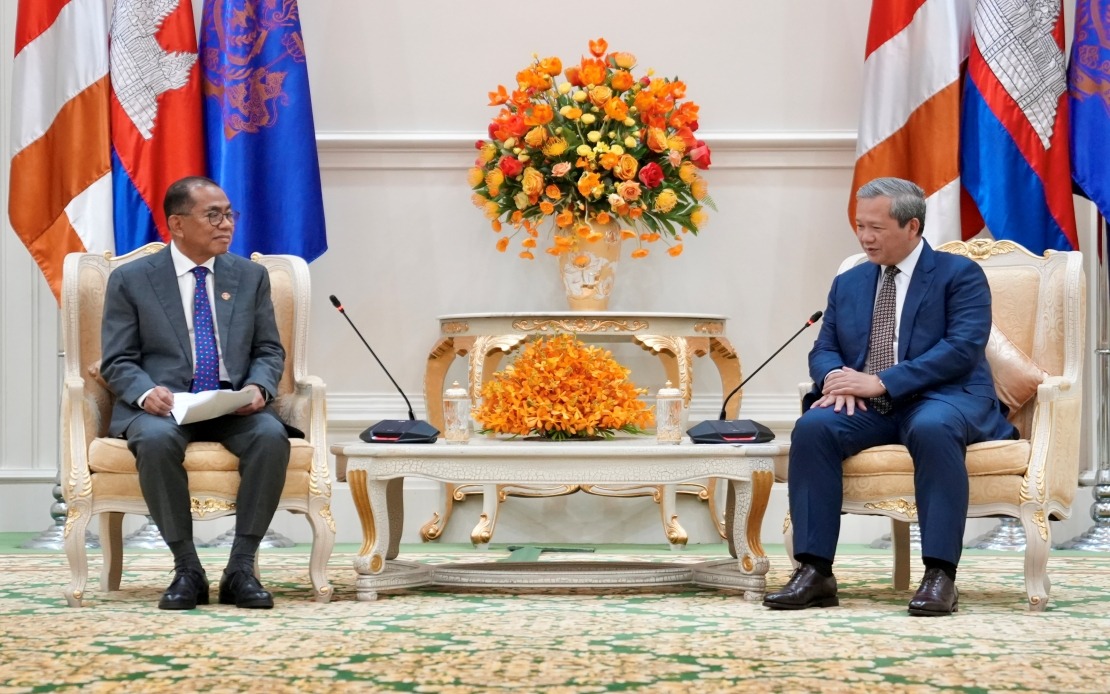
During his engagement with Cambodian Prime Minister Samdech Thipadei Hun Manet at Phnom Penh's Peace Palace, Mohamed Khaled underscored the bilateral relationship's evolution toward concrete security frameworks. The centrepiece of these discussions was the near-finalisation of the Malaysia-Cambodia Defence Cooperation Memorandum of Understanding, a document that will serve as the institutional backbone for expanding military collaboration between the two nations. This agreement carries particular significance given that Malaysia and Cambodia approach their 70th anniversary of diplomatic relations in 2027, suggesting both governments view defence ties as foundational to the broader partnership.
The MoU's scope reflects contemporary security challenges rather than Cold War-era concerns. Rather than emphasising traditional military capabilities, the framework encompasses emerging domains that will define regional security for decades to come. Jungle warfare training addresses the physical terrain that characterises much of Southeast Asia, where border disputes and internal security challenges remain persistent realities. More significantly, the inclusion of artificial intelligence and drone technology indicates both nations recognise that modern defence strategies depend on technological sophistication and data mastery. This forward-looking approach distinguishes Malaysia and Cambodia from regional peers who may still view defence cooperation through older lenses.
Beyond bilateral mechanics, Mohamed Khaled's conversations highlighted ASEAN's collective approach to persistent regional tensions. The discussions pointedly referenced the Cambodia-Thailand border situation, where the ASEAN Observer Team mechanism provides diplomatic oversight without imposing direct intervention. By emphasising dialogue and peaceful resolution, Malaysia and Cambodia signal that ASEAN members can manage disagreements through their own institutional frameworks rather than inviting external powers into regional disputes. This approach carries particular relevance for Malaysia, which has long advocated for ASEAN centrality in managing regional security, even as major powers seek to expand their influence in Southeast Asia.
The South China Sea Code of Conduct emerged as another critical agenda item, reflecting shared concerns about maintaining predictable maritime behaviour across contested waters. Malaysia's emphasis on finalising this instrument alongside its Cambodian counterpart demonstrates that middle-power nations recognise their collective influence matters more when coordinated. For Malaysian readers, this underscores why bilateral relationships with fellow ASEAN members function as force multipliers—individual negotiations carry less weight than coordinated positions on matters affecting the entire region's security architecture.
Mohamed Khaled's parallel engagement with Cambodian Deputy Prime Minister and Defence Minister General Tea Seiha extended these conversations into more technical defence discussions. The decision to hold separate but complementary meetings with civilian and military leadership suggests a sophisticated diplomatic approach that acknowledges both political and operational dimensions of defence cooperation. This two-track engagement reflects understanding that lasting security partnerships require alignment across government structures, not merely headline-grabbing agreements between senior officials.
The timing of these visits intersects meaningfully with Malaysia's regional strategy. While the country has concluded its ASEAN Chairmanship, Mohamed Khaled's explicit statement that Malaysia's commitment to regional stability remains unchanged sends a message to both ASEAN partners and external observers. This consistency matters because it reassures neighbouring states that Malaysia's defence diplomacy reflects long-term strategic thinking rather than opportunistic positioning tied to rotating leadership roles. For Cambodia, this continuity provides confidence that Malaysian support for border peace initiatives and ASEAN mechanisms will persist regardless of which capital holds the rotating chair.
The Malaysian delegation's composition—including Chief of the Royal Malaysian Navy Admiral Tan Sri Zulhelmy Ithnain and Defence Ministry officials—indicates these visits carried substantive rather than ceremonial weight. The presence of senior military and civilian defence bureaucrats signals serious negotiations about implementation frameworks and operational details, not merely symbolic relationship-building. This attention to institutional depth differentiates genuine partnership development from superficial diplomatic theatre.
Mohammad Khaled's preceding visit to Vietnam, where he engaged with both political and defence leadership, reinforces a broader pattern of Malaysia strengthening ties with major ASEAN economies. Vietnam and Cambodia, as key players in regional security architecture and ongoing territorial discussions, represent logical priority partners for any Malaysian government committed to ASEAN cohesion. By visiting both nations in sequence, the Defence Minister demonstrated that Malaysia does not distinguish between major and smaller ASEAN members in its diplomatic outreach—a subtle but important signal in a region where power dynamics sometimes create hierarchies among member states.
The Defence White Paper and National Defence Strategy references situate these diplomatic initiatives within Malaysia's broader security planning framework. Rather than treating defence diplomacy as an ad-hoc activity, the government explicitly links bilateral engagement to documented strategic priorities. This institutional integration suggests Malaysia's defence partnerships reflect calculated choices aligned with long-term security objectives rather than reactive responses to immediate crises. For policymakers and analysts, this approach demonstrates maturation in how Malaysia conceives its regional role.
Looking forward, the anticipated signing of the Malaysia-Cambodia Defence Cooperation MoU during the ASEAN Defence Ministers' Meeting in the Philippines will formalise commitments discussed during this visit. Such multilateral forums provide opportunities to demonstrate these bilateral advances to the broader regional community, potentially encouraging other ASEAN dyads to pursue similar comprehensive frameworks. Malaysian leadership in promoting structured defence cooperation may thus influence regional norms around what constitutes modern defence partnerships.
For Malaysia specifically, deepening ties with Cambodia serves multiple strategic interests simultaneously. It reinforces Malaysia's commitment to ASEAN solidarity, maintains influence over a neighbour with whom it shares maritime interests in the Gulf of Thailand, and demonstrates capacity for substantive engagement beyond headline-grabbing initiatives. As Southeast Asia navigates pressures from competing great powers, Malaysia's choice to invest diplomatic capital in strengthening relationships with ASEAN partners affirms the region's capacity to manage its own security affairs through cooperative mechanisms rather than deference to external powers.

