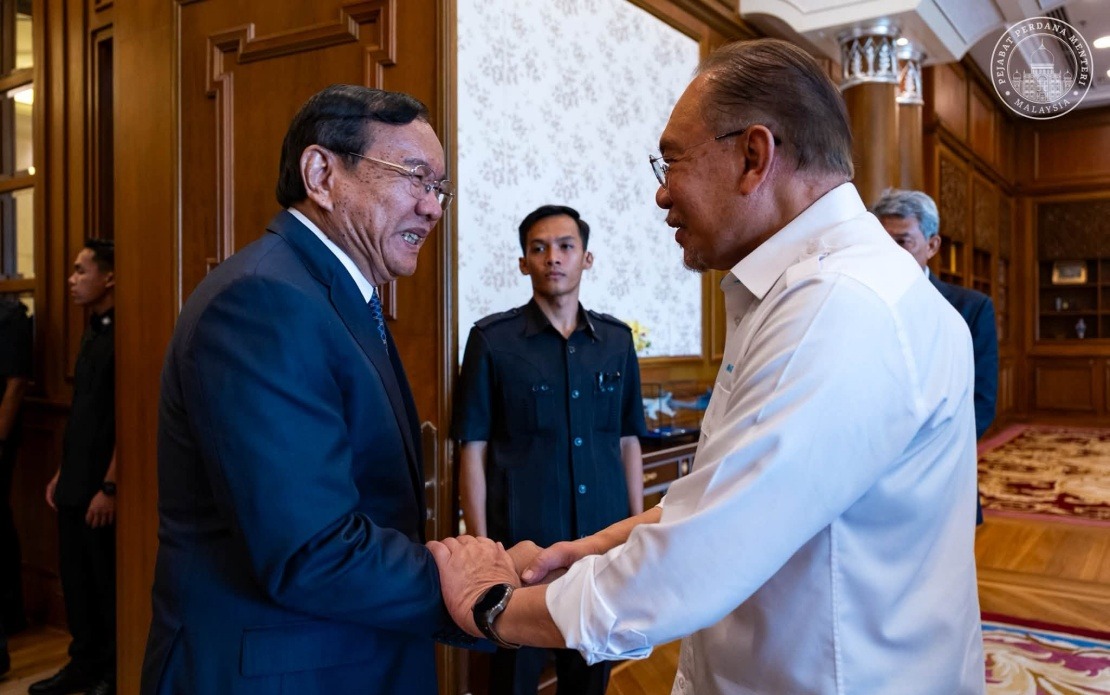
Prime Minister Datuk Seri Anwar Ibrahim has outlined an ambitious agenda for Malaysia-Cambodia cooperation, signalling the two Southeast Asian neighbours are poised to deepen their economic and strategic engagement across a diverse range of sectors. The announcement came during a courtesy call from Cambodian Deputy Prime Minister and Minister of Foreign Affairs and International Cooperation Prak Sokhonn, who arrived in Malaysia to inaugurate talks that will shape bilateral ties for years to come.
The strategic priorities identified by the two countries reflect the evolving landscape of regional economic competition and technological advancement. Digital transformation and artificial intelligence have emerged as centrepieces of the cooperation framework, suggesting both nations recognise the imperative to harness emerging technologies for economic growth and social development. This alignment is particularly significant for Malaysia, which has positioned itself as a regional hub for digital innovation and technology entrepreneurship, and for Cambodia, which is increasingly integrating technology into its development strategy.
The halal industry represents another pillar of this renewed partnership, underscoring Malaysia's established position as a global halal standard-setter and Cambodia's growing interest in accessing this lucrative market. For Malaysian businesses and religious institutions, Cambodia's engagement with halal certification and production standards opens avenues for trade expansion and the export of expertise. The sector encompasses food manufacturing, cosmetics, pharmaceuticals and logistics, creating multifaceted commercial opportunities that extend beyond traditional trade relationships.
Food security has likewise featured prominently in the discussions, a concern that resonates throughout ASEAN as member states grapple with climate change, supply chain disruptions and demographic pressures. Cambodia's agricultural potential and Malaysia's technological and financial capabilities create a natural complementarity, enabling joint ventures in agribusiness, food processing and agricultural innovation that could bolster regional self-sufficiency and resilience against external shocks.
Human capital development, the fifth sectoral focus, acknowledges that economic progress ultimately depends on investing in people. Whether through educational exchanges, vocational training partnerships or professional development programmes, this commitment recognises that neither nation can achieve sustainable growth without cultivating a skilled, adaptable workforce capable of competing in the modern economy. Malaysian institutions' expertise in higher education and technical training positions them well to contribute meaningfully to Cambodia's capacity-building efforts.
Cross-border crime prevention has also emerged as a shared concern demanding coordinated action. The porous nature of Malaysia-Cambodia borders, combined with the region's vulnerability to human trafficking, drug smuggling and transnational organised crime, necessitates robust cooperation between law enforcement agencies. Strengthening these mechanisms serves both nations' security interests while contributing to broader ASEAN stability.
The timing of Prak Sokhonn's visit carries additional significance, as it precedes the Third Malaysia-Cambodia Joint Commission for Bilateral Cooperation meeting scheduled for August 4. This formal mechanism provides institutional structure for translating announced commitments into concrete projects and measurable outcomes. Through the JCBC framework, both nations can establish working groups, set timelines and allocate resources toward their shared objectives, transforming political rhetoric into substantive cooperation.
Looking further ahead, Malaysia and Cambodia are already preparing for the 70th anniversary of their diplomatic relations in 2027. This milestone provides an opportunity to reflect on decades of partnership while charting a course toward an even deeper strategic relationship. For regional observers, the deliberate cultivation of ties between two ASEAN members signals commitment to strengthening the bloc's internal cohesion at a time when external pressures and competing great power interests test regional unity.
Prime Minister Anwar emphasised that as ASEAN member states, Malaysia and Cambodia shoulder collective responsibility for preserving peace and regional stability. This statement carries weight in Southeast Asia's complex geopolitical environment, where smaller nations must maintain strategic autonomy whilst navigating competing interests of major powers. By strengthening bilateral and multilateral ties through forums like ASEAN, Malaysia and Cambodia demonstrate commitment to a rules-based order grounded in mutual respect and shared prosperity.
The broader context of ASEAN Community Vision 2045 underscores how bilateral cooperation between member states contributes to the bloc's overarching goal of achieving greater prosperity, stability and competitiveness. Malaysia and Cambodia's expanded cooperation in these sectors directly advances that vision by promoting economic integration, technological advancement and human development across the region. For Malaysian stakeholders in business, academia and civil society, Cambodia presents both market opportunities and partnership possibilities that merit serious exploration.
Anwar's statement concludes by expressing confidence that Malaysia-Cambodia relations will continue strengthening, a diplomatic formulation that nonetheless reflects genuine mutual interest. Both nations benefit from stable, productive relations: Malaysia gains access to Cambodia's markets and resources whilst offering technical expertise and capital, whilst Cambodia benefits from technology transfer, investment and knowledge-sharing partnerships. This complementary relationship, when properly nurtured through high-level engagement and institutional mechanisms, can generate tangible returns for both populations.
As Southeast Asia navigates post-pandemic recovery and prepares for longer-term structural changes driven by technological disruption and geopolitical reorientation, bilateral partnerships like Malaysia-Cambodia cooperation provide essential building blocks for regional resilience and prosperity. The sectors identified by Anwar and Prak Sokhonn—digital economy, artificial intelligence, halal industry, food security and human capital development—represent the frontiers of 21st-century economic competition, positioning both nations at the forefront of regional transformation and growth.

