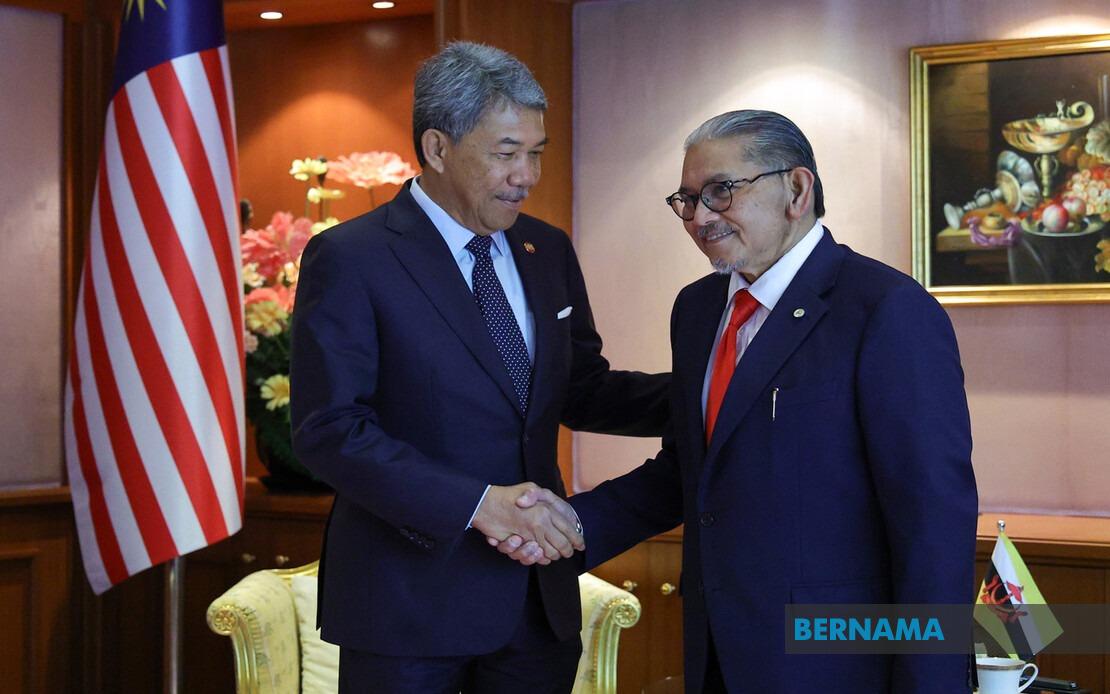
Malaysia and Brunei have reinforced their longstanding partnership through substantive diplomatic engagement, with Foreign Minister Datuk Seri Mohamad Hasan highlighting significant progress on multiple fronts during the 27th Meeting on the Implementation of the Exchange of Letters held in Bandar Seri Begawan. The bilateral talks, which saw Brunei's Second Minister of Foreign Affairs Datuk Seri Setia Erywan Mohd Yusof co-chairing alongside Mohamad, demonstrated the two nations' commitment to resolving outstanding issues and expanding cooperation in critical areas affecting their shared border and populations.
At the heart of the discussions lay persistent boundary matters that have required sustained diplomatic attention. Mohamad disclosed that the two countries have achieved approximately 50 per cent completion of land boundary demarcation, a methodical process that extends beyond merely acknowledging where existing borders lie. The demarcation exercise represents a more technical and comprehensive undertaking, involving careful examination of geographical, topographical and administrative factors on the ground that demand resolution according to internationally recognised standards. This incremental progress reflects the patience and professionalism both governments bring to border management, avoiding the acrimony that sometimes characterizes such processes in the region.
The foundation for this boundary work derives from the 2009 Terms of Reference, which established the framework and principles guiding the demarcation initiative. Rather than rushing to arbitrary conclusions, Malaysia and Brunei have tasked technical committees with fieldwork and analysis, ensuring that any final demarcation aligns with historical records, geographical realities and the bilateral agreement. Mohamad explained that the technical committee's forthcoming report will provide the basis for harmonising boundary markers and documentation, a critical step toward resolving any ambiguities that could otherwise generate friction in years ahead.
Beyond terrestrial concerns, the meeting addressed maritime boundaries, another area where precision and mutual understanding prove essential. Southeast Asian nations have grown increasingly conscious of maritime security and resource management, particularly as shipping volumes increase and fisheries interests intersect. The inclusion of maritime boundary discussions in the bilateral agenda reflects both nations' appreciation for comprehensive border governance that covers land and sea dimensions.
A notable development emerging from the talks involves the establishment of a Search and Rescue mechanism between the two countries. Mohamad confirmed that Malaysia and Brunei intend to formalise this cooperation through a memorandum of understanding, institutionalising their coordinated response to maritime emergencies, aircraft incidents and other rescue operations affecting their shared waters and airspace. For Malaysia, which spans extensive maritime territory and manages significant shipping channels, effective SAR coordination with neighbours enhances national security and demonstrates responsible stewardship of regional waters.
The bilateral engagement also targeted practical measures to simplify cross-border movement for citizens of Brunei, Sarawak and Sabah. This initiative carries particular weight given that Brunei sits geographically within the Malaysian island of Borneo, surrounded by Sarawak and located near Sabah. Enhanced people-to-people mobility through streamlined travel procedures could stimulate economic exchange, tourism and cultural interactions that benefit all three jurisdictions. For Malaysians in Sarawak and Sabah, reduced barriers to visiting or conducting business in Brunei directly impact economic opportunities and social connections.
The substantive nature of these discussions underscores that bilateral relations between Malaysia and Brunei rest on more than ceremonial goodwill. Both nations navigate complex questions of sovereignty, resource sharing and regional integration that demand consistent diplomatic effort and technical expertise. The 27th Meeting on the Exchange of Letters represents part of a longer institutional framework through which Malaysia and Brunei systematically address outstanding issues rather than allowing them to accumulate into sources of tension.
From a broader Southeast Asian perspective, the Malaysia-Brunei partnership model offers valuable lessons in conflict avoidance and cooperative problem-solving. As the region experiences growing economic integration and evolving geopolitical dynamics, the capacity of neighbouring nations to resolve boundary matters and enhance operational cooperation becomes increasingly significant. The progress reported by Mohamad suggests that despite occasional setbacks that attend all diplomatic processes, both governments remain committed to constructive engagement.
The forthcoming SAR memorandum and continued boundary demarcation work will likely occupy bilateral attention in coming months. Mohamad's transparency in describing both the accomplishments and the ongoing nature of this work indicates confidence in the trajectory of these initiatives rather than suggesting imminent resolution of all outstanding issues. For Malaysian policymakers focused on Sabah and Sarawak, the emphasis on facilitating movement and cooperation carries strategic importance as these states continue developing economically and socially within the federation.

