The National Anti-Drug Agency (AADK) has thrown its weight behind Malaysia Aviation Group's (MAG) decision to make drug screening mandatory for all 1,260 Malaysia Airlines (MAS) pilots and cabin crew members, a move prompted by the recent detention of an MAS pilot in Indonesia. The endorsement signals a coordinated government push to strengthen safety protocols within the nation's aviation sector, where passenger welfare depends critically on the fitness and sobriety of flight personnel.
Acknowledging the gravity of the situation, AADK director-general Datuk Ruslin Jusoh underscored that aviation cannot afford compromises on safety given the thousands of passengers who depend on pilots and crew daily. He framed the screening initiative as consistent with the government's overarching zero-tolerance stance on drug abuse and trafficking. The comprehensive approach extends beyond individual testing to encompass detection operations, workplace drug-free programmes, and supervisory training designed to catch problematic substance use before it reaches the flight deck.
The agency has committed substantial resources to support MAG's implementation. AADK will collaborate through dedicated drug detection operations targeting flight crew, reinforcement of its Drug-Free Workplace programme (TEKAD), and preventive training focused on supervisors across the airline. This multi-layered strategy reflects recognition that isolated incidents, while alarming, represent aberrations rather than systemic failures within Malaysia's aviation workforce. The partnership also incorporates cross-agency coordination with police, the Civil Aviation Authority of Malaysia (CAAM), and international regulators to strengthen information sharing at key entry points.
Historical precedent demonstrates AADK's existing engagement with Malaysia's aviation sector. The agency conducted detection operations at MAS in April 2025 and at AirAsia in December 2025, establishing a track record of proactive monitoring before this latest incident. These previous operations underscore that drug screening in aviation is not a reactive novelty but an evolving component of Malaysia's security infrastructure. The expansion to mandatory screening for all pilots represents an escalation of existing vigilance rather than introduction of entirely new protocols.
Beyond aviation, Terengganu's drug landscape presents a mixed picture that warrants concern. While overall addiction and abuse cases declined by 7.2 per cent to 7,582 individuals in the first quarter of 2026 compared to the same period the previous year, demographic shifts within the affected population are troubling. A 16.7 per cent surge in involvement among children aged 10 to 14 signals that substance abuse is penetrating younger cohorts, a trajectory that threatens long-term public health outcomes. Simultaneously, rising cases among those aged 55 to 59 and 65 to 69 indicate that drug abuse spans the entire life course, complicating intervention strategies that must address vastly different motivations and contexts.
Amphetamine-type stimulants remain the dominant drug threat in Terengganu, accounting for 6,206 cases or 81.9 per cent of recorded incidents in the first quarter of 2026. Methamphetamine (syabu), yaba pills, and ecstasy comprise this category, reflecting the particular vulnerability of Malaysia's population to synthetic drugs that are often cheaper, more potent, and more readily available than traditional narcotics. Opiates trail significantly, representing 1,281 cases or 16.9 per cent, though their persistent presence indicates continued demand despite global regulatory efforts.
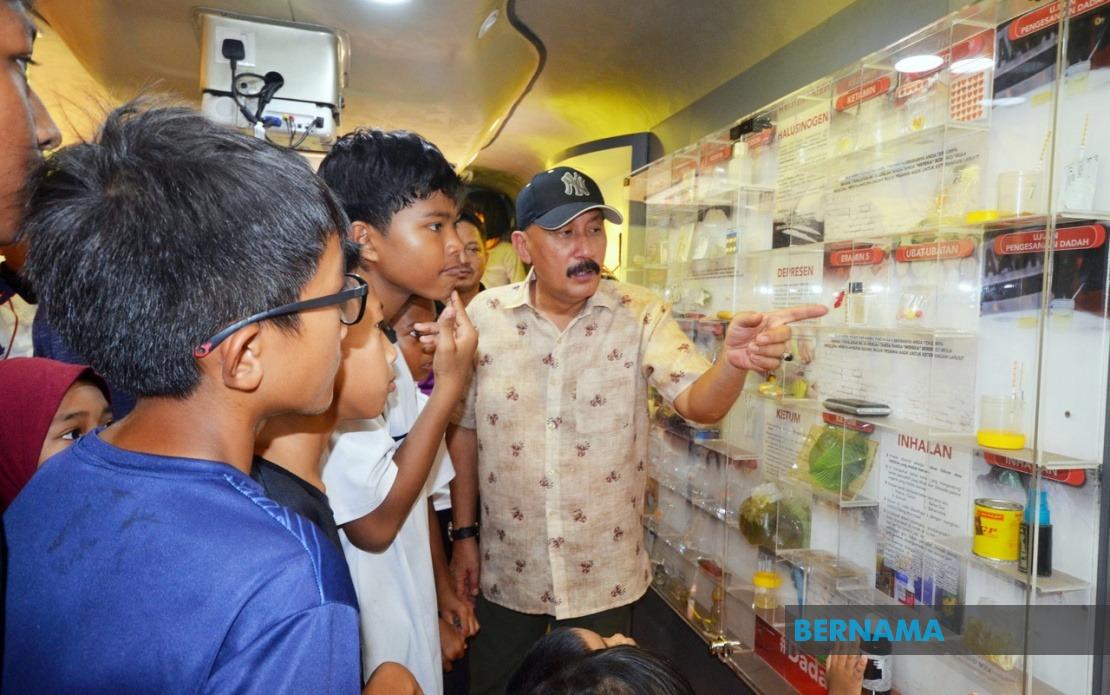
Recognising the necessity of early intervention, AADK has expanded its footprint into rural communities through the MADANI Foster Village (KAM) and MADANI Foster School (SAM) programmes. The upgrade of recreational and educational infrastructure at FELDA Tenang exemplifies this approach, with improvements including football pavilions, futsal and sepak takraw courts, and enhanced school facilities. These investments acknowledge that drug prevention operates most effectively when communities have accessible alternatives, supportive environments, and legitimate outlets for youth energy and ambition.
The SAM programme particularly targets schools and community levels, serving as an early defensive line against drug experimentation among adolescents. By embedding anti-drug messaging and prevention education within familiar institutional structures, the government increases the likelihood of reaching vulnerable populations before substance use becomes entrenched. The complementary involvement of Parent-Teacher Associations (PTAs) and local communities creates multiple touchpoints for intervention and reinforcement of drug-free norms.
For Malaysian aviation and the broader Southeast Asian region, the mandatory screening initiative carries significant implications. Malaysia's position as a major aviation hub serving millions of passengers annually makes aviation safety a regional concern. Airlines operating across Southeast Asian routes depend partly on mutual recognition of safety standards; Malaysia's tightened protocols may prompt peer countries to reassess their own screening requirements or prompt closer coordination among regional civil aviation authorities. The incident that triggered this response demonstrates that even in heavily regulated sectors with stringent professional standards, individual lapses can occur, necessitating systematic safeguards.
Ruslin's reaffirmation of AADK's commitment to support both government and private sector initiatives reflects a collaborative model increasingly prevalent in Malaysia's counter-narcotics strategy. Rather than relying solely on enforcement, the agency recognises that sustainable drug-free environments require partnership across multiple stakeholders. MAG's proactive response, government backing, and cross-agency coordination illustrate an integrated approach where detection, prevention, treatment, and institutional reform operate in concert rather than isolation.
Looking forward, the success of mandatory pilot screening will likely establish precedent for other safety-critical industries in Malaysia. If aviation successfully implements comprehensive drug screening without operational disruption or privacy concerns that generate public backlash, similar programmes may expand to transportation, security, and other sectors where public safety depends on employee sobriety. The regulatory template being established in airlines could therefore influence occupational health standards across Malaysian industry for years to come.

