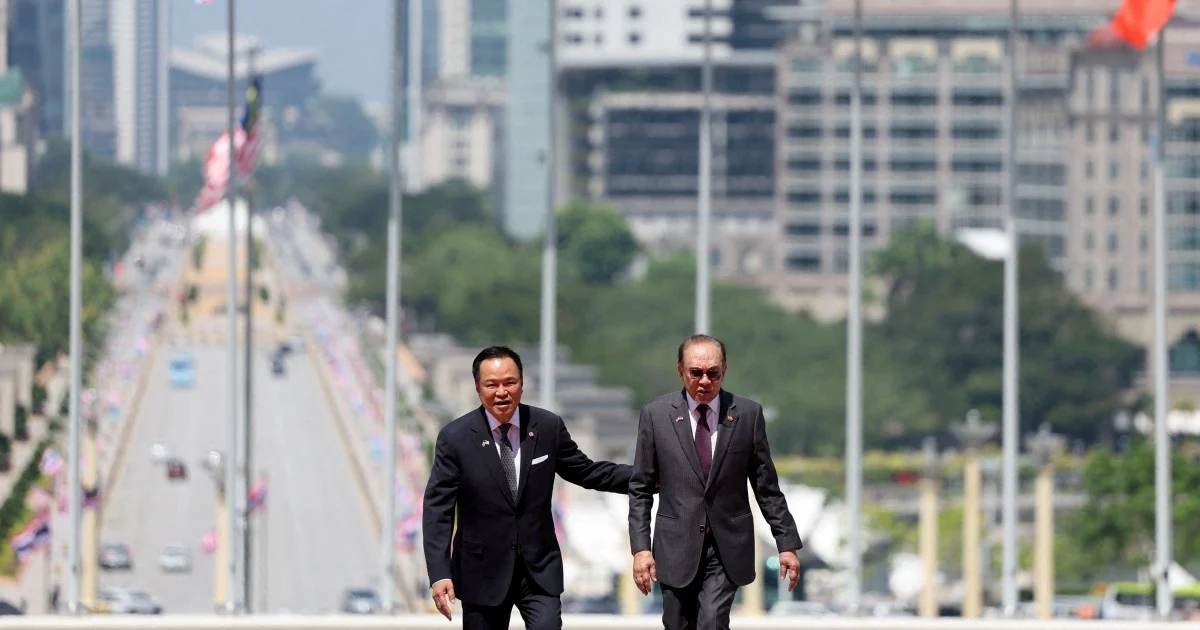
Prime Minister Datuk Seri Anwar Ibrahim has underscored Malaysia's commitment to resolving the Myanmar crisis through a framework centred on inclusive dialogue and respect for popular sovereignty. Speaking in Putrajaya, the Prime Minister articulated a diplomatic position that privileges engagement with multiple stakeholders over exclusionary approaches, signalling Malaysia's intent to play a constructive role in addressing one of Southeast Asia's most pressing humanitarian and political challenges.
The Malaysian government's stance reflects a broader regional consensus that Myanmar's path forward cannot be dictated by any single actor or interest group. Instead, Anwar's comments suggest that durable solutions must emerge from genuine participation by diverse constituencies within Myanmar society, including various ethnic groups, civil society organisations, and communities affected by the ongoing conflict. This positions Malaysia within a moderate consensus that rejects both the military junta's monopoly on power and external interventions that circumvent Myanmar's own decision-making capacity.
Myanmar has endured deepening instability since the February 2021 military coup displaced the elected government of Aung San Suu Kyi. The subsequent years have witnessed armed resistance, humanitarian displacement affecting millions, and economic deterioration that has rippled across the Southeast Asian region. The crisis poses direct challenges for neighbouring countries, including Malaysia, which hosts significant Rohingya refugee populations and depends on regional stability for economic and security cooperation.
Anwar's emphasis on self-determination carries particular weight given Malaysia's own experience with democratic transitions and multicultural governance. By insisting that Myanmar's people themselves must chart their nation's course, the Prime Minister implicitly rejects both authoritarian consolidation and foreign-imposed solutions, positioning Malaysia as an advocate for locally rooted, legitimate outcomes. This framing acknowledges that external pressure alone has failed to produce meaningful change in Myanmar and that sustainable resolution requires buy-in from those directly affected by the crisis.
The inclusive engagement approach advocated by Malaysia reflects ASEAN's broader diplomatic philosophy, though implementation remains challenging. ASEAN's Five-Point Consensus, adopted in 2021, similarly called for dialogue and humanitarian assistance while respecting Myanmar's sovereignty. However, the Myanmar junta's limited cooperation with the consensus framework has frustrated regional efforts, leaving member states like Malaysia to reiterate commitment to dialogue while grappling with limited leverage.
Malaysia's position also acknowledges the complexity of Myanmar's internal landscape. The country encompasses numerous ethnic nationalities with distinct political aspirations, historical grievances, and territorial claims. Inclusive engagement must account for these diverse interests, from Burman majority communities to ethnic armed organisations operating in border regions. This complexity explains why Malaysia and other ASEAN neighbours have avoided prescriptive solutions, instead calling for open platforms where all voices can contribute to shaping Myanmar's future.
The humanitarian dimensions of the Myanmar crisis add urgency to Malaysia's diplomatic calls. The conflict has displaced millions internally and driven hundreds of thousands into neighbouring countries as refugees. Malaysia, already hosting over 180,000 registered Rohingya refugees alongside undocumented migrants from Myanmar, bears tangible costs of the crisis. Anwar's emphasis on inclusive resolution thus serves both principled diplomatic interests and practical national concerns, as regional stability directly affects Malaysia's capacity to manage refugee populations and maintain social cohesion.
Myalaysia's approach also reflects caution about unilateral intervention or alliance-building that could deepen polarisation within Myanmar. By emphasising inclusivity rather than alignment with particular factions, Malaysia preserves its ability to engage constructively with various actors and maintain regional stability. This balancing act becomes increasingly delicate as Myanmar's conflict deepens and international attention intensifies, with some external powers viewing the country through geopolitical lenses rather than humanitarian or regional stability frameworks.
The call for self-determination specifically rejects narratives in which Myanmar's future should be determined by security arrangements, resource interests, or great power competition. By insisting on the Myanmar people's right to shape their own destiny, Anwar positions Malaysia against both military authoritarianism and external interference, appealing to fundamental principles of sovereignty and democratic legitimacy. This stance carries resonance across Southeast Asia, where memories of colonial intervention and Cold War great power rivalry remain relevant to contemporary debates about external engagement.
Moving forward, Malaysia's articulation of this position may influence how ASEAN collectively approaches Myanmar engagement. As the bloc seeks to maintain unity and credibility, individual member states' diplomatic messaging becomes important. Malaysia's emphasis on inclusive engagement and self-determination provides a framework that balances pressure for accountability and resolution against recognition of Myanmar's sovereignty and the complexity of its internal dynamics.
The challenge now lies in translating rhetorical commitment into practical mechanisms that can facilitate genuine dialogue. Myanmar's junta has shown limited receptiveness to ASEAN-led initiatives, suggesting that inclusive engagement requires not only goodwill from regional actors but also shifts within Myanmar's military and political establishment. Malaysia's continued diplomatic emphasis on this approach signals patience with long-term engagement while maintaining clear principles about the need for inclusive, legitimate solutions that respect both Myanmar's people and the region's broader stability.

