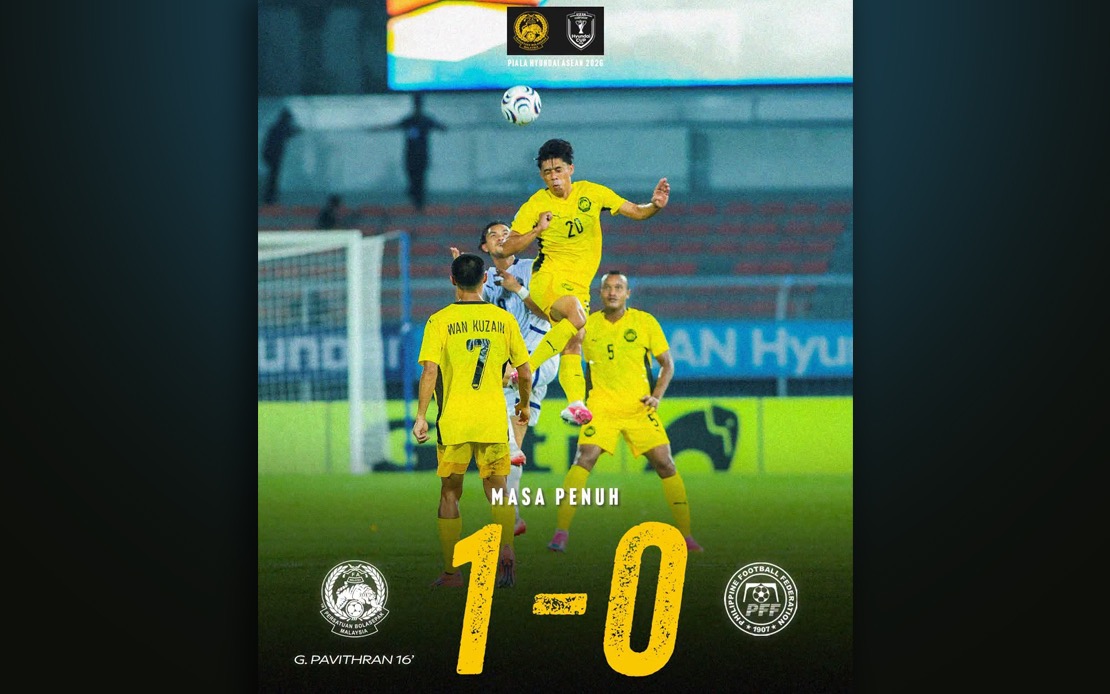
Malaysia has secured its passage to the semi-finals of the 2026 ASEAN Cup following a commanding 1-0 victory over the Philippines in their final Group B encounter at the Kuala Lumpur Football Stadium in Cheras. The win, achieved under interim head coach Tan Cheng Hoe, delivered the solitary objective the national team required—three points from the match—to confirm advancement from the group phase of the prestigious regional tournament.
The performance at the 18,000-capacity venue underscored Malaysia's determination and tactical discipline. Harimau Malaya supporters, distinguished by their black and yellow attire, contributed substantially to the atmosphere throughout the evening, creating an intimidating home environment that likely reinforced the team's confidence and intensity. The significance of the fixture extended beyond securing qualification; it represented a statement of intent as Malaysia seeks to establish itself among the region's elite football-playing nations.
The breakthrough arrived in the 16th minute when midfielder Wan Kuzain Wan Ahmad Kamal delivered a pinpoint cross into the Philippines penalty box. G. Pavithran's header found the back of the net with clinical precision, igniting celebrations among the home crowd and providing Malaysia with the lead they would defend throughout the remainder of the encounter. This early advantage proved psychologically important, allowing the Malaysian side to dictate the tempo and shape of play during the opening period.
Following their opening goal, Malaysia demonstrated tactical maturity by maintaining possession and controlling the rhythm of the game. The Philippines, managed by Carles Cuadrat, attempted to impose themselves through increased attacking moves, yet Malaysia's defensive structure remained resolute. The midfield ensured effective transitional play, preventing the Philippines from establishing momentum before the interval whistle concluded the first half without further goal-scoring drama.
The second period saw the Philippines emerge with renewed attacking urgency, reflecting typical tournament football where teams chasing results inject greater aggression into their play. However, Malaysia's backline, marshalled by captain Paulo Josue, displayed the concentration and organisation required to nullify these efforts. The defensive resilience proved decisive in frustrating the Philippines' search for an equaliser, restricting clear-cut opportunities and maintaining the structural integrity that coach Hoe had evidently instilled.
Malaysia nearly extended their advantage in the 85th minute when Pavithran positioned himself advantageously following a low cross from a teammate. The Philippines defender Jaime Rosquillo's intervention prevented what would have been a decisive second goal, illustrating the fine margins that often determine tournament outcomes. The failure to add a second goal, while unsettling for Malaysia supporters seeking insurance, ultimately proved inconsequential given the defensive performance.
The victory positioned Malaysia as runners-up in Group B with nine accumulated points, a total sufficient to advance alongside group champions Thailand, who accumulated 12 points after defeating Myanmar 2-0 in parallel competition. The Thai side's superior point tally reflects their marginally stronger form throughout the group stage, though both nations progressed with reasonable emphases on consistency and defensive solidity. The points distribution across the group illustrates the competitive balance within this particular tier of ASEAN football.
Malaysia's semi-final assignment presents a formidable examination of their tournament credentials. Vietnam, who topped Group A, hold the distinction of defending champions, indicating their recent dominance of regional football competitions. The two-leg format scheduled for August 16 and 19 demands Malaysia maintain their current trajectory while adapting strategically to overcome opponents boasting greater recent success in continental competitions. The away fixture presents particular tactical challenges, requiring Hoe's side to marry defensive discipline with clinical attacking efficiency.
From a broader perspective, Malaysia's semi-final qualification validates recent investment in player development and coaching infrastructure. The interim appointment of Tan Cheng Hoe reflects the federation's pragmatic approach to identifying experienced leadership capable of extracting maximum performance during high-pressure tournaments. Success in knockout football depends substantially on psychological fortitude, tactical adaptation, and the ability to perform under escalating pressure—qualities that the Philippines encounter demonstrated the team possesses at least in preliminary phases.
The semi-final pairing against Vietnam represents the logical progression of a regional tournament structure where historically stronger nations predominate. Vietnam's group-stage dominance suggested they managed opponent psychology effectively while maintaining attacking potency—dual requirements that separate tournament contenders from champions. Malaysia's task involves demonstrating that their home victory over the Philippines reflects sustainable quality rather than temporary form, a distinction that knockout football ruthlessly exposes.
For Malaysian football enthusiasts and analysts, the forthcoming weeks offer genuine prospect of extended tournament engagement. Reaching semi-finals validates recent development pathways while providing realistic opportunity for further progress. However, realism suggests that Vietnam represent qualitatively different opposition than the Philippines, demanding Malaysia's most complete performances if they harbour genuine championship aspirations. The August fixtures will substantially determine whether current trajectory represents sustainable improvement in Malaysian football's international standing or merely a tournament campaign reflecting competitive circumstance.

