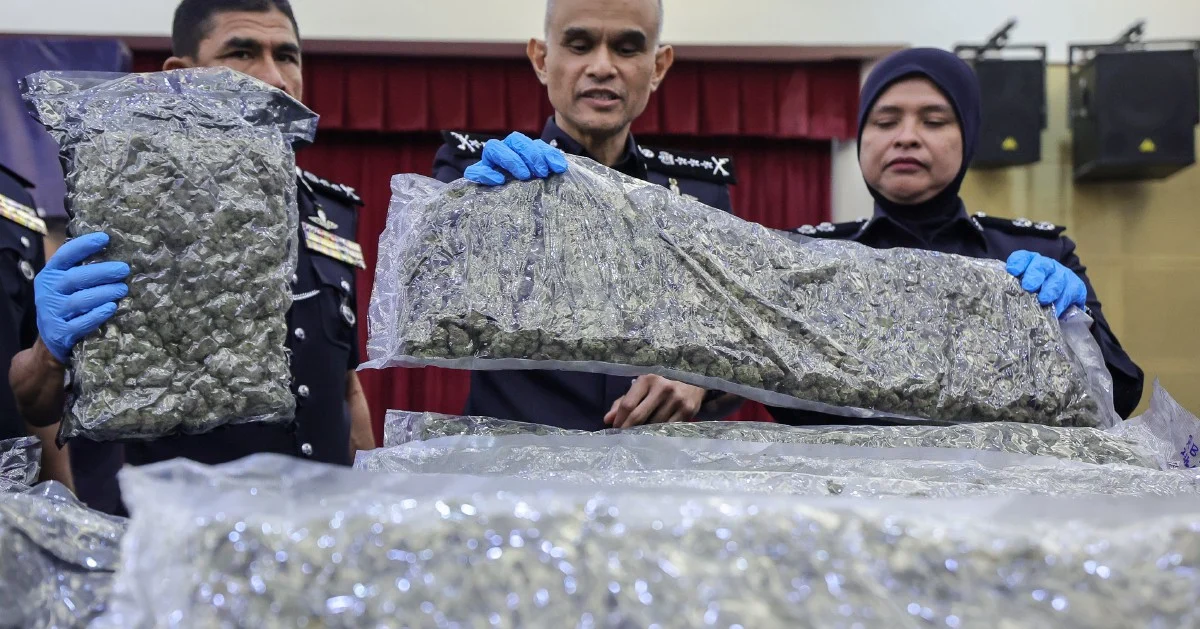
Authorities have dismantled a significant drug smuggling operation at Kuala Lumpur International Airport, confiscating 650 kilograms of cannabis buds and detaining 38 individuals in what represents a major success for Malaysia's anti-narcotics efforts. The seizure, made since January this year, underscores the persistent threat posed by organised trafficking networks attempting to exploit the country's primary international aviation hub as a conduit for illicit substances.
The scale of this interception highlights the evolving sophistication of drug smuggling methods employed by international criminal syndicates targeting Southeast Asia. Rather than attempting to move bulk quantities through conventional shipping routes, traffickers increasingly exploit passenger terminals and cargo facilities at major airports, banking on the volume of daily movements to conceal contraband. The half-tonne seizure at KLIA suggests these networks view Malaysia's gateway as a strategic point for either domestic distribution or transshipment to regional markets where demand remains strong despite enforcement efforts.
The arrested individuals include both Malaysian citizens and foreign nationals, indicating an international dimension to the trafficking chain. This mixed composition is typical of modern drug operations, where syndicates recruit accomplices across borders to handle different stages of distribution. Foreigners often serve as couriers or organisers, leveraging their reduced visibility or exploiting visa-free or visa-on-arrival arrangements that many Southeast Asian nations maintain. Understanding these recruitment patterns has become crucial for intelligence agencies seeking to disrupt supply chains at their source.
Cannabis trafficking has intensified across Southeast Asia as regional demand grows, particularly among younger demographics and in urban centres. Malaysia's position within the drug trade reflects both its geographic centrality and the sophistication of its transportation infrastructure. Unlike landlocked nations, countries with international airports and busy seaports face compounded challenges in screening the massive volume of goods and passengers flowing through daily. The cannabis seized at KLIA likely represents only a fraction of successful trafficking attempts, suggesting the underlying problem remains substantial despite this impressive interdiction.
The confiscation at the airport also reflects improved detection capabilities and intelligence-sharing among Malaysian law enforcement agencies. The Bukit Aman headquarters coordination with airport security and customs authorities demonstrates how institutional cooperation can yield tangible results against transnational crime. However, the continued volume of seizures indicates that detection alone remains insufficient; dismantling entire trafficking organisations requires sustained intelligence work, financial investigations, and proactive identification of supply sources upstream.
For Malaysian readers, this operation carries implications beyond immediate public safety concerns. Cannabis trafficking generates profits that fuel broader criminal ecosystems, funding other illicit activities including arms smuggling and human trafficking. The arrest of 38 individuals removes active participants from supply chains, though sentencing outcomes and prosecution success rates will ultimately determine whether these detentions produce lasting deterrent effects. Malaysia's mandatory sentencing provisions for drug trafficking potentially carry severe penalties for those convicted, yet the persistence of smuggling attempts suggests perpetrators view the risk-reward calculation favourably.
Regionally, the KLIA seizure reflects patterns observed across Southeast Asia, where airports in Bangkok, Singapore, and Jakarta have similarly reported major cannabis interdictions. This convergence suggests international trafficking organisations are simultaneously testing multiple gateways, adapting routes based on perceived security vulnerabilities. Intelligence sharing among ASEAN nations remains incomplete, meaning traffickers benefit from fragmented enforcement while law enforcement agencies often operate with limited visibility into cross-border movements.
The investigation into these 38 suspects will likely reveal supply chains extending into producer nations in the Golden Triangle or further afield, potentially implicating organised crime groups with significant resources and political protection in their home countries. Malaysian authorities face considerable challenges in pursuing such investigations without bilateral agreements facilitating extradition or mutual legal assistance. Building cases against suppliers abroad remains considerably more difficult than securing domestic convictions, meaning many trafficking networks continue functioning despite enforcement actions against their retail distribution networks.
Looking forward, sustained pressure at airports like KLIA will require continued investment in detection technology, intelligence analysis, and frontline officer training. Scanner upgrades, canine units, and behavioural profiling all contribute to interdiction efforts, yet determined syndicates continuously innovate concealment methods. The 650-kilogram seizure demonstrates current capabilities, but whether it represents a watershed moment or merely a statistical outlier in an otherwise effective smuggling operation remains unclear. Success in this domain ultimately depends on whether Malaysian authorities can transition from reactive interdiction to proactive disruption of trafficking organisations themselves.