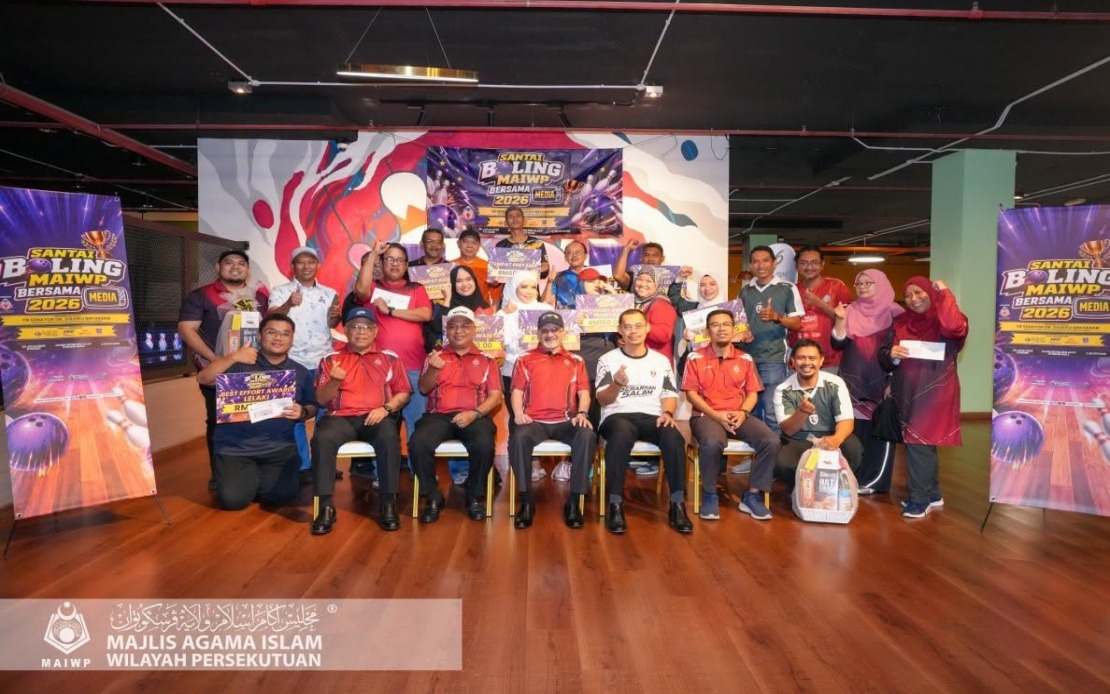
The Federal Territory Islamic Religious Council (MAIWP) has launched an informal networking initiative designed to deepen its institutional relationships with Malaysia's media landscape. Held at Juara Bowling Alley in Strand Mall, Kuala Lumpur, the MAIWP Bowling Recreational Programme 2026 brought together representatives from the country's leading news organisations, subsidiaries, and government agencies. The event reflects a strategic recognition within MAIWP that cultivating strong ties with media partners is essential for effectively communicating its programmes to the Muslim communities across Kuala Lumpur, Labuan, and Putrajaya.
At its core, the programme addresses a fundamental communication challenge facing government-linked religious institutions: ensuring that accurate, timely information about welfare and socio-economic initiatives reaches the target population. MAIWP oversees religious affairs, education, and community development programmes that directly affect hundreds of thousands of residents in the Federal Territory. By fostering closer relationships with newsrooms, the council aims to ensure broader and more effective dissemination of announcements regarding scholarships, social support schemes, educational activities, and religious guidance services.
The media organisations participating in the event represent a comprehensive cross-section of Malaysia's news ecosystem. The list included Bernama (the national news agency), commercial broadcasters such as IKIMfm and TV AlHijrah, major newspaper publishers including Berita Harian, New Straits Times, Harian Metro, and Utusan Malaysia, as well as public broadcasting services under RTM. This diverse representation signals MAIWP's intention to reach audiences across multiple platforms—from radio and print to digital and television—rather than relying on any single news channel. Such multi-platform engagement is increasingly vital in Malaysia's fragmented media consumption patterns, where different demographic groups favour different sources.
The informal bowling setting itself carries strategic significance in Malaysian institutional culture. Rather than a formal boardroom meeting or press conference, MAIWP deliberately chose a recreational environment that encourages casual conversation and relationship-building. This approach acknowledges that media relations operate on multiple levels beyond formal press releases and official statements. Journalists and editors are more likely to understand institutional priorities, constraints, and nuances through sustained personal relationships with government officials. A bowling outing creates space for these informal exchanges to occur, potentially leading to more contextualised and sympathetic coverage of MAIWP initiatives.
The council's emphasis on recognising the media's role in disseminating accurate information reflects broader concerns within Malaysia's religious and governance institutions about information quality and public perception. Misinformation and confusion regarding government services, religious guidance, and eligibility criteria for assistance programmes remain persistent problems across the Federal Territory. MAIWP's statement explicitly highlights the media's responsibility in this regard, suggesting the council views partnerships with established news organisations as a counterweight to unverified claims and rumour-mongering that may circulate through social media or informal channels.
From a governance perspective, strengthening media relationships also helps MAIWP advance its institutional agenda and demonstrate its value to the federal government. As a statutory body under the Minister in the Prime Minister's Department (Religious Affairs), MAIWP competes for budgetary resources and political attention alongside numerous other agencies. Positive media coverage of the council's welfare programmes, educational initiatives, and community engagement efforts enhances its public profile and supports arguments for continued or expanded funding. The presence of corporate communications personnel at the bowling event underscores this institutional calculation.
The programme also reflects evolving expectations regarding transparency and public communication among Malaysia's government agencies. Citizens increasingly expect proactive disclosure of government services and initiatives rather than waiting passively for residents to discover programmes through administrative channels. By systematically working with media partners to amplify its communications, MAIWP positions itself as a modern, accessible institution rather than a purely bureaucratic entity. This positioning becomes particularly important for younger Muslims in the Federal Territory who may be less likely to visit government offices or read official gazettes but regularly consume news through mainstream media outlets.
The participation of MAIWP's subsidiaries and corporate communications unit in the event indicates that relationship-building with media will be an ongoing, institutionalised priority rather than a one-off gesture. Subsidiaries handling welfare, education, and community services have frontline experience with programme delivery and can provide journalists with detailed insights into how policies translate into practical benefits for residents. Sustained engagement between these operational bodies and media organisations should, in theory, result in more informed and nuanced reporting about MAIWP's work.
Looking forward, the success of this initiative will depend on whether media outlets perceive genuine news value in MAIWP's activities or whether the relationship becomes primarily transactional—journalists attending events for access in exchange for promotional coverage. The council's stated commitment to strengthening networks and building closer relationships suggests ambitions beyond simple public relations. However, Malaysian media organisations increasingly operate under budget constraints and reduced newsroom capacity, which may limit their ability to dedicate resources to covering religious affairs and community development in depth. MAIWP will need to provide compelling narratives and actionable information angles that align with editorial priorities if it hopes to generate organic media interest beyond courtesy coverage of official announcements.
The bowling programme ultimately represents MAIWP's recognition that institutional effectiveness in the modern era requires sophisticated media engagement. Whether discussing welfare benefits, educational programmes, or religious guidance, the council's ability to reach and inform the Federal Territory's Muslim residents depends partly on how well it communicates through established news channels. By investing in relationships with journalists, editors, and broadcast professionals, MAIWP acknowledges that government messages alone rarely penetrate public consciousness without media amplification and validation. The challenge ahead involves maintaining these partnerships while ensuring that media coverage reflects the full complexity and genuine impact of MAIWP's work.

