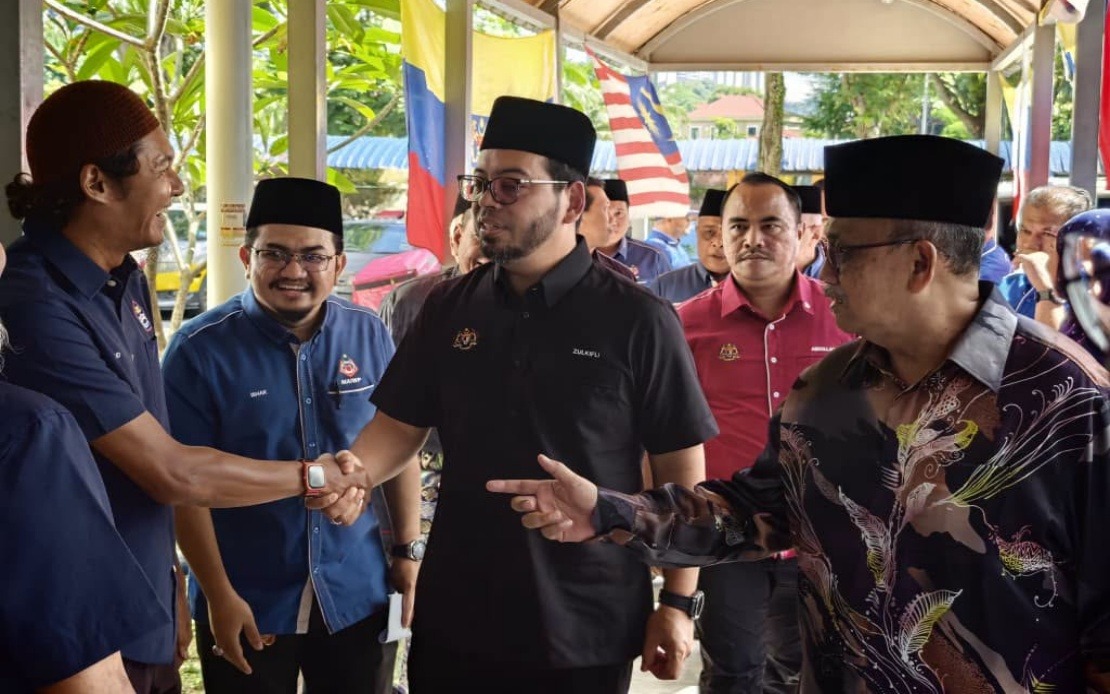
The Federal Territories Islamic Religious Council (MAIWP) has taken a significant step forward in modernising its approach to zakat distribution with the establishment of a dedicated service facility at Jalan Pelangi 10, Taman Pelangi in Kuala Lumpur. The opening of the Zakat Distribution Centre (PAZA) Batu branch represents a strategic expansion of institutional infrastructure aimed at making Islamic almsgiving more accessible and efficient for residents across the Federal Territory.
Senator Dr Zulkifli Hasan, who holds the position of Minister in the Prime Minister's Department overseeing Religious Affairs, underscored the purpose of this new facility during its official inauguration. Beyond functioning as a conventional service counter, the minister emphasised that PAZA Batu has been designed as a comprehensive community engagement hub capable of delivering welfare initiatives while fostering closer connections with residents through targeted outreach programmes.
The establishment of dedicated zakat distribution centres reflects a broader institutional recognition that managing charitable giving at scale requires proper physical infrastructure and organised systems. Rather than fragmenting assistance through multiple touchpoints, MAIWP's approach consolidates operations in purpose-built facilities where beneficiaries can access services with greater convenience and dignity. This model aligns with contemporary best practices in social welfare administration across Southeast Asia, where governments increasingly prioritise customer-centric service delivery.
As of mid-June, MAIWP's portfolio of zakat assistance had reached substantial proportions, with the council distributing RM505.6 million across 38 distinct programmes and human capital development initiatives. This figure demonstrates the scale of religious charitable activity managed by the Federal Territories authority and highlights why operational efficiency matters. When managing half a billion ringgit in annual distributions across nearly forty separate schemes, even marginal improvements in processing speed and accessibility can meaningfully enhance the experience for tens of thousands of beneficiaries.
The inauguration itself became an occasion for immediate welfare impact, with MAIWP distributing 50 food baskets valued at RM100 each to vulnerable residents during the opening ceremony. This immediate distribution underscored the council's commitment to translating institutional infrastructure into tangible community benefit rather than allowing the facility opening to remain merely symbolic.
Complementing the distribution activity, MAIWP organised a coordinated visiting programme targeted at zakat recipients residing within the Batu parliamentary constituency, with particular focus on residents in the Pekan Batu People's Housing Scheme (PPR). This courtesy visit initiative demonstrates a relational approach to welfare administration, where officials personally engage with beneficiaries rather than maintaining purely transactional relationships. Such direct engagement can yield valuable feedback about programme effectiveness and identify emerging community needs that existing schemes might not adequately address.
For Malaysian Muslim communities in the Federal Territories, the opening of PAZA Batu carries practical significance beyond ceremonial value. Residents in Kuala Lumpur now have a dedicated physical space where they can seek assistance, clarify eligibility requirements, and access guidance about available programmes without navigating complicated bureaucratic pathways. The geographic centralisation of services in a purpose-built facility signals institutional seriousness about accessibility, particularly for lower-income households that may lack time or transportation resources to chase services across multiple locations.
The expansion of PAZA infrastructure also reflects demographic and administrative realities within Kuala Lumpur. As the capital experiences continuous urban growth and population shifts, institutions managing public services must adapt their physical footprint to match changing settlement patterns. The placement of PAZA Batu at Jalan Pelangi 10 in Taman Pelangi positions the facility within an established residential community, making it more immediately accessible to the populations it serves compared to a single centralised office elsewhere in the city.
Beyond immediate service delivery, the existence of a dedicated zakat distribution centre with explicit community engagement functions suggests an institutional philosophy that views Islamic charitable giving not merely as financial transfers but as an opportunity for social cohesion and community-building. By organising courtesy visits and welfare programmes alongside benefit distribution, MAIWP positions itself as a catalyst for community connection rather than a purely administrative apparatus.
The programme of 38 assistance schemes referenced by Minister Zulkifli represents considerable diversity in how zakat can address various social vulnerabilities. Such diversity indicates sophisticated programme design that recognises communities face multifaceted challenges—basic subsistence, housing security, health needs, education access, skill development—that single standardised interventions cannot adequately address. The availability of multiple pathways for assistance increases the likelihood that eligible residents can find programmes matching their particular circumstances.
Looking ahead, the success of PAZA Batu will partly depend on community awareness and active take-up of services. The opening ceremony and accompanying outreach activities function as initial awareness-building efforts, but sustained engagement will require ongoing communication about programme availability and eligibility criteria. Word-of-mouth recommendations from satisfied beneficiaries typically prove more effective than formal announcements in driving programme utilisation within communities.
The investment in physical infrastructure for zakat distribution also carries implicit acknowledgment of administrative complexity that digital systems alone cannot entirely resolve. While online platforms can facilitate applications and information dissemination, vulnerable populations often benefit from face-to-face interaction where they can ask clarifying questions, receive personalised guidance, and address special circumstances that standardised digital processes might inadequately capture.

